Bridging the Gender Gap in Women’s Sports Injury Prevention
For decades, the world of sports science and athletic training has operated with a significant blind spot: the female athlete. While participation in women’s and girls’ sports has skyrocketed, the research, equipment, and training protocols designed to keep them safe have lagged far behind, often relying on data and models built for the male body. This critical gap is now coming into sharp focus, with researchers, medical professionals, and advocates pushing for a long-overdue revolution in how we approach injury prevention for women and girls in sports.
The High Cost of the Data Gap
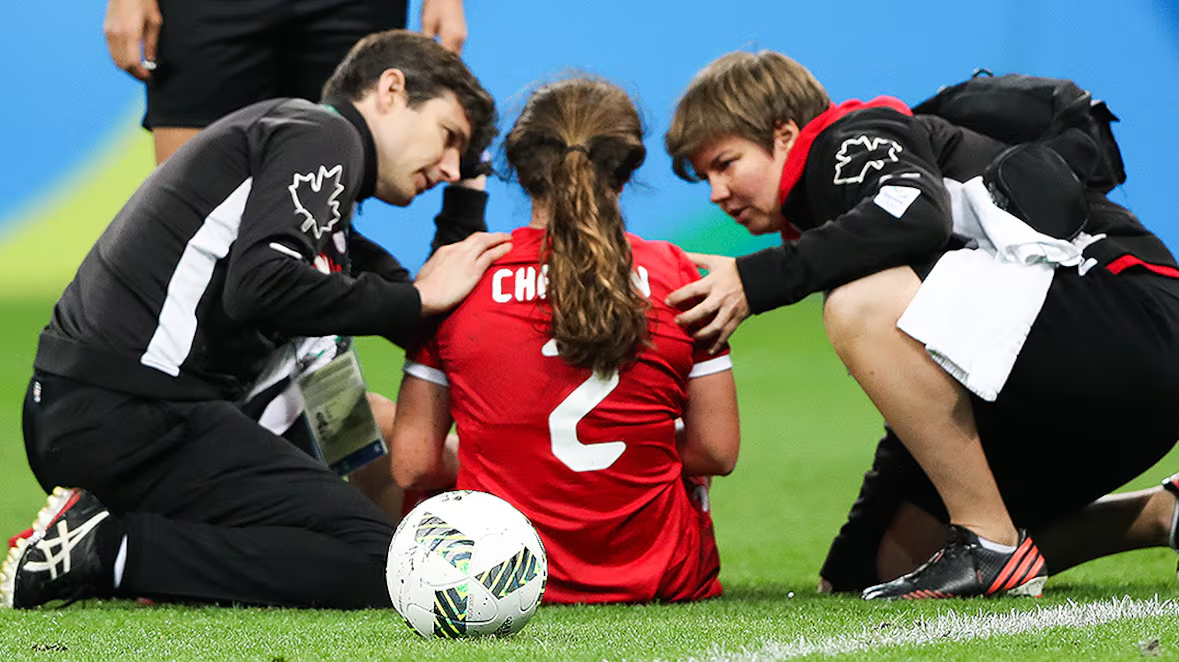
The statistics are sobering and highlight a clear disparity. Female athletes are up to eight times more likely to suffer an anterior cruciate ligament (ACL) tear than their male counterparts. They also face higher rates of certain concussions, stress fractures, and patellofemoral pain (runner’s knee). For years, these alarming rates were often accepted as an inevitable biological fact. However, a growing body of evidence suggests that much of this risk is not inherent but is instead exacerbated by a system that fails to account for their unique physiology and biomechanics.
The root of the problem is a historical lack of investment in sex-specific and gender-specific research. From the lab to the playing field, the male body has been the default template.
- Protective Gear: Equipment like shoulder pads, helmets, and even soccer shin guards are often scaled-down versions of men’s gear, not designed for the different proportions, muscle distribution, and center of mass of female athletes.
- Training Regimens: Strength and conditioning programs have frequently been “one-size-fits-all,” neglecting the neuromuscular and hormonal factors that influence injury risk in women.
- Medical Understanding: Conditions like Relative Energy Deficiency in Sport (RED-S), which disproportionately affects females, and the impact of the menstrual cycle on injury, recovery, and performance have been severely understudied.
This data gap doesn’t just lead to more injuries; it can cut promising careers short and have lifelong health implications for young athletes.
Calgary’s Pioneering Push for Change
At the forefront of challenging this status quo is a dedicated team of researchers in Calgary, Alberta. Their work embodies the multi-faceted approach needed to create meaningful change. One key project involves using advanced motion-capture technology to analyze how female athletes move. By studying everything from how a soccer player plants their foot for a kick to how a hockey player takes a hit, the team is building a crucial database of female-specific biomechanics.
Beyond Biology: The Whole-Athlete Approach
What sets this new wave of research apart is its holistic view. Scientists are moving beyond purely anatomical explanations to understand the complex interplay of factors that contribute to injury risk. This includes:
- Hormonal Fluctuations: Investigating how phases of the menstrual cycle may affect ligament laxity, fatigue, and recovery times.
- Sociocultural Pressures: Examining how societal expectations, coaching styles, and the “play through the pain” mentality uniquely impact girls and women.
- Developmental Windows: Focusing on adolescence as a critical period where targeted training can build resilience and movement patterns that protect an athlete for life.
This research is not just about identifying risks; it’s about creating solutions. The goal is to translate data into practical, evidence-based training programs, better-fitting equipment, and educational resources for coaches, parents, and the athletes themselves.
Building a New Playbook for Safety and Performance
Closing the gender gap in sports medicine requires action at every level of the athletic ecosystem. The work of researchers provides a roadmap for this transformation.
For Coaches and Trainers: Implementing neuromuscular training programs—which focus on strength, agility, plyometrics, and balance—has been proven to reduce ACL injury risk in female athletes by 50% or more. Education on the female athlete triad and RED-S is also essential for early identification and intervention.
For Equipment Manufacturers: The call for innovation is loud and clear. The market needs gear engineered from the ground up for female bodies. This means more than just a “pink and shrink” approach; it requires investment in female-specific design and prototyping.
For Parents and Athletes: Empowerment through knowledge is key. Young female athletes should be encouraged to:
- Participate in year-round strength and conditioning.
- Communicate openly with coaches and medical staff about their bodies, including menstrual cycles.
- Understand that proper fueling and rest are non-negotiable components of training, not signs of weakness.
For Sports Organizations and Funders: Sustained investment in female-focused research is the fundamental requirement for progress. Granting agencies and sports governing bodies must prioritize funding studies that address these long-neglected questions.
The Future is Inclusive
Bridging the gender gap in injury prevention is about far more than reducing statistics. It’s a matter of equity, safety, and unlocking potential. When we invest in understanding and supporting the female athlete, we do more than prevent injuries—we create an environment where women and girls can train smarter, perform at their peak, and enjoy lifelong healthy relationships with sport.
The movement led by researchers in Calgary and around the world signals a pivotal shift. It champions a future where a young girl stepping onto the field or court benefits from the same depth of scientific knowledge, innovative equipment, and tailored support that has long been available to boys. By rewriting the playbook to be inclusive by design, we are not just building better athletes; we are building a fairer and healthier foundation for the future of sport itself.