The Global Week Ahead: Are Markets Trading Places as Momentum Shifts?
As global markets head into a new trading week, investors are confronting a growing sense that leadership across regions may be changing. Assets that once dominated performance are losing momentum, while previously lagging markets are showing renewed strength. This evolving landscape has prompted a key question for investors: are global markets trading places?
From equities and currencies to bonds and commodities, relative performance is shifting amid changing growth expectations, diverging monetary policy paths, and persistent geopolitical uncertainty. The week ahead may prove pivotal in determining whether these moves represent a temporary rotation or the early stages of a broader global realignment.
A Turning Point for Global Market Leadership
For much of the past year, market leadership appeared relatively clear. Certain economies outperformed on the back of stronger growth, resilient consumers, and supportive financial conditions. However, recent data suggests that global momentum is becoming more fragmented.
Investors are increasingly questioning whether previous leaders can maintain their advantage as economic conditions normalize and policy support fades. At the same time, regions that struggled earlier are beginning to benefit from valuation resets, improving fundamentals, or shifting capital flows.
This potential rotation in global leadership sets the stage for heightened volatility in the days ahead.
Equity Markets Signal Rotation
Equity markets are often the first to reflect changes in global sentiment. Recent price action suggests that sector and regional rotations are gaining traction.
Markets that benefited from strong earnings growth and policy support are now facing valuation pressures. Meanwhile, select international equities are attracting interest as investors seek diversification and relative value.
This rotation does not imply a wholesale abandonment of former leaders, but it does suggest that performance gaps may narrow as markets reassess risk and reward.
Currency Markets Reflect Changing Expectations
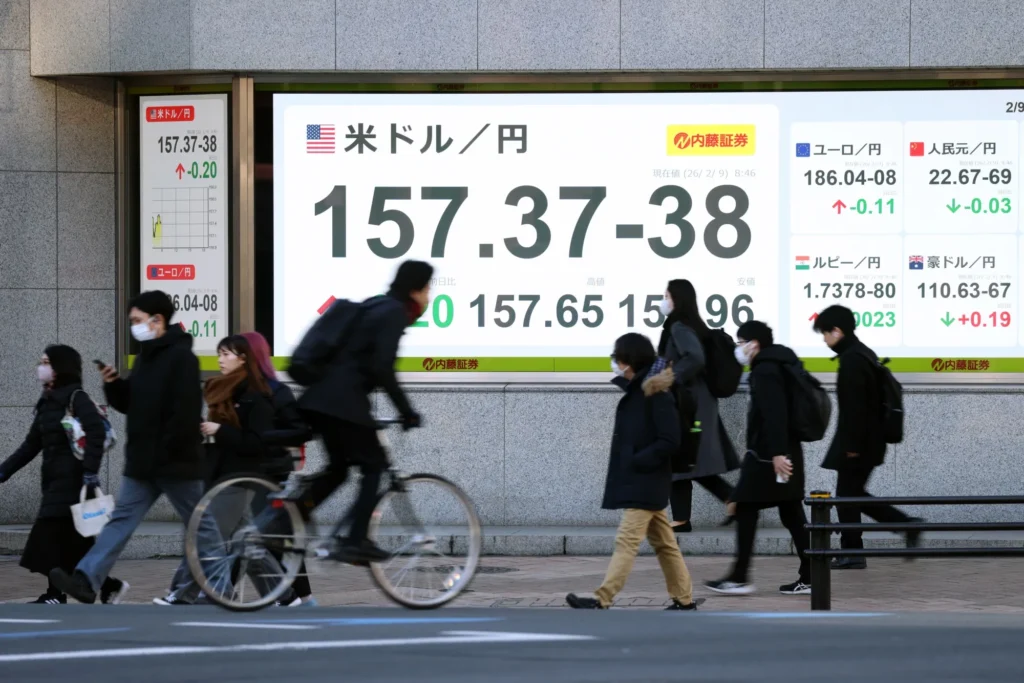
Currency movements offer another lens into the idea of markets trading places. Shifts in interest rate expectations, growth outlooks, and risk sentiment have led to notable adjustments in foreign exchange markets.
Currencies tied to economies showing resilience or policy flexibility are gaining support, while those facing structural challenges are under pressure. These moves highlight how capital is responding to relative opportunity rather than absolute strength.
As the week unfolds, currency volatility may intensify as investors reposition ahead of key economic signals.
Bond Markets Reprice Growth and Inflation Risks
Global bond markets are also undergoing a reassessment. After prolonged periods of elevated yields, signs of slowing growth and softer employment data in some regions have triggered repricing across yield curves.
Markets are recalibrating expectations around inflation persistence and the timing of potential policy easing. This has created divergence between regions where inflation risks remain elevated and those where disinflation appears more entrenched.
Bond performance in the week ahead will offer clues about whether investors believe growth leadership is shifting on a more durable basis.
Commodities Caught Between Demand and Uncertainty
Commodities occupy a unique position in the global trading landscape. Prices are influenced by both demand expectations and geopolitical developments, making them sensitive to shifts in global leadership.
Energy and industrial metals reflect concerns about global growth, while precious metals respond to currency moves and risk sentiment. If markets are indeed trading places, commodity performance may become increasingly uneven.
The coming week could see sharper differentiation across commodity classes as investors reassess global demand dynamics.
Central Banks Drive Divergence
At the heart of these shifts lies divergent central bank policy. While some policymakers remain focused on inflation risks, others are beginning to acknowledge slowing momentum and softer labor markets.
This divergence creates uneven financial conditions across regions, influencing capital flows and relative asset performance. Markets are particularly sensitive to any change in tone that suggests policy flexibility or renewed restraint.
Central bank communication in the week ahead may accelerate the sense that global markets are repositioning.
Geopolitical Risk Adds Another Layer
Geopolitical developments continue to shape investor behavior. Ongoing conflicts, trade tensions, and political uncertainty contribute to uneven risk appetite across regions.
Markets perceived as insulated or strategically positioned may attract capital, while those exposed to geopolitical shocks face higher risk premiums. This dynamic reinforces the idea that relative positioning matters more than ever.
In this environment, even modest geopolitical headlines can trigger outsized market reactions.
Capital Flows Signal Shifting Confidence
Capital flows provide a tangible measure of whether markets are trading places. Recent trends suggest investors are selectively reallocating rather than exiting risk altogether.
Flows into alternative markets, defensive assets, and selective international equities indicate a search for balance rather than outright risk aversion. This nuanced behavior supports the view that the global investment landscape is becoming more complex and less concentrated.
The sustainability of these flows will be tested as new data emerges.
What Investors Should Watch This Week
As the week ahead unfolds, several factors will determine whether recent shifts gain momentum:
- Economic data that confirms or challenges growth divergence
- Inflation signals that influence policy expectations
- Central bank commentary that reshapes market narratives
- Risk sentiment driven by geopolitical developments
Together, these elements will shape whether markets continue to trade places or revert to established leadership patterns.
Volatility Likely to Remain Elevated
Periods of transition are rarely smooth. As leadership shifts, markets often experience increased volatility as participants adjust positioning and expectations.
This volatility does not necessarily signal instability, but rather reflects price discovery in a changing environment. Investors prepared for rotation may find opportunity, while those anchored to old assumptions may face challenges.
The week ahead may therefore reward flexibility and disciplined risk management.
A Broader Reset in Market Thinking
The idea of markets trading places speaks to a broader reset in how investors assess global opportunity. Rather than chasing momentum, there is growing emphasis on fundamentals, valuation, and resilience.
This shift could lead to a more balanced global market structure over time. However, the transition phase is likely to remain noisy, with leadership changing hands more frequently.
Understanding this context is critical for navigating near-term uncertainty.
Conclusion: A Week That Could Redefine Momentum
As global markets enter the new week, the question of whether they are trading places looms large. Shifting economic signals, diverging policy paths, and evolving risk sentiment suggest that established hierarchies are being tested.
Whether these changes mark a lasting realignment or a temporary rotation will depend on incoming data and investor response. What is clear is that complacency is no longer an option.
In a world of changing momentum, adaptability may prove to be the most valuable asset of all.