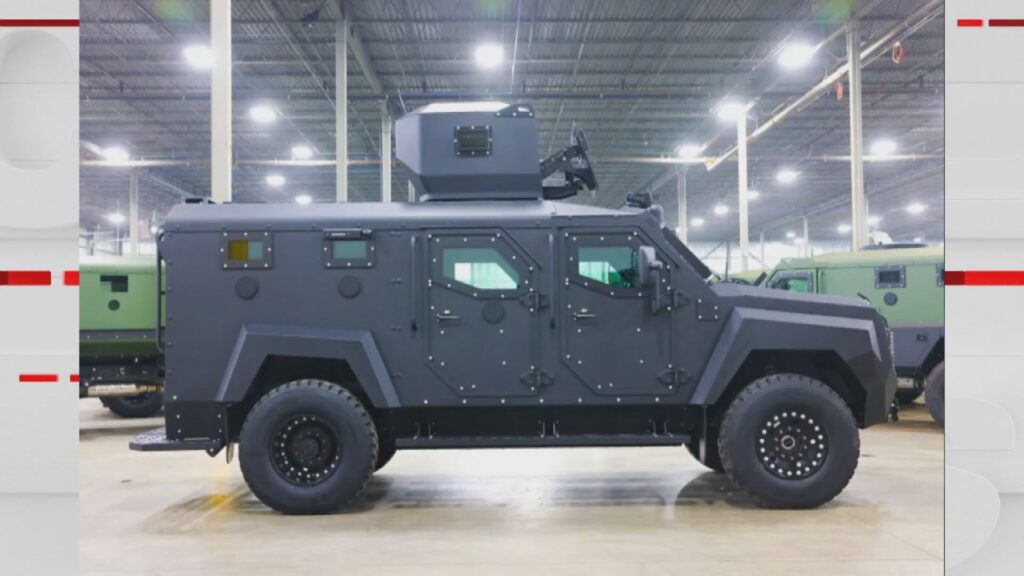
Canadian Armored Vehicle Contract Sparks U.S. Production Debate
A major contract for new armored vehicles for the Canadian Army has ignited a significant debate about domestic industrial benefits, supply chain sovereignty, and the realities of modern defense manufacturing. While the vehicles are being procured from a renowned Canadian company, the revelation that final assembly will occur in the United States has raised questions about the fulfillment of economic promises to Canada.
The Core of the Controversy: A Canadian Order, U.S. Assembly
The story centers on a multi-billion dollar contract awarded to General Dynamics Land Systems–Canada (GDLS-Canada), based in London, Ontario. The company, a stalwart of Canada’s defense sector, is tasked with building hundreds of new Light Armoured Vehicles (LAVs) for the Canadian Armed Forces. These advanced vehicles are critical for troop transport and combat support.
However, the situation took a complex turn when U.S. Immigration and Customs Enforcement (ICE) published a notice stating that the armored vehicles it ordered from GDLS-Canada would be produced at the company’s facility in Lima, Ohio. This disclosure brought to light that the Canadian Army’s new LAVs, built under a separate contract, are also slated for final assembly and testing at this same American plant before being shipped north.
On the surface, this seems at odds with the Canadian government’s emphasis on bolstering domestic industry through defense spending. The arrangement has prompted scrutiny from industry observers and policymakers alike.
Understanding the Global Supply Chain
GDLS-Canada and government officials have been quick to contextualize the production plan within the framework of a highly integrated North American defense industry. They argue that focusing solely on the final assembly location misses the broader economic picture for Canada.
The company emphasizes that a substantial portion of the work and value remains in Canada. Key aspects include:
- Design and Engineering: The intellectual property, design work, and systems integration for the vehicle platform are led by Canadian engineers and technicians in Ontario.
- Component Manufacturing: Critical components, including advanced armoured hulls, drivelines, and sophisticated electronic systems, are manufactured at GDLS-Canada’s facilities and by a network of suppliers across the country.
- Final Integration for Canada: While the base vehicle is assembled in Ohio, the specialized mission modules and unique configuration required by the Canadian Army will be installed at the Canadian facility.
The choice of the Ohio plant is presented as a matter of capacity and efficiency. The Lima facility is a specialized center of excellence for tracked vehicle production with the space, tooling, and workforce to handle the large-scale assembly required for both U.S. and Canadian orders.
The Industrial and Technological Benefits (ITB) Policy Question
At the heart of the political debate is Canada’s Industrial and Technological Benefits (ITB) Policy. This policy mandates that companies winning large federal defense contracts must make investments in Canada equal to the value of the contract. These investments are meant to create high-value jobs, foster innovation, and support the long-term health of the Canadian industrial base.
Critics of the current vehicle production model ask: If final assembly is happening in the U.S., are Canadian taxpayers getting the full promised return on investment? They argue that final assembly is a high-value activity involving significant labor and technology application, and its offshoring—even to a close ally—represents a lost opportunity for Canadian workers and technical expertise.
Weighing Sovereignty Against Pragmatism
Proponents of the current arrangement counter that in an era of complex, globalized manufacturing, sovereignty and benefit are not defined by a single production step. They point out that retaining the core design authority and manufacturing of the most technologically sensitive components within Canada is more strategically vital than the physical assembly.
Furthermore, integrating production with the U.S. operation can lead to economies of scale, potentially lowering costs for Canada and ensuring interoperability with a key NORAD and NATO partner. The integrated supply chain is also seen as a strategic asset, making the Canadian defense sector more resilient and competitive internationally.
Broader Implications for Canada’s Defense Strategy
This debate transcends a single contract and touches on fundamental questions about Canada’s defense industrial strategy:
- Self-Sufficiency vs. Interdependence: How much domestic production capacity is essential for national security, and where can Canada rely on trusted allies?
- Defining “Value”: Should the ITB policy be updated to more explicitly prioritize high-value engineering and intellectual property over traditional manufacturing jobs?
- Competitiveness: Can Canadian defense firms compete for international orders if they are constrained from using their parent company’s most efficient global production facilities?
The government maintains that the GDLS-Canada contract is generating and sustaining thousands of high-skilled jobs in Ontario and across the supply chain, fulfilling the spirit of the ITB policy. They view the company as a national asset whose success on the global stage—sometimes utilizing its international footprint—ultimately strengthens its Canadian operations.
A Complex Equation with No Simple Answers
The discussion around where Canada’s new armored vehicles are assembled highlights the intricate balance in modern defense procurement. It pits the ideal of complete domestic production against the practical realities of cost, efficiency, and allied integration.
While the sight of vehicles for the Canadian Army being assembled in Ohio is politically sensitive, the full economic narrative is more nuanced. The retention of design control, systems integration, and key manufacturing in Canada represents a substantial industrial commitment. The challenge for policymakers is to communicate this complexity effectively to a public that understandably wants to see direct, tangible benefits from massive defense expenditures.
As Canada continues to modernize its armed forces, this contract will likely serve as a key reference point. It underscores the ongoing need to refine policies that ensure defense spending truly fortifies the national industrial base, even within the interconnected landscape of North American defense. The ultimate measure of success will be whether Canada emerges from this procurement with not only a fleet of advanced vehicles but also a more innovative, skilled, and sustainable defense sector capable of meeting future challenges.