How Quebec’s Political Leaders Are Deepening Social Divisions
In the heart of Canadian confederation, a quiet but profound fracture is widening. Quebec, a province celebrated for its vibrant culture and distinct identity, finds itself at a crossroads not defined by geography, but by social cohesion. Increasingly, the discourse emanating from its political class is not one of unity in diversity, but of division and demarcation. Rather than bridging gaps, many argue that Quebec’s political leaders are actively deepening social rifts, prioritizing short-term electoral gains over the long-term health of a pluralistic society.
This isn’t about the legitimate debate over language protection or national identity—cornerstones of Quebec’s political landscape. It is about the tone, targeting, and legislative overreach that transforms policy into polemic, casting entire groups of citizens as perpetual outsiders.
The Mechanics of Division: Language, Secularism, and Immigration
The playbook for this social fracturing operates on several key fronts, each amplifying mistrust and alienation.
1. The Evolving Language Battleground
The French language is the lifeblood of Quebec, and its protection is a consensus position. However, recent political maneuvers have shifted from protection to preeminence in ways that stigmatize. Laws like Bill 96, which overhaul the Charter of the French Language, extend French requirements to smaller businesses and impose stricter rules on CEGEPs. While the intent is clear, the effect is to create a two-tiered reality where anglophones and allophones feel their place is conditional, their participation scrutinized. The message, intentional or not, is that linguistic identity is a zero-sum game.
2. The Heavy Hand of State Secularism
The Law on State Secularism (Bill 21) stands as the most potent symbol of division. By prohibiting certain public servants in positions of authority from wearing religious symbols, it directly targets Muslim, Sikh, and Jewish Quebecers, particularly women. Proponents argue it enforces neutrality, but its implementation tells a different story: it legislates individuals out of public careers based on faith. It tells citizens that their religious identity is incompatible with public service, formalizing their “otherness” and fueling a sense of institutional betrayal.
3. Immigration as a Political Football
Immigration discourse in Quebec has become increasingly charged. Political rhetoric often frames newcomers as a threat to social harmony, francization, and the “values” of Quebec society. Proposals to cap numbers or tie immigration to French proficiency, while pragmatic on the surface, are often couched in language that paints immigrants as a problem to be managed, not as future Quebecers to be integrated. This creates a hostile environment where new and established minorities feel politically weaponized.
The Political Calculus: Short-Term Gains, Long-Term Scars
Why would political leaders pursue such a divisive path? The answer lies in a cold electoral calculus.
- Mobilizing the Base: In a fragmented political landscape, appealing to a core nationalist base with clear, tough stances on identity can be a winning strategy. It simplifies complex issues into us-vs-them narratives.
- Deflecting from Other Issues: Focusing intensely on identity politics can divert public attention from other pressing governance challenges, such as healthcare, inflation, or climate change.
- Owning the Narrative: By setting the terms of debate around identity, certain parties position themselves as the sole defenders of Quebec’s heritage, making opposition seem unpatriotic.
This strategy may yield electoral victories, but it comes at a steep cost: the erosion of social trust. It pits neighbor against neighbor, community against community, and sows seeds of resentment that can last for generations.
The Human Cost: Alienation and a Weakened Social Fabric
Beyond the political headlines, the human impact is real and damaging.
- Brain Drain and Economic Impact: Talented individuals from minority communities, feeling unwelcome or that their opportunities are limited, may choose to build their lives elsewhere. This deprives Quebec of vital skills and innovation.
- Psychological Toll on Minorities: Constant political debate about your community’s place in society leads to anxiety, alienation, and a weakened sense of belonging. It tells young Quebecers that no matter where they are born, they may never be “Quebecois enough.”
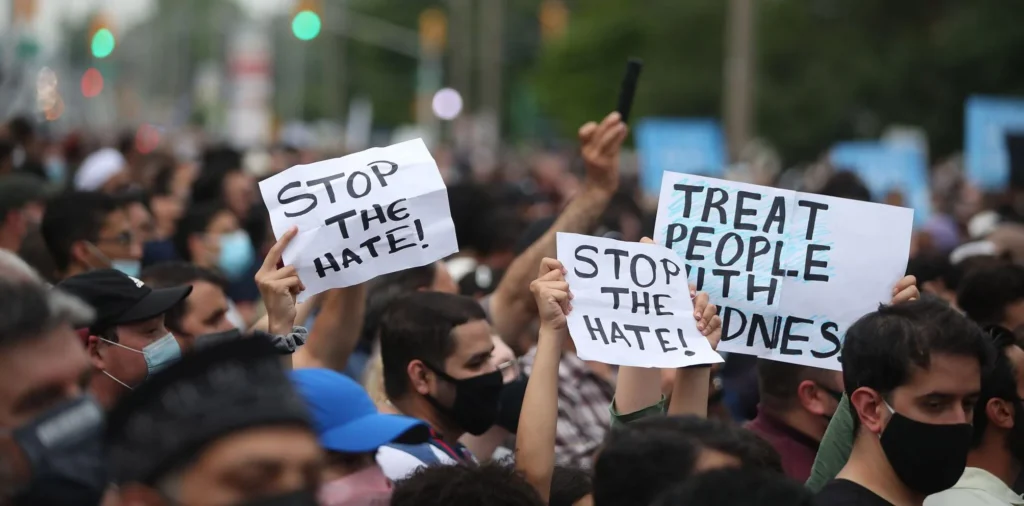
- Normalization of Intolerance: When political leaders use divisive language, it grants permission for similar rhetoric in the public square. It can embolden prejudice and make everyday discrimination more socially acceptable.
The result is a province less united, less resilient, and less confident in its own future. A society preoccupied with internal lines in the sand is ill-prepared to face collective external challenges.
Toward a More Cohesive Future: The Path Forward
Reversing this trend requires courage and a shift in political paradigm. It does not mean abandoning the defense of the French language or secular public institutions. It means pursuing these goals without making scapegoats of minorities.
A Different Kind of Leadership is Needed:
- Inclusive Patriotism: Political leaders must champion a Quebec identity that is confident enough to be inclusive. Being a proud Quebecois and having diverse cultural or religious practices are not mutually exclusive.
- Policy with a Light Touch: Legislation should aim to integrate and uplift, not exclude and marginalize. Investments in francization programs, community bridging, and anti-discrimination initiatives are more constructive than punitive laws.
- Elevating the Discourse: Leaders must reject the temptation of divisive rhetoric and instead speak to the shared aspirations of all Quebecers: prosperity, security, and a high quality of life in a distinct society.
The great strength of Quebec has always been its ability to forge a unique path. That path forward, however, cannot be built on a foundation of fractured communities. The current political strategy of deepening social divisions is a dangerous gamble with the province’s social peace and prosperity. True leadership would recognize that Quebec’s identity is not so fragile that it needs walls to protect it; it is robust enough to be enriched by the contributions of all who call it home. The question remains: will Quebec’s political class choose to be architects of division or builders of a common, thriving future?