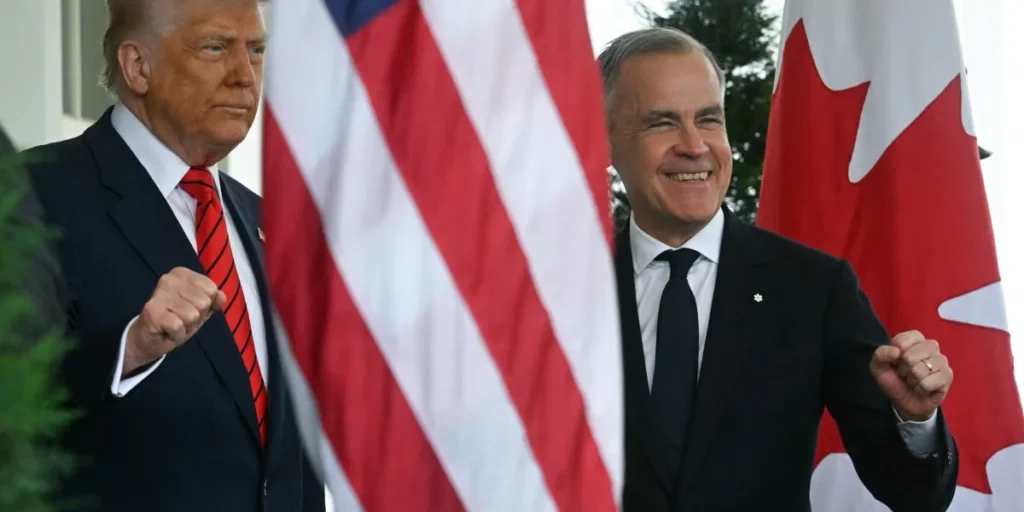
President Donald Trump reignited debate over US-Canada trade relations, stating that Canada has taken advantage of the United States on trade for many years. His remarks come amid renewed discussions over tariffs, trade balances, and enforcement of existing agreements between the two neighboring countries.
The statement has drawn attention from policymakers, business leaders, and international trade analysts, as the United States and Canada maintain one of the largest bilateral trading relationships in the world.
Renewed Focus on US-Canada Trade Imbalance
At the center of Trump’s comments is the issue of the US-Canada trade imbalance. While trade between the two nations exceeds hundreds of billions of dollars annually, debates persist over whether the terms have been equally beneficial.
Trump emphasized concerns over:
- Agricultural market access
- Dairy supply management policies
- Energy exports and pricing
- Manufacturing competitiveness
- Tariff enforcement mechanisms
Supporters of the administration argue that certain Canadian policies have historically restricted US producers from fair market access.
USMCA Agreement Under Scrutiny
The United States-Mexico-Canada Agreement (USMCA), which replaced NAFTA, was designed to modernize North American trade. However, Trump’s latest remarks suggest that enforcement and compliance remain critical concerns.
Trade experts note that the USMCA includes updated provisions on:
- Labor standards
- Digital trade
- Intellectual property protection
- Automotive manufacturing rules
- Agricultural exports
Despite these reforms, political leaders continue to debate whether the agreement sufficiently addresses long-standing trade concerns.
Agriculture and Dairy at the Heart of Dispute
One of the most sensitive areas in US-Canada trade negotiations involves dairy products and agricultural goods.
Canada’s supply management system regulates domestic dairy production and imposes tariffs on certain imports. US farmers have argued that these policies limit American access to Canadian markets.
Trump’s statement reinforces the administration’s stance that expanded agricultural access is essential for fair trade balance.
Farm industry representatives have called for stricter enforcement of existing trade commitments to ensure equal competition.
Energy Trade and Cross-Border Cooperation
Energy remains one of the strongest pillars of US-Canada economic cooperation. Canada is a major supplier of crude oil and natural gas to the United States, while US refineries and infrastructure support integrated energy markets.
Despite trade tensions, energy cooperation continues to benefit both economies. Analysts point out that North American energy integration enhances:
- Energy security
- Price stability
- Infrastructure investment
- Cross-border employment
However, trade policy rhetoric can influence investment decisions and long-term strategic planning in the energy sector.
Economic Impact of Trade Tensions
Statements regarding trade imbalances often influence financial markets and business sentiment. A renewed focus on US-Canada trade fairness could lead to:
- Negotiation adjustments
- Policy reviews
- Tariff discussions
- Diplomatic consultations
While no immediate policy changes have been formally announced, investors and trade stakeholders are monitoring developments closely.
Trade relations between the two countries support millions of jobs across manufacturing, agriculture, transportation, and retail sectors.
Political Significance of Trade Messaging
Trade policy has long been central to President Trump’s political messaging. By highlighting concerns over Canada taking advantage of US trade, the administration signals continued emphasis on domestic economic protection and manufacturing competitiveness.
Political analysts observe that trade rhetoric often resonates strongly with industrial regions and agricultural communities.
The renewed focus on trade fairness may play a key role in broader economic discussions throughout the year.
Business Community Reaction
Business groups on both sides of the border have called for stability and predictability in trade policy. Cross-border supply chains are deeply integrated, particularly in the automotive and manufacturing sectors.
Executives stress that sudden policy shifts or tariff increases could disrupt:
- Supply chains
- Pricing structures
- Investment planning
- Export growth
At the same time, domestic producers seeking expanded market access support stronger enforcement measures.
Global Trade Context
The debate over US-Canada trade relations unfolds within a broader global trade environment shaped by supply chain adjustments, inflation pressures, and shifting geopolitical alliances.
As nations reassess trade dependencies, North American partnerships remain strategically important.
Experts note that maintaining stable relations between the US and Canada is critical for regional economic resilience.
What Could Happen Next?
Moving forward, potential developments may include:
- Trade compliance reviews
- Bilateral negotiations
- Sector-specific enforcement actions
- Policy statements from Canadian officials
Any formal trade action would require careful coordination to avoid unintended economic consequences.
For now, Trump’s statement serves as a political and economic signal rather than an immediate policy directive.
Long-Term Outlook for US-Canada Trade Relations
Despite periodic tensions, the United States and Canada share one of the closest economic partnerships globally.
Key strengths of the relationship include:
- Geographic proximity
- Integrated manufacturing
- Shared infrastructure
- Cultural and business alignment
Most analysts believe that while rhetoric may intensify, structural economic ties will continue to anchor cooperation.
However, ongoing scrutiny of trade terms suggests that negotiations and policy discussions will remain active topics.
Final Analysis
President Trump’s assertion that Canada has taken advantage of the United States on trade for many years revives longstanding debates over fairness, market access, and trade balance.
While the statement highlights concerns over agricultural and manufacturing competitiveness, the broader economic relationship between the two nations remains deeply interconnected.
As policymakers weigh enforcement and negotiation strategies, the future of US-Canada trade relations will likely depend on balancing domestic economic priorities with regional economic stability.
With billions in cross-border commerce at stake, trade discussions between the two nations will remain a key focus in Washington and Ottawa in the months ahead.