
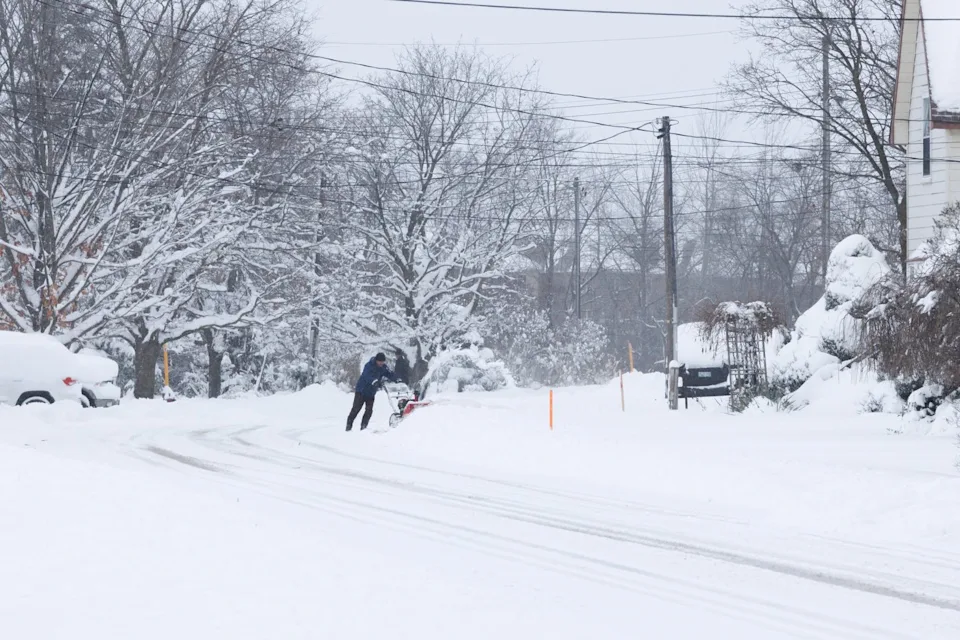
A historic winter storm has unleashed its fury across Ontario, transforming landscapes into scenes from a snow globe and bringing daily life to a grinding halt. In a dramatic display of winter’s power, parts of the province were buried under a staggering 70 centimetres of snow, with fierce winds creating massive drifts and whiteout conditions. This wasn’t just a snowfall; it was a full-scale winter wallop that tested the mettle of residents and the readiness of municipal services.
The storm, which swept across southern and eastern Ontario, delivered a sharp reminder of Canadian winter’s formidable potential. From Toronto to Ottawa and through the snowbelt regions, communities woke up to a world shrouded in deep, heavy snow. The event serves as a powerful case study in weather preparedness and the sheer scale of nature’s force.
A Province Paralyzed by Record-Breaking Snowfall
The numbers tell a story of an extraordinary meteorological event. While many areas saw a significant 20-30 cm, it was the snowbelt regions east of Lake Huron and Georgian Bay that bore the brunt of the storm’s intensity. Localized reports confirmed accumulations hitting the 70 cm mark, a depth that overwhelms infrastructure and challenges even the most seasoned snow removal crews.
This wasn’t a gentle, overnight dusting. The snow fell persistently over many hours, accompanied by strong, gusting winds. This combination was particularly dangerous, as it reduced visibility to near-zero at times and made travel not just difficult, but actively hazardous. The wind didn’t just blow the snow around; it sculpted it into formidable drifts, some reaching several feet high against homes and across roadways.
The Immediate Impact: Travel Chaos and Community Response
The storm’s first and most visible impact was on transportation. Across the affected regions, a cascade of disruptions unfolded:
- Road Closures and Perilous Driving Conditions: Major highways, including sections of Highway 400 and 401, became treacherous corridors. Numerous collisions and stranded vehicles were reported, prompting police to repeatedly urge people to avoid all non-essential travel. Many secondary roads in hardest-hit areas were rendered impassable.
- Transit Disruption: Local transit services in cities like Toronto and Ottawa faced severe delays and cancellations. Streetcars and buses struggled with snow-clogged routes, while GO Transit services experienced significant setbacks.
- Air Travel Grounded: Toronto Pearson International Airport and Billy Bishop Toronto City Airport were hit hard. Hundreds of flights were cancelled, leaving passengers stranded in terminals. The massive effort to clear runways and de-ice planes was a race against continuing snowfall.
- School and Business Closures: Dozens of school boards, colleges, and universities made the proactive decision to close for the day, prioritizing student and staff safety. Many businesses also shuttered their doors, allowing employees to stay home and safe.
Beyond the Headlines: The Human Stories of the Storm
Behind the statistics of snowfall and flight cancellations are the stories of Ontarians pulling together. Neighbors checked on elderly residents, community groups organized informal check-ins, and social media became a hub of real-time support and information sharing.
The storm also highlighted the heroic efforts of essential workers. Snowplow operators, hydro crews, and first responders worked around the clock in brutal conditions. Their mission was twofold: clear the roads for emergency access and restore power to the thousands who lost it as heavy snow weighed down power lines and tree branches. The dedication of these crews, facing fatigue and relentless elements, was a testament to public service.
For many, the storm also brought a moment of forced pause—a “snow day” in the truest sense. With travel impossible, families found themselves together, perhaps baking, playing games, or simply watching the relentless flakes fall. It was a stark, beautiful, and inconvenient reminder of nature’s ability to override our busy schedules.
Scientific Perspective: What Fueled This Winter Wallop?
Meteorologists point to a classic but potent recipe for such a major snow event. The storm was fueled by a collision of moisture-rich air from the Great Lakes and a strong low-pressure system tracking across the region. This setup, known as a “Colorado Low” or similar nor’easter-type track, is notorious for producing heavy, widespread precipitation.
The “lake-enhanced” effect was a critical multiplier, particularly for communities downwind of the open waters of Lake Huron and Georgian Bay. As cold air flowed over the relatively warmer lake surfaces, it picked up immense moisture, which was then dumped as snow when it reached land. This phenomenon is why snowbelt regions are consistently among the snowiest places in Canada.
Lessons Learned and Looking Ahead
As the digging-out process continues, this storm leaves behind important considerations for both individuals and municipalities.
- Personal Preparedness is Non-Negotiable: The event underscored the necessity of having a home emergency kit with supplies for at least 72 hours, including water, non-perishable food, medications, and backup power sources.
- The Importance of Heeding Warnings: Environment Canada’s storm warnings were accurate and severe. This event proved that taking these forecasts seriously—by postponing travel and preparing for outages—can prevent accidents and save lives.
- Infrastructure Stress Test: For cities and towns, a storm of this magnitude acts as a stress test for snow removal capacity, emergency response coordination, and communication systems. The recovery phase offers valuable data to improve protocols for future events.
- Climate Resilience: While a single storm cannot be directly attributed to climate change, scientists note that a warming atmosphere can hold more moisture, potentially intensifying precipitation events when conditions are right. Building resilient communities that can withstand extreme weather is an ongoing challenge.
Ontario’s epic winter wallop, with its 70 cm snowfalls, will be remembered as a benchmark storm. It was a disruptive, beautiful, and formidable event that showcased both the power of nature and the resilience of the communities in its path. As the snow slowly melts and life returns to normal, the images of buried cars and heroic snowplows will serve as a powerful reminder: in Canada, winter always deserves our respect and preparation.

