Iran’s Regional Strikes and U.S. Peace Talks: A Dangerous Divide
The Middle East stands at a perilous crossroads, where two seemingly contradictory forces are colliding with potentially explosive consequences. On one side, Iran and its network of allied militias are escalating military strikes across the region, signaling a readiness for direct confrontation. On the other, the United States, under a potential second Trump administration, is reportedly preparing a renewed push for a historic Arab-Israeli peace agreement. This clash between escalating violence and ambitious diplomacy creates a dangerous divide, threatening to unravel regional stability at a critical moment.
The Escalating Shadow War: Iran’s Calculated Aggression
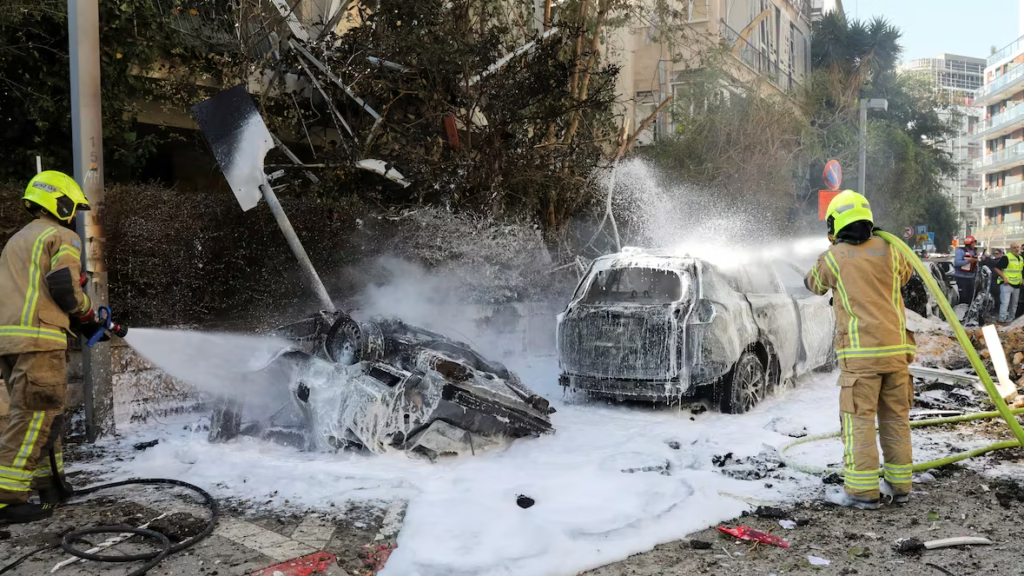
For years, the conflict between Iran and Israel has been fought in the shadows: cyber-attacks, covert operations, and strikes by proxy forces. Recently, that shadow war has stepped decisively into the light. Following an attack on its diplomatic compound in Damascus, which it blamed on Israel, Iran launched an unprecedented direct drone and missile barrage from its own territory against Israel. This marked a significant shift in Tehran’s longstanding “strategic patience” doctrine.
This aggression is not isolated. It is part of a broader campaign of regional pressure executed through Iran’s “Axis of Resistance,” which includes:
- Hezbollah in Lebanon: Engaging in daily cross-border fire with Israel, risking a full-scale war.
- The Houthis in Yemen: Disrupting global shipping in the Red Sea with missile and drone attacks on commercial vessels.
- Militias in Iraq and Syria: Conducting repeated attacks on U.S. military bases in the region.
The Message Behind the Missiles
Iran’s strategy is multifaceted. Primarily, it seeks to deter Israel and the U.S. by demonstrating capability and resolve, proving that any direct action against it will be met with a forceful response. Secondly, it aims to position itself as the leader of regional opposition to Israel and American influence, rallying domestic and allied support. Finally, these actions serve as leverage, increasing the stakes and potentially the concessions Iran could demand in any future negotiations, whether on its nuclear program or regional role.
The Diplomatic Counterpoint: Trump’s Grand Bargain Ambitions
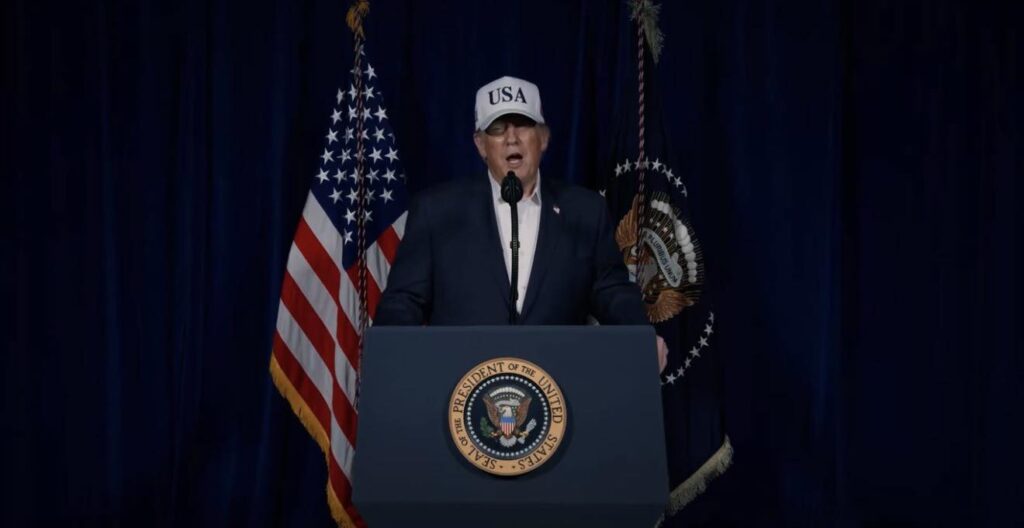
Simultaneously, a very different plan is being formulated. Reports indicate that advisors to former President Donald Trump are crafting a comprehensive Middle East peace plan intended to be a centerpiece of a potential second term. This initiative, often referred to as the “grand bargain,” aims to achieve what has eluded diplomats for decades: a normalization agreement between Israel and Saudi Arabia.
The potential deal is staggering in its scope and ambition. In exchange for Saudi normalization with Israel, the U.S. would offer Riyadh a formal defense treaty and support for a civilian nuclear program. For Israel, it would mean a historic peace with the most influential Arab nation. The plan would also seek to address the Palestinian issue, though details remain vague, likely involving economic incentives and a promise of future statehood without immediate sovereignty.
The Stark Contradiction
Herein lies the dangerous divide. Iran’s escalation is fundamentally at odds with the environment needed for such delicate, historic diplomacy. You cannot build a lasting peace on a foundation of active warfare. An Israeli-Saudi deal would be a monumental defeat for Iran’s regional vision, isolating it further. Tehran is therefore incentivized to sabotage the process through violence, hoping to provoke an Israeli overreaction that draws the region into a broader conflict, making diplomacy impossible.
Converging Fault Lines: Where Conflict and Diplomacy Collide
Several flashpoints illustrate how these two trajectories—war and peace—are on a collision course.
- The Saudi Dilemma: Saudi Crown Prince Mohammed bin Salman may desire a defense pact with the U.S., but he cannot openly embrace Israel while it is engaged in a hot war with Iranian proxies or directly with Iran. The Arab public’s sympathy for the Palestinian cause remains a powerful constraint.
- Israeli Domestic Pressure: In Israel, the government faces immense public pressure for a decisive response to Iranian aggression. A large-scale military action against Iran or Hezbollah could instantly derail any normalization talks and plunge the region into chaos.
- The U.S. Balancing Act: Washington is trying to walk a near-impossible tightrope: restraining Israel to prevent a regional war while defending it against attacks, all while attempting to lay the groundwork for a mega-diplomatic deal. This balancing act becomes infinitely harder with every missile launch.
Navigating the Divide: Possible Pathways Forward
The path forward is fraught with risk, but not entirely without potential avenues for de-escalation.
A Coherent U.S. Strategy is Paramount: The United States must forge a unified policy that credibly addresses both the immediate military threat and the long-term diplomatic vision. This means clear, private red lines for Iran to halt proxy attacks, coupled with a realistic, step-by-step roadmap for the Saudi-Israeli deal that includes tangible benefits for Palestinians.
De-escalation as a Precursor to Diplomacy: Any meaningful peace process will require a period of managed de-escalation. This could involve backchannel communications to establish tacit rules of engagement and potentially even regional dialogues that include Gulf Arab states to address shared security concerns, including Iran’s behavior.
The High Stakes of Failure
The cost of miscalculation is extraordinarily high. If escalation wins out, the region could face a devastating multi-front war involving state and non-state actors, spiking global energy prices, and shattering any hope for diplomatic progress for a generation. Conversely, if diplomacy is pursued in a vacuum, ignoring the live security threats, it will be built on sand and likely collapse.
The Middle East is caught between the relentless pressure of Iran’s military axis and the gravitational pull of a potential American-brokered realignment. This dangerous divide between strikes and talks defines the current moment. Whether the region descends into a wider conflagration or staggers toward a new, fragile stability will depend on whether the architects of violence or the architects of peace can find a way to first lower the temperature. The world is watching, hoping that diplomacy can build a bridge across this perilous chasm before it is too late.