
Missing Aid Boats to Cuba Spark Urgent Search and Rescue Mission
The tranquil waters of the Gulf of Mexico have become the center of a tense international search, as humanitarian efforts to deliver critical aid to Cuba have been overshadowed by a distressing disappearance. At least two boats, part of a mission to transport food and medical supplies from the United States to the island nation, have vanished, sparking an urgent search and rescue operation and raising profound questions about the perils of circumventing the long-standing U.S. embargo.
A Humanitarian Mission Interrupted
The missing vessels were operated by the Puerto Rico-based group, Solidarity Without Borders. This organization is part of a network of activists who, for years, have navigated the complex legal and physical waters to deliver aid directly to the Cuban people. Their missions are acts of defiance against the U.S. economic embargo, which severely restricts trade and financial transactions with Cuba.
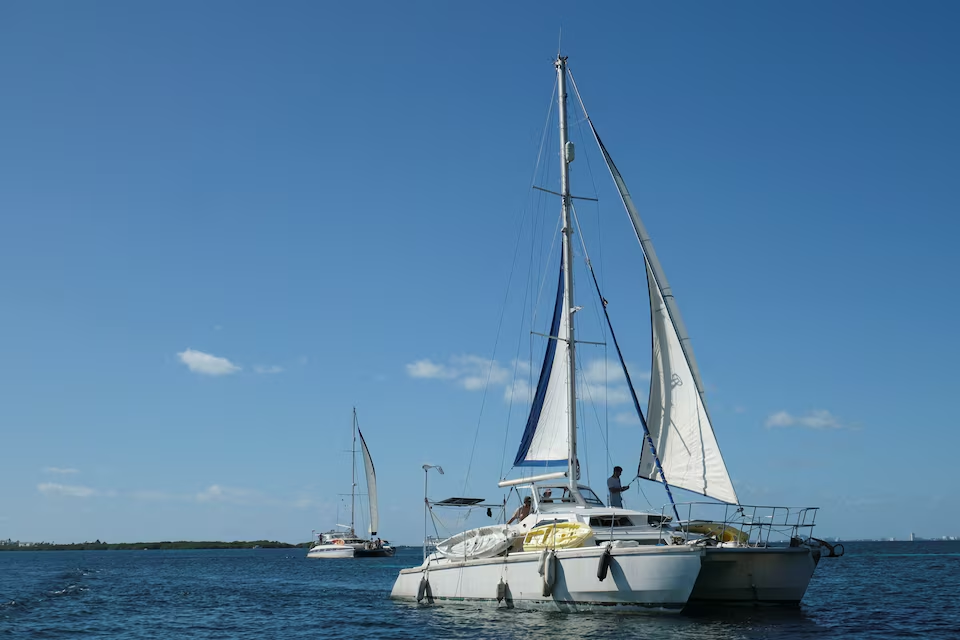
The last known contact with the boats was made on a recent Saturday. One vessel, a sailboat named *Hope*, was en route from St. Petersburg, Florida, to the Cuban port of Cárdenas, carrying essential food items. The other, a smaller craft, was reportedly traveling from Isla Mujeres, Mexico, toward Havana. When both failed to arrive at their destinations or make scheduled contact, alarm bells rang.
The U.S. Coast Guard swiftly initiated a massive search operation, covering a vast expanse of ocean spanning from the Florida Keys westward into the Gulf. Aircraft and cutters have been deployed, scouring the area for any sign of the vessels or their crews. Cuban authorities have also mobilized their own search and rescue assets, highlighting the rare cooperative effort prompted by the crisis.
The Dangerous Waters of Politics and Principle
This incident casts a stark light on the inherent risks of these direct-aid missions. Participants are often volunteers, motivated by a deep sense of solidarity but sometimes operating with limited resources.
Navigating Legal and Physical Peril
The journey itself is fraught with danger. The Gulf of Mexico is known for its sudden and severe weather changes, which can overwhelm smaller boats. Furthermore, the act of transporting goods from the U.S. to Cuba without special licenses violates the Treasury Department’s Office of Foreign Assets Control (OFAC) regulations. Those involved risk severe penalties, including hefty fines and asset seizures, creating an environment where missions may operate with a degree of secrecy that complicates safety protocols and emergency response.
- Weather Hazards: Unpredictable storms and high seas pose a constant threat to small craft.
- Legal Repercussions: Crews face potential prosecution for violating U.S. sanctions laws.
- Operational Secrecy: The need to avoid detection can limit access to standard maritime safety networks.
The Enduring Debate Over the Embargo
At the heart of these missions is the six-decade-old U.S. embargo on Cuba. Supporters of the policy argue it is a necessary tool to pressure the Cuban government on human rights and democratic reforms. However, critics, including the activists running these aid boats, contend that the embargo’s primary victims are the Cuban people, exacerbating shortages of food, medicine, and essential supplies.
This tragedy brings the human cost of this geopolitical stalemate into sharp relief. It underscores the desperation of those willing to brave significant personal risk to bridge the gap created by political division. The missing boats are a physical manifestation of the ongoing struggle between U.S. foreign policy and grassroots humanitarian impulses.
The Human Element: Families in Anguish
Behind the headlines and political analysis are families living in a nightmare of uncertainty. Relatives of the missing crew members are clinging to hope while grappling with a lack of information.
One family member expressed the collective anguish, stating that every hour without news feels like an eternity. They have appealed to both U.S. and Cuban authorities to exhaust every possible avenue in the search. This human drama reminds us that the story is not just about policy or principles, but about individuals who set out to help others and have now themselves become the subject of a desperate rescue mission.
International Response and Lingering Questions
The incident has resonated beyond the immediate region. Human rights organizations and groups advocating for normalized U.S.-Cuba relations have pointed to the disappearance as a direct consequence of a failed policy. They argue that if legal channels for humanitarian aid were more open and accessible, such perilous journeys would not be necessary.
Key questions remain unanswered as the search continues:
- What was the exact cause of the disappearance—mechanical failure, catastrophic weather, or another unforeseen event?
- How can the safety of future humanitarian missions be ensured within the current legal framework?
- Will this event prompt a reevaluation of aid channels to Cuba, or simply reinforce the dangers of the status quo?
The U.S. Coast Guard has emphasized that its paramount concern is saving lives, a mission that temporarily transcends political boundaries. However, once the immediate crisis concludes, the deeper, more intractable issues will remain.
A Crisis with No Easy Answers
The urgent search for the missing aid boats to Cuba is more than a maritime incident. It is a poignant and tragic symbol of the complex intersection of humanitarian aid, political conflict, and human courage. As search teams scan the horizon, they are looking for more than just boats; they are searching for answers in a sea of geopolitical tension.
The outcome of this mission will hopefully bring closure to the families involved. But regardless of the result, this event has already succeeded in highlighting the extraordinary lengths to which people will go to support one another across divides, and the profound risks that can arise when political barriers block the paths of compassion. The story of these missing boats is a sobering reminder that in the struggle to help, the helpers themselves sometimes need rescuing.

