
Could the U.S. Seize Iran’s Strategic Kharg Island? Analyzing a Provocative Suggestion
The geopolitical landscape in the Persian Gulf is perpetually tense, but recent remarks from former U.S. President Donald Trump have injected a new and highly provocative scenario into the discourse. During a rally, Trump suggested that the United States could, or perhaps should, take possession of Iran’s Kharg Island, citing unpaid debts. This statement, while not official policy, opens a complex discussion about international law, military strategy, and the volatile balance of power in one of the world’s most critical energy corridors.
What and Where is Kharg Island?
To understand the gravity of the suggestion, one must first appreciate Kharg Island’s significance. Located in the northern Persian Gulf, about 25 kilometers off the coast of Iran, it is not just any piece of land.
A Linchpin of Iranian Oil Exports
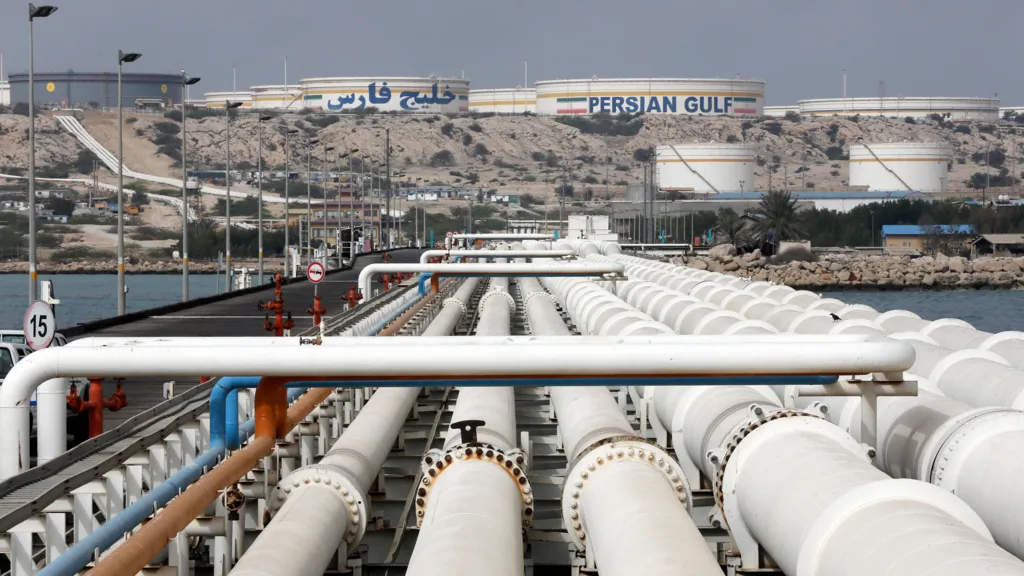
Kharg Island is the primary terminal for Iran’s crude oil exports. Home to extensive storage tanks, jetties, and loading facilities, it handles the vast majority of the country’s seaborne oil shipments. Its strategic value to Iran’s economy—and by extension, to global energy markets—cannot be overstated. Disrupting or controlling Kharg Island would equate to having a direct hand on Iran’s economic lifeline.
A Historical and Military Flashpoint
The island’s strategic importance has made it a target before. During the brutal Iran-Iraq War in the 1980s, it was repeatedly attacked by Iraqi forces in what became known as the “Tanker War,” severely damaging Iran’s export capability. Iran has since heavily militarized the island with anti-aircraft batteries, coastal defense missiles, and other fortifications, viewing it as a national security red line.
Deconstructing Trump’s “Debt” Rationale
Trump’s comments framed a potential seizure as compensation for what he claimed Iran owed the United States. This rationale is fraught with legal and diplomatic complications.
- The Legal Vacuum: International law provides no mechanism for one state to unilaterally seize the sovereign territory of another to settle alleged debts. Such an act would be a blatant violation of the United Nations Charter, which prohibits the use of force against the territorial integrity of any state.
- A Precedent for Chaos: Accepting such a justification would set a dangerous global precedent, potentially legitimizing land grabs by powerful nations against weaker ones under any number of self-justifying claims.
- The Nature of the “Debt”: The claim likely references historical financial disputes or reparations, but these are matters for international courts or diplomatic negotiation, not military appropriation.
The Strategic and Military Implications of Seizure
From a purely strategic standpoint, the idea of seizing Kharg Island is a military planner’s nightmare and would represent a dramatic escalation with unforeseeable consequences.
An Act of War
There is no ambiguity here. An armed takeover of Iranian territory would be universally interpreted as an act of war. It would not be a limited strike or a sanction; it would be a direct invasion and occupation of sovereign soil. Iran’s response would be immediate and severe, likely triggering a regional conflagration.
Regional War and Global Economic Shockwaves
Iran would undoubtedly retaliate across multiple domains. The immediate risk would be the closure of the Strait of Hormuz, the narrow chokepoint through which about 20% of the world’s oil passes. Iran’s asymmetric capabilities—including its network of proxy forces, its missile arsenal, and its ability to conduct asymmetric naval warfare—would be unleashed against U.S. interests, allies, and commercial shipping throughout the region.
The result would be a massive spike in global oil prices, severe disruption to the world economy, and the high potential for a direct U.S.-Iran military conflict that could draw in other regional powers.
The Human and Operational Cost
Even contemplating a successful invasion is daunting. Kharg Island is a fortified position. A military operation to take and hold it would involve intense naval and aerial bombardment, amphibious assaults, and brutal urban warfare, resulting in significant casualties on all sides. The long-term occupation of a hostile island in confined waters would be a persistent and bloody drain.
Diplomatic Fallout and International Reaction
The international community would almost certainly unite in condemnation of such an action. Key reactions would include:
- Unified Global Condemnation: Allies and adversaries alike would reject the violation of sovereignty, isolating the United States diplomatically.
- Undermining International Norms: It would shatter the post-World War II international order based on the inviolability of borders, damaging U.S. moral authority irreparably.
- Empowering Iranian Rhetoric: Tehran’s narrative of the U.S. as a predatory, imperialist power would receive its most powerful validation in decades, rallying domestic support and potentially drawing sympathy from other nations wary of Western intervention.
Conclusion: A Rhetorical Provocation vs. Strategic Reality
While the suggestion of seizing Kharg Island captures headlines, it resides firmly in the realm of rhetorical provocation rather than feasible policy. Its implementation is virtually unthinkable due to the catastrophic costs—legal, military, economic, and diplomatic.
However, the remark itself is significant. It highlights the continued use of maximum-pressure rhetoric toward Iran and underscores the persistent volatility of U.S.-Iran relations. It serves as a stark reminder of how quickly tensions in the Persian Gulf could escalate based on miscalculation or incendiary language.
The real-world focus for stability remains on diplomatic engagement, multilateral negotiations like the now-stalled JCPOA (Iran nuclear deal), and de-escalation protocols. The path to security in the Gulf does not run through the occupation of strategic islands, but through the difficult, patient work of dialogue and deterrence within the established frameworks of international law. The idea of taking Kharg Island is less a viable strategy and more a dangerous thought experiment illustrating the very real perils of conflict in this tinderbox region.

