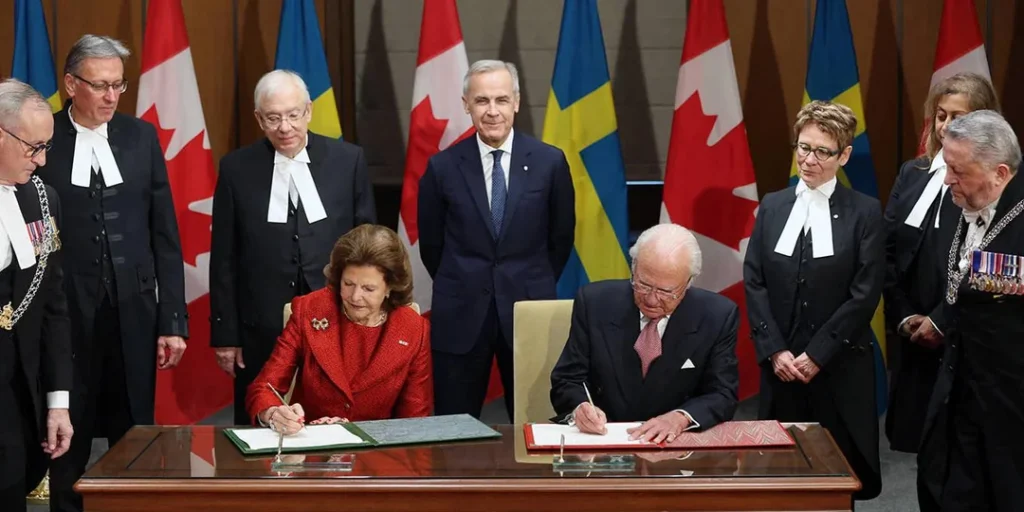
In a world increasingly defined by geopolitical fault lines and complex security challenges, nations are re-evaluating their alliances. The recent announcement of a new strategic partnership between Canada and Sweden marks a significant evolution in transatlantic cooperation. Far from a routine diplomatic agreement, this pact signals a profound alignment of two like-minded democracies determined to bolster collective defense, technological resilience, and the rules-based international order at a critical juncture.
This partnership is not born in a vacuum. It is a direct response to a deteriorating security environment, most notably Russia’s war in Ukraine and growing authoritarian assertiveness. Both Canada and Sweden, though separated by an ocean, share a deep commitment to democratic values, multilateralism, and a free and open Arctic. By formally linking their strategic capabilities, Ottawa and Stockholm are creating a force multiplier for stability in the Euro-Atlantic area and beyond.
Why This Partnership Matters Now: A Convergence of Threats and Values
The timing of this agreement is as crucial as its substance. For Sweden, its recent accession to NATO is the most dramatic shift in its security posture in over two centuries. The partnership with Canada acts as a deepening layer of integration within the Alliance, connecting Sweden’s formidable defense industry and Arctic expertise with a key North American ally. For Canada, the partnership solidifies a European foothold with a nation that understands the dual challenges of Arctic sovereignty and great-power competition.
Shared Strategic Imperatives
The core drivers of this partnership are clear and mutually reinforcing:
- The Arctic Frontier: Both nations are significant Arctic states with vast northern territories. They share concerns over militarization, environmental security, and the preservation of the region as a zone of low tension and cooperative governance.
- Support for Ukraine: Canada and Sweden have been staunch supporters of Ukraine, providing military aid, training, and humanitarian assistance. This partnership will streamline and potentially coordinate long-term support efforts.
- Countering Authoritarian Influence: The pact is a stand against efforts to undermine democratic institutions and international norms, emphasizing resilience against disinformation and cyber threats.
- Technological Sovereignty: In critical areas like telecommunications (5G/6G), artificial intelligence, and clean energy, collaboration reduces dependency on adversarial states and fosters innovation based on shared ethical principles.
Pillars of the New Canada-Sweden Strategic Partnership
The agreement moves beyond symbolic statements, establishing concrete areas for collaboration. These pillars are designed to be actionable and results-oriented.
1. Enhanced Defense and Security Cooperation
This is the bedrock of the partnership. Expect to see:
- Increased joint military exercises, particularly in the High North and Baltic Sea, enhancing interoperability for NATO missions.
- Deeper industrial collaboration, linking Sweden’s world-leading defense companies (like Saab and BAE Systems Hägglunds) with Canadian counterparts and the Canadian Armed Forces.
- Strengthened intelligence-sharing and joint work on hybrid threat analysis, covering cyberattacks and disinformation campaigns.
2. Securing Critical Technologies and Supply Chains
In an era of economic coercion, building secure innovation networks is paramount. The partnership focuses on:
- Collaborative research and development in dual-use technologies with both civilian and defense applications.
- Joint efforts to secure mineral supply chains critical for everything from electric vehicle batteries to advanced electronics, leveraging Canada’s resource base and Swedish processing expertise.
- Promoting secure telecommunications infrastructure, a clear nod to shared concerns over high-risk vendors.
3. Advancing Climate and Energy Security
Recognizing that climate change is a threat multiplier, the two nations will align efforts:
- Sharing best practices and technology for green transition in hard-to-abate sectors and northern communities.
- Collaborating on next-generation nuclear energy, including Small Modular Reactors (SMRs), as a source of clean, reliable power.
- Partnering on sustainable development in the Arctic, ensuring economic activity respects fragile ecosystems.
The Broader Implications: A Signal to Allies and Adversaries
The Canada-Sweden partnership is more than a bilateral deal; it sends powerful signals to the international community.
For NATO and the Euro-Atlantic community, it models how deeper, tailored cooperation between members can strengthen the Alliance’s overall fabric. It particularly bridges the North American and Nordic-Baltic spheres, creating a more cohesive northern flank.
For like-minded partners in the Indo-Pacific, such as Japan and South Korea, it demonstrates a pattern of democratic nations building resilient, value-based networks across regions to address global challenges.
Conversely, for nations that seek to disrupt the international order, this partnership is a clear message. It shows that democracies are organizing, investing, and innovating together to defend their interests and principles. It represents a move from reactive policy to proactive, long-term strategic coordination.
Challenges and the Path Forward
While the potential is significant, the partnership’s success will depend on sustained political will and resource commitment. Both governments must ensure bureaucratic follow-through, dedicated funding, and clear benchmarks for progress. They must also navigate the complexities of aligning defense procurement processes and industrial policies.
Furthermore, the partnership must maintain a strong public mandate. Leaders in Ottawa and Stockholm will need to communicate clearly to their citizens why this transatlantic link is vital for national security, economic opportunity, and the preservation of a world governed by rules, not force.
Conclusion: A Strategic Anchor for Uncertain Times
The new strategic partnership between Canada and Sweden is a testament to adaptive statecraft. It is a forward-looking alliance built on a foundation of shared values and shared threats. By combining Sweden’s strategic location and technological prowess with Canada’s global diplomatic reach and resource wealth, this pact creates a formidable node in the expanding network of democratic cooperation.
In the face of Arctic transformation, European war, and technological competition, this partnership provides both nations with a greater margin of security and influence. It is an investment not just in mutual defense, but in shaping a future where open societies can thrive. As the international landscape continues to shift, the Canada-Sweden partnership stands as a deliberate and powerful step toward a more secure and stable world order.