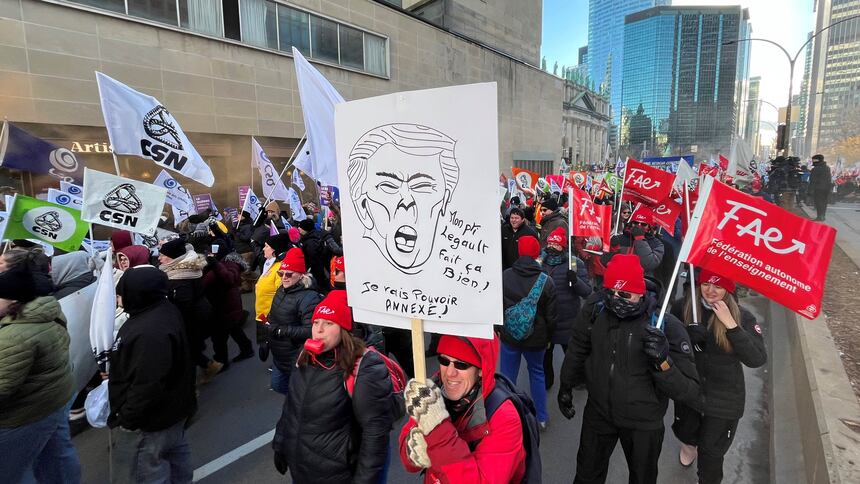
On a crisp spring day in Montreal, the streets surrounding the National Assembly echoed with a powerful message. Thousands of union members, educators, and public sector workers converged in a massive demonstration, their voices unified in opposition to two pieces of legislation from the Coalition Avenir Québec (CAQ) government. The rally, a vivid display of collective dissent, targeted Bill 3 and Bill 89—proposals that demonstrators argue undermine worker rights and the very fabric of public services in Quebec.
This mobilization marks a critical juncture in the relationship between the provincial government and its workforce, signaling deep-seated concerns over the future of labor negotiations and public education.
Understanding the Core of the Conflict: What Are Bill 3 and Bill 89?
To grasp the scale of the protest, one must first understand the legislation fueling the fire. The CAQ government, led by Premier François Legault, has framed these bills as necessary tools for efficiency and flexibility. However, the unions and their thousands of members tell a starkly different story.
Bill 3: The “Public Sector Pension Plan” Reform
While presented as a measure to ensure the sustainability of pension plans, Bill 3 has been labeled by unions as a direct attack on hard-earned retirement benefits. The proposed changes would affect a wide swath of public sector employees, including teachers, healthcare workers, and civil servants. Key points of contention include:
- Increased employee contributions to pension plans.
- A shift in the risk burden from the government to employees.
- Changes to indexing that could erode the value of pensions over time against inflation.
For workers who have planned their futures around existing agreements, the bill feels like a broken promise and a dangerous precedent.
Bill 89: The “Education Governance” Overhaul
Perhaps even more galvanizing for the protestors is Bill 89, an ambitious reform of the education sector. The government states its aim is to decentralize decision-making and bring it closer to students. Critics, however, see a blueprint for privatization and the erosion of union power. Major concerns include:
- The creation of “school service centers” with boards appointed by the government, reducing democratic oversight.
- Enhanced powers for the Education Minister to override collective agreements on working conditions.
- Provisions that could facilitate the transfer of public school assets to private entities.
Teachers and support staff argue this bill will destabilize the public education system, compromise quality, and strip them of their professional autonomy and negotiated rights.
A Sea of Flags and Chants: The Montreal Protest in Focus
The demonstration in Montreal was not a spontaneous outburst but a meticulously organized show of force. Buses poured in from across Quebec, filling the streets with a sea of union flags from the CSQ (Centrale des syndicats du Québec), FTQ (Fédération des travailleurs et travailleuses du Québec), CSN (Confédération des syndicats nationaux), and APTS (Alliance du personnel professionnel et technique de la santé et des services sociaux).
Chants of “Solidarité!” and “On lâchera pas!” (We won’t let go) reverberated off government buildings. Speakers at the rally, including union leaders and frontline workers, shared personal stories about the potential impact of the bills. A teacher spoke of the fear that Bill 89 would lead to larger class sizes and fewer resources. A nurse detailed how pension cuts after a demanding career felt like a betrayal.
The protest served a dual purpose: it was both a vent for frustration and a strategic display of power aimed directly at Premier Legault and his ministers, whose offices looked down upon the gathering crowds.
The Government’s Stance and the Union’s Ultimatum
The CAQ government has remained steadfast in its defense of the legislation. Premier Legault has argued that modernizing pension plans is essential for fiscal responsibility and that the education reforms are designed to improve student success by cutting bureaucracy. He has expressed a desire to negotiate but within the framework established by these bills.
The unions reject this framework entirely. They see the bills as “fait accompli” legislation—laws designed to impose conditions before any real negotiation begins. The rally in Montreal was a clear signal that they are prepared for a significant fight. The message from union leadership is unambiguous: withdraw or fundamentally amend Bills 3 and 89, or face escalating action. This could include rotating strikes, general strikes, and legal challenges, setting the stage for a prolonged and disruptive confrontation.
The Broader Implications: Beyond Wages and Pensions
While the immediate issues are pensions and working conditions, the conflict touches on deeper themes in Quebec society.
- The Role of Government: Is the state’s primary role that of a manager seeking efficiency, or a partner in upholding robust public services and social contracts?
- The Value of Public Service: The protest is a defense of the public sector model itself, arguing that weakening unions and privatizing elements of education will create a two-tier system that benefits the wealthy.
- Democratic Deficit: Critics accuse the CAQ of using its majority to push through sweeping changes without meaningful consultation from those most affected, the workers and professionals on the ground.
The opposition to these bills has created a rare unity across different public sector unions, suggesting that the government may have underestimated the resilience and solidarity of its workforce.
What Comes Next for Quebec?
The thousands of demonstrators in Montreal have thrown down the gauntlet. The path forward is fraught with potential for conflict. The government faces a choice: to dig in and risk a paralyzing social crisis, or to step back and engage in genuine, good-faith negotiation without preconditions.
The outcome of this standoff will resonate far beyond the specifics of pension percentages or school board structures. It will define the relationship between the state and its employees for a generation and shape the quality of Quebec’s cherished public institutions. The streets of Montreal have spoken; now, the ball is in the government’s court. One thing is certain: the unions have made it clear they are not backing down, and the spring of 2024 may be remembered as a pivotal season for labor and social rights in Quebec.