
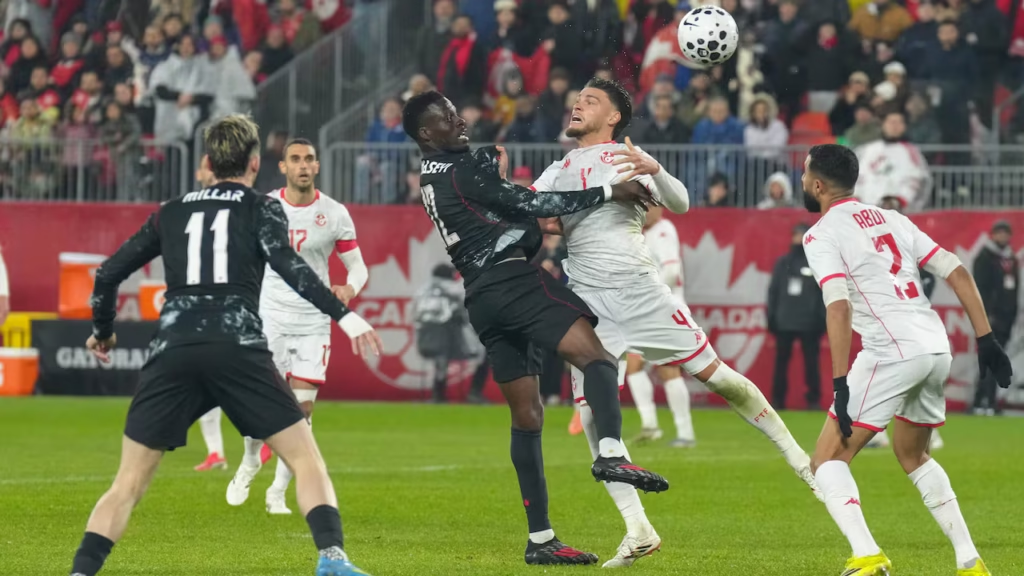
Canada’s Scoreless Draw With Tunisia Reveals a Worrying World Cup Problem
In the crisp air of Vienna, a final dress rehearsal before the grandest stage in soccer unfolded. Canada’s men’s national team, buoyant with historic qualification, faced Tunisia in their last friendly before the 2022 FIFA World Cup. The script called for a confident, goal-filled send-off. Instead, the final curtain fell on a 0-0 draw, leaving behind a familiar, nagging question that now looms larger than ever: can this electric Canadian team find the finishing touch when it matters most?
While the result itself is a mere footnote, the performance and its implications are anything but. For 90 minutes, Canada showcased the very engine that propelled them through CONCACAF—high energy, aggressive pressing, and spells of mesmerizing, fluid attack. Yet, for all their dominance in possession and territory, the net remained untouched. This wasn’t just a missed opportunity for a win; it was a stark revelation of the single biggest challenge standing between Canada and a successful World Cup campaign.
Dominance Without Reward: Dissecting the Tunisia Stalemate
On paper, and for long stretches on the pitch, Canada was the better side. Coach John Herdman’s men dictated the tempo, with the midfield trio of Stephen Eustáquio, Atiba Hutchinson, and Jonathan Osorio working tirelessly to win back possession and launch attacks. The tactical setup was clear: utilize the blistering pace and trickery of Alphonso Davies, deployed in a more advanced left-wing role, and the intelligent movement of Jonathan David through the middle.
Chances Created, But Not Converted
The chances came, as they often do for this Canadian side. Davies, a constant threat, cut inside and fired shots. David found pockets of space, only to be met by a last-ditch block or a timely intervention. Cyle Larin, introduced in the second half, added a physical presence. Yet, a combination of factors kept the scoreboard blank:
- A Resilient Tunisian Defense: The Eagles of Carthage, themselves World Cup-bound, were impeccably organized. They sat deep, remained compact, and frustrated Canada’s forwards, denying them the space to unleash their most deadly moves.
- Last-Moment Interventions: Time and again, a final pass was intercepted, a cross was cleared, or a shot was bravely blocked. This highlighted a need for sharper decision-making and quicker execution in the final third.
- The Missing Clinical Edge: Ultimately, when the golden opportunities did present themselves, the finish was either lacking or met by a good save. This “final product” has been a sporadic issue throughout qualification and has now resurfaced at a critical juncture.
The clean sheet, secured by Milan Borjan and a disciplined backline, is a positive takeaway. But in a game where victory was there for the taking, the inability to score overshadows the defensive solidity.
The Core Concern: A Persistent Problem at the Worst Time
This isn’t a new narrative for Canadian soccer fans. While the team has scored plenty of goals, there have been matches—especially against defensively disciplined sides—where possession and pressure haven’t translated into points. The draw with Tunisia acts as an amplifier for this concern. The World Cup is not CONCACAF. The margins are infinitesimally smaller, and the chances, when they come, are often singular.
Against world-class opponents, you may only get one clear look at goal. The difference between a historic result and a lesson learned is the ability to bury that chance. The reliance on momenta of individual brilliance from Davies or David is clear, but for a sustained tournament run, the scoring threat must be more diversified and ruthlessly efficient.
The Tactical Conundrum for John Herdman
The match also presented a tactical subplot for Head Coach John Herdman to ponder. Deploying Alphonso Davies higher up the pitch maximizes his offensive threat but potentially diminishes his impact in building play from a deeper, wing-back role. It’s a trade-off. Against Tunisia, the experiment showed both its upside (more direct danger) and its current limitation (a sometimes-isolated Jonathan David).
Herdman must now ask:
- Is the current system generating the *best* chances for our premier scorers, or just the *most* chances?
- Do we need to adjust our approach against low-block defenses we are sure to face?
- Can someone else—a Buchanan, a Hoilett, a Larin—step up as a consistent secondary scoring source to ease the burden?
The answers to these questions will define Canada’s World Cup journey.
Staring Down a Daunting World Cup Group
The context of this draw is what makes it so poignant. Canada’s Group F is arguably the tournament’s “group of death.” The path to the knockout stage runs through:
- Belgium (FIFA Ranking #2): A golden generation brimming with individual talent and tournament experience.
- Croatia (FIFA Ranking #12): The 2018 finalists, renowned for their technical mastery and relentless midfield.
- Morocco (FIFA Ranking #22): A fierce, athletic side with nothing to lose and everything to gain.
The blueprint for scoring against these titans is not obvious. Belgium and Croatia will likely enjoy more possession, forcing Canada into dangerous transitional attacks. Morocco, much like Tunisia, will be physically stout and difficult to break down. The lesson from Vienna is clear: Canada must evolve from a team that creates excitement to one that executes with cold, clinical precision. Wasted opportunities against these opponents will be punished, and likely, will signal an early exit.
Conclusion: The Final Preparations Are Mental
With the final whistle in Vienna, the tactical and physical preparation is essentially complete. The team now jets off to Qatar, its roster set, its strategies drawn. What remains is the final, most crucial preparation: the mental one.
The draw with Tunisia is not a cause for panic, but it is an essential wake-up call. It has exposed the one crack in the armor that needs immediate sealing. The energy, the teamwork, the defensive shape, and the unwavering belief are all present. These qualities have made Canada a beloved underdog story.
Now, to author a historic next chapter, they must find the last, missing piece. As the world watches, Canada’s quest in Qatar will hinge on its ability to look at that moment of truth—the split-second when the ball arrives at a striker’s foot in the box—and transform anxiety into assuredness, hope into celebration. The search for that elusive scoring touch is officially on the clock, with the eyes of a nation and the world watching.

