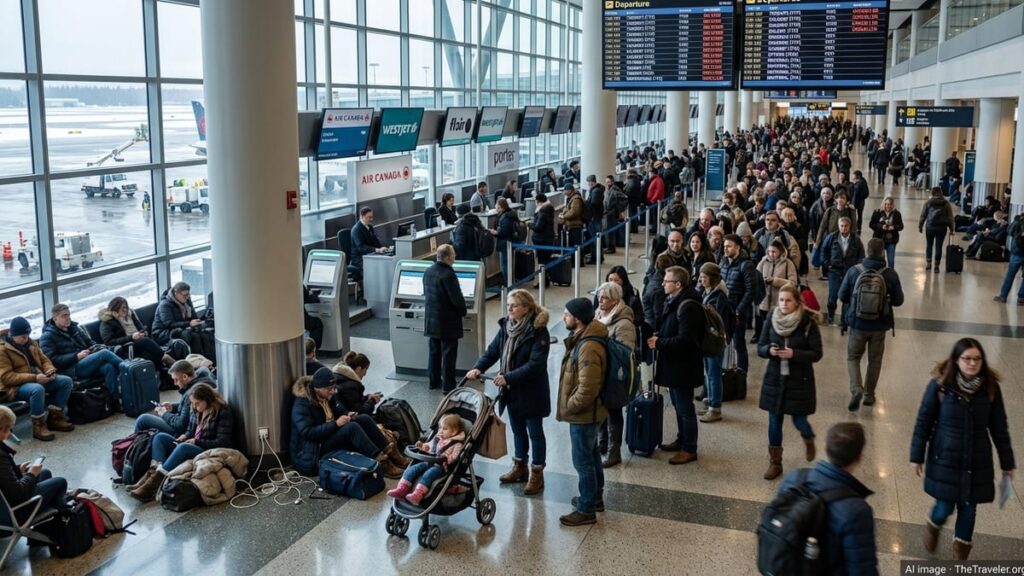
Massive Flight Cancellations and Delays Cause Canada Travel Chaos
A wave of severe travel disruption has swept across Canada, leaving thousands of passengers stranded and plans in tatters. A perfect storm of operational issues, staffing challenges, and severe weather collided over the past 48 hours, leading to a cascade of flight cancellations and extensive delays that crippled major airports from coast to coast. The chaos, impacting nearly every major Canadian airline, has underscored the fragility of the national air travel network during peak periods.
A Nationwide Disruption: Major Hubs Paralyzed
The travel nightmare was not confined to a single region. Reports from flight tracking services and airport authorities confirmed significant disruptions at virtually all of Canada’s key aviation gateways. The scale of the problem was immense, with data indicating over 80 flights cancelled and more than 800 delays within a critical 24-hour window. Passengers faced uncertainty and frustration as departure boards lit up with red “Cancelled” notices and yellow “Delayed” tags.
The airports hardest hit included:
- Toronto Pearson International (YYZ): Canada’s busiest airport became an epicenter of confusion, with lengthy queues at customer service desks and crowded terminals.
- Vancouver International (YVR): West coast travel was thrown into disarray, with numerous flights to eastern Canada and domestic routes affected.
- Montreal-Trudeau International (YUL): Both domestic and international itineraries, particularly transborder flights, experienced major setbacks.
- Calgary International (YYC): A critical hub for connecting traffic, especially for WestJet, saw its operations severely hampered.
- Ottawa (YOW) and Halifax (YHZ): Even smaller major hubs felt the ripple effects of the nationwide meltdown.
The Airlines in the Eye of the Storm
No major carrier was spared from the operational crisis. The disruptions painted a picture of an industry-wide struggle to maintain stability.
WestJet’s Operational Hurdles
WestJet faced one of the most significant challenges, grappling with a combination of aircraft availability issues and crew scheduling constraints. The airline, which operates a vast network from its Calgary base, was forced to proactively cancel dozens of flights to prevent a more severe downstream domino effect. Social media was flooded with images and stories from passengers waiting for hours for rebooking options.
Air Canada’s Network Strain
As the country’s largest carrier, Air Canada’s extensive schedule meant its delays and cancellations affected the highest number of travelers. Issues were reported across its main hubs in Toronto, Vancouver, and Montreal, impacting both short-haul domestic hops and crucial long-haul international connections.
Porter Airlines and Regional Carriers
Even nimble regional operators like Porter Airlines were not immune. While its focus is on the Eastern Canada triangle (Toronto, Ottawa, Montreal), the interconnected nature of the aviation ecosystem meant that delays from larger partners and general airport congestion caused significant knock-on effects for its typically reliable schedule.
Unpacking the Causes: Why Did This Happen?
Such widespread chaos is rarely the result of a single factor. Industry analysts point to a convergence of several critical pressures that pushed the system beyond its breaking point.
- Severe Weather Events: Localized thunderstorms in Ontario and Quebec, coupled with unexpected fog on the coasts, created an initial wave of delays. In aviation, a delay in one region can quickly propagate across the entire network.
- Ongoing Staffing Shortages: The air travel industry continues to face a well-documented shortage of key personnel, including pilots, flight attendants, and ground handling crews. This reduced resilience means there are fewer spare resources to recover from disruptions.
- Aircraft and Technical Issues: A higher-than-usual number of unscheduled maintenance events reportedly took several aircraft out of service simultaneously, tightening capacity across multiple airlines.
- Systemic Summer Pressure: The travel system is operating at near-peak capacity during the summer months. With planes flying full, re-accommodating passengers from cancelled flights becomes a logistical nightmare, often taking days to resolve.
Passenger Fallout: Stranded, Stressed, and Seeking Solutions
For the traveling public, the disruption translated into real hardship. Scenes at baggage claim areas piled high with unclaimed luggage became common. Families missed long-awaited vacations, business travelers missed critical meetings, and individuals faced the stressful and costly scramble for alternatives.
Passenger rights advocates were quick to remind travelers of their entitlements under Canada’s Air Passenger Protection Regulations (APPR). For cancellations and delays within the airline’s control, passengers may be entitled to compensation ranging from $125 to $1000, depending on the length of delay and size of airline. However, the process of claiming this compensation is often lengthy, and airlines frequently cite “safety-related” or “weather-related” causes to avoid payouts.
The immediate advice for affected passengers is to:
- Document everything, including new boarding passes, receipts for meals and accommodations, and communication with the airline.
- Understand that if a cancellation is due to weather, the airline’s obligation is primarily rebooking or a refund, not necessarily compensation.
- Be persistent but polite when dealing with overwhelmed airline staff, who are also facing immense pressure.
Looking Ahead: Is This the New Normal?
This latest episode of travel chaos raises serious questions about the stability of Canada’s air transport system. While weather is an unpredictable variable, the industry’s apparent inability to absorb these shocks points to deeper structural issues. The chronic staffing shortages and tight operational margins leave little buffer for when things go wrong.
In the short term, travelers are advised to build in significant buffer time for connections, consider travel insurance for critical trips, and monitor their flight status closely in the 24 hours before departure. Booking the first flight of the day can also reduce the risk of being impacted by cumulative delays.
For the long term, pressure is mounting on airlines, airports, and regulators to collaborate on solutions that build a more resilient network. This may involve strategic investments in workforce development, improved data-sharing for operational coordination, and a review of scheduling practices to ensure they are achievable with available resources.
For now, the memories of crowded terminals and cancelled plans serve as a stark reminder that smooth summer travel in Canada cannot be taken for granted. As the industry works to rebuild its capacity, passengers must brace for the possibility that such widespread disruptions, while not daily occurrences, may remain a recurring feature of the travel landscape for some time to come.