
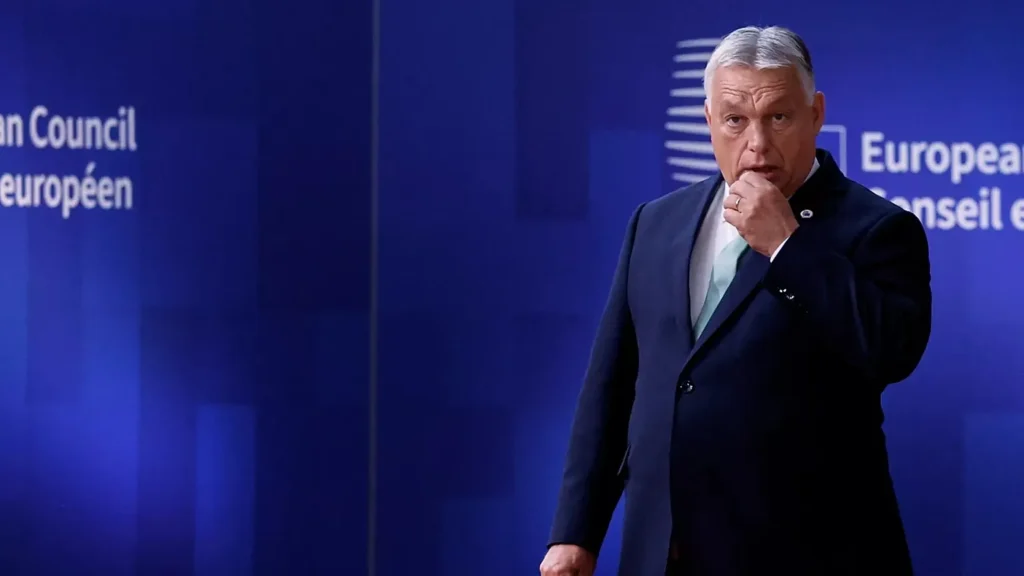
Hungary’s Viktor Orbán Faces Potential EU Defeat and Backlash
For over a decade, Hungarian Prime Minister Viktor Orbán has been the European Union’s most persistent and provocative internal critic. From challenging migration policies to locking horns with Brussels over the rule of law, his brand of “illiberal democracy” has consistently tested the bloc’s unity and patience. However, a significant shift is now underway. A growing coalition within the EU is moving to isolate and counter Orbán’s influence, signaling that his long-running strategy of confrontation may finally be meeting its match. This moment represents a critical juncture, not just for Hungary, but for the future direction of the European project itself.
The Architect of Illiberal Democracy: Orbán’s Contentious Reign
Since returning to power in 2010, Viktor Orbán has systematically reshaped Hungary. His Fidesz party has wielded a parliamentary supermajority to rewrite the constitution, overhaul the judiciary, and bring much of the media under government-friendly ownership. This domestic transformation has been paired with a foreign policy that frequently positions Hungary against the EU mainstream.
Key pillars of Orbán’s contentious EU stance have included:
- Rule of Law Clashes: The European Commission has repeatedly launched infringement procedures against Hungary, citing erosion of judicial independence, academic freedom, and LGBTQ+ rights. Billions in EU funds have been frozen as a result.
- Migration and Sovereignty: Orbán became the face of anti-immigration sentiment within the EU, famously erecting border fences and refusing mandatory migrant quotas. He frames these battles as a defense of national sovereignty against Brussels’ overreach.
- Pro-Russia Positioning: Even after the full-scale invasion of Ukraine, Orbán has maintained closer ties with Moscow than any other EU leader, opposing sanctions packages and blocking aid to Kyiv, arguing for peace talks on Russia’s terms.
This combative approach has earned Orbán admirers among far-right factions across Europe but has left him increasingly isolated within the formal structures of the EU.
The Tipping Point: Ukraine and the Rise of a Determined Opposition
The war in Ukraine has acted as a catalyst, transforming simmering frustration with Orbán into decisive action. His obstruction of vital financial and military aid for Ukraine is viewed by many member states as a direct threat to European security and the bloc’s strategic autonomy. This has galvanized a coalition that is no longer willing to operate by consensus when it comes to Budapest.
Concrete Mechanisms of Pressure
The EU is now deploying tools designed to curb Orbán’s disruptive power:
- The Article 7 Procedure: While a slow-moving mechanism, the “nuclear option” of suspending Hungary’s voting rights remains on the table, backed by a growing chorus of voices in the European Parliament.
- Financial Leverage: The EU’s decision to freeze approximately €20 billion in cohesion and pandemic recovery funds over rule-of-law concerns is hitting Hungary’s economy hard, creating domestic pressure.
- Isolation in the Council: There is a marked shift towards moving decisions on Ukraine aid from unanimous voting to qualified majority, effectively sidelining Hungarian vetoes. The famous “Orbán veto” is being strategically circumvented.
This multi-pronged strategy marks a departure from the past, where Orbán often managed to secure concessions through last-minute negotiations.
Potential Consequences: What Defeat Would Mean for Orbán and Hungary
A successful containment of Orbán by the EU would have profound implications. Domestically, it could weaken his unshakeable political narrative of defending Hungary from a bullying Brussels, especially if economic pressures mount. The withheld EU funds are critical for infrastructure and development; prolonged freezing could stir public discontent.
For the European Union, effectively managing the “Orbán problem” is a test of its resilience. Success would demonstrate that the bloc can uphold its fundamental values and conduct a coherent foreign policy even when challenged from within. It would reinforce the principle that membership entails responsibilities, not just benefits.
However, the risks are also significant:
- Pushing Orbán further into a corner could reinforce his populist rhetoric and lead Hungary to deepen its ties with non-EU allies like Russia and China.
- It could embolden other Eurosceptic forces, framing the conflict as proof of the EU’s authoritarian tendencies against sovereign nations.
- A permanently alienated Hungary within the EU could create a dysfunctional, two-tier Union.
The Broader Battle for Europe’s Soul
The standoff with Viktor Orbán is more than a political dispute; it is a clash of visions for Europe. On one side is the model of liberal democracy, multilateral cooperation, and a rules-based order championed by the EU’s core institutions. On the other is Orbán’s vision of illiberal democracy, where traditional national identity, majoritarian rule, and strongman leadership take precedence over pluralism and checks and balances.
This battle is being watched closely by other leaders with Eurosceptic leanings, such as Slovakia’s Robert Fico or the rising far-right in France and Germany. The outcome will send a powerful signal about which direction has momentum. If the EU succeeds in neutralizing Orbán’s disruptive capacity without fracturing, it will strengthen the liberal model. If Orbán outmaneuvers the bloc or forces a permanent schism, it will be a victory for illiberalism.
Conclusion: An Inflection Point for the EU
Viktor Orbán has long played the role of the EU’s spoiler with remarkable skill, often extracting concessions and dominating headlines. Yet, the geopolitical earthquake caused by the war in Ukraine has changed the calculus. The EU’s patience has worn thin, and its resolve has hardened. The tools for countering his influence are now being applied with unprecedented coordination and determination.
While it is too early to declare a definitive defeat for the Hungarian leader, the tide is clearly turning. The once-lonely voice of criticism has grown into a resolute chorus demanding accountability. The coming months will reveal whether Orbán can adapt to this new, more hostile European arena or if his era of unchecked provocation is finally reaching its limit. The result will define not only Hungary’s path but will also answer a fundamental question about the European Union: Can it defend its core principles from within, while still holding itself together? The great Orbán experiment is reaching its most critical phase.

