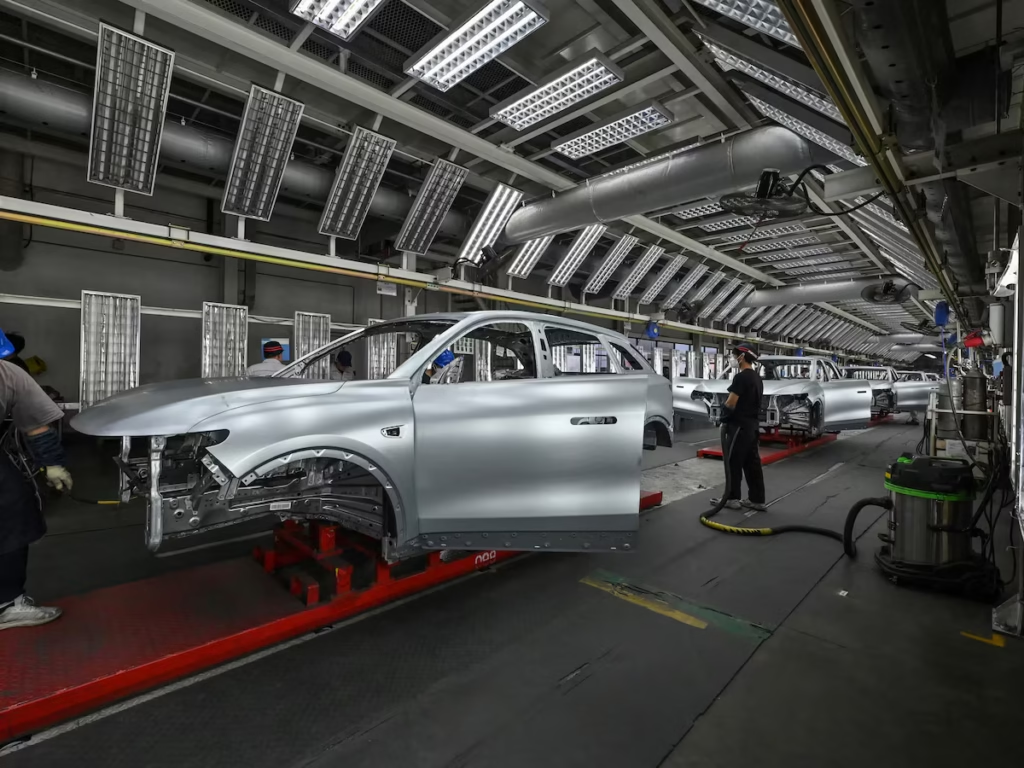
Ontario Rejects Chinese EV Production at Stellantis Brampton Plant
In a move that underscores the high-stakes geopolitics of the global electric vehicle race, the Ontario government has firmly rejected a proposal that would have seen a Chinese automaker produce electric vehicles at the Stellantis plant in Brampton. This decision, confirmed by multiple sources, throws a wrench into the future of the sprawling facility and highlights the delicate balancing act between securing economic investment and protecting domestic industrial interests in a fiercely competitive sector.
The proposal, which involved Chinese state-owned automaker Dongfeng Motor, aimed to repurpose the Brampton Assembly Plant for electric vehicle manufacturing. With Stellantis set to end production of its Chrysler 300, Dodge Charger, and Dodge Challenger at the site in the coming years, the plant’s future has been a major concern for workers and the regional economy. The Dongfeng plan presented a potential path to maintain operations and jobs, but it ultimately collided with broader political and economic currents.
The Geopolitical Fault Lines in the EV Transition
Ontario’s rejection is not merely a business decision; it is a reflection of the intense geopolitical tensions surrounding electric vehicles and battery supply chains. The North American auto industry, buoyed by massive U.S. and Canadian government incentives through acts like the U.S. Inflation Reduction Act (IRA), is actively working to build a domestic EV ecosystem less reliant on China, which currently dominates the processing of critical minerals and battery component manufacturing.
Allowing a Chinese state-owned enterprise to establish production foothold in the heart of Ontario’s automotive corridor was seen as antithetical to this strategic goal. Officials expressed concerns about:
- Security & Supply Chain Reliance: Deepening dependence on Chinese automotive technology and manufacturing processes.
- Intellectual Property: Risks associated with the transfer of advanced manufacturing knowledge and IP.
- Market Competition: The potential for vehicles produced with significant state support to undercut North American automakers on price.
- Alignment with Federal Strategy: The proposal was at odds with federal and provincial efforts to attract investments from established Western automakers and battery giants to create a “mine-to-mobility” supply chain.
Brampton’s Uncertain Future and the Worker Dilemma
The decision, while strategically coherent, leaves the fate of the Brampton plant and its thousands of workers in limbo. Stellantis has committed to retooling its Windsor and Brampton plants for electrification, but the specific plans and timelines for Brampton remain unclear. The Dongfeng proposal, however controversial, represented a concrete, if contentious, plan to keep the lights on.
For union leaders and plant workers, the primary concern is job security. The transition to electric vehicles is inherently disruptive, often requiring fewer assembly workers due to the simpler mechanics of EVs. The loss of a potential tenant, regardless of origin, is a blow to hopes for a seamless transition.
“Our focus has always been on securing the future of that plant with good, unionized jobs,” said Unifor National President Lana Payne in a statement reacting to the news. “While we understand the broader context, the workers in Brampton need a clear, viable plan for their future.”
A Contrast with Ford’s Deal in Oakville
The Ontario government’s stance on Brampton stands in sharp contrast to its handling of Ford’s Oakville Assembly Plant. There, the province and federal government provided hundreds of millions in incentives to secure a massive $1.8 billion retooling project to produce electric vehicles. That deal was hailed as a landmark victory in securing Ontario’s EV future.
The differing approaches reveal a clear hierarchy in the province’s automotive strategy:
- Priority on Incumbents: Major, long-established automakers like Ford and Stellantis (for its Windsor EV battery plant and retooling promises) are key partners deserving of support.
- Guarded Gates for New Entrants: New market entrants, particularly those from geopolitical rivals, face much higher scrutiny and are likely to be turned away if they threaten the strategic domestic vision.
- Protection of the Industrial Base: The goal is to evolve the existing automotive ecosystem, not replace it with foreign-owned production that may have weaker ties to the local supply chain and workforce.
The Bigger Picture: North America’s Fortified EV Strategy
Ontario’s move is a microcosm of a continent-wide strategy. The United States, through the IRA, has created powerful financial incentives that are explicitly designed to onshore EV supply chains and marginalize Chinese automakers and suppliers. Canada, and Ontario as its industrial heartland, are aligning closely with this approach to ensure they remain competitive and integrated within the North American market.
This creates a paradox: while the world needs more affordable EVs to accelerate the adoption of clean transportation, Western policies are deliberately walling off their markets from the world’s most prolific and cost-competitive producer. The fear is that Chinese EVs, backed by decades of state investment and scale, could overwhelm nascent domestic industries before they find their footing.
What Comes Next for the Brampton Plant?
With the Chinese proposal off the table, the pressure is now squarely on Stellantis and governments to deliver an alternative future for the Brampton facility. Several paths are possible:
- Accelerated Stellantis Retooling: The company could fast-track its own EV platform for the plant, though this depends on global product allocation decisions made in boardrooms overseas.
- Attracting a Different OEM: The search for another automotive manufacturer to occupy the plant could begin, though any candidate would likely need to align with the North American strategic vision.
- Component Manufacturing Hub: The site could be repurposed for the production of critical EV components, such as battery modules, power electronics, or software, feeding into the broader regional supply chain.
- Worst-Case Scenario: Without a viable new mandate, the plant faces the prospect of closure, with production shifted to other Stellantis facilities in the U.S. or Mexico.
The rejection of Chinese production at Brampton is a definitive statement of industrial policy. It signals that Ontario is willing to make difficult, short-term sacrifices to control the long-term destiny of its auto sector. The province is betting that by keeping the door closed to certain players, it can build a more sovereign, secure, and ultimately sustainable electric vehicle industry. The success of this bet, however, will be measured in the coming years by the activity—or silence—within the walls of the Brampton Assembly Plant. The future of one of Canada’s last major auto assembly hubs now hangs in the balance, awaiting a new vision that satisfies both economic security and geopolitical strategy.