
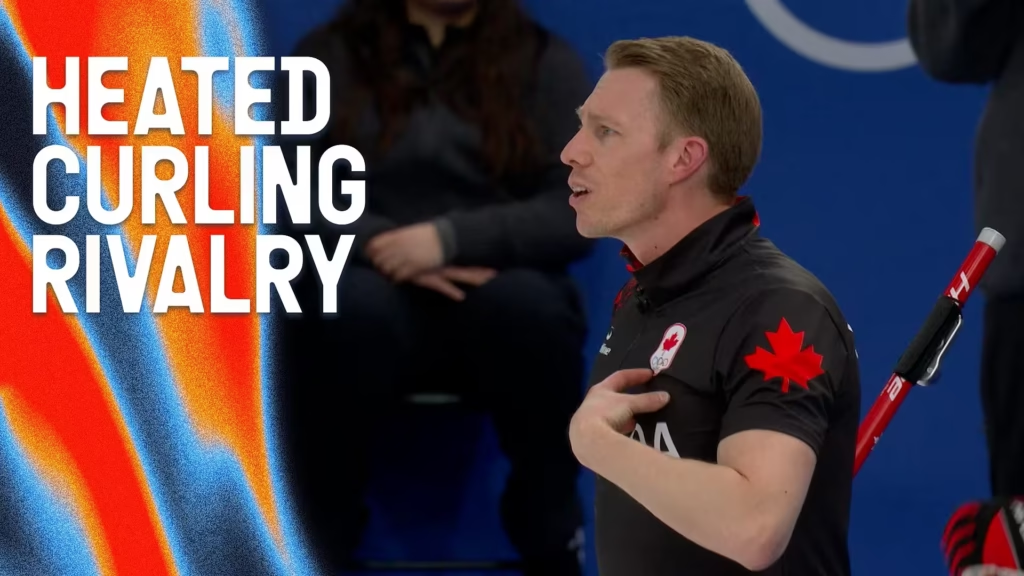
Canada-Sweden Curling Feud Deepens Over Controversial Double-Touch Rule
The genteel world of elite curling is once again embroiled in a high-stakes dispute, proving that the “Roaring Game” can sometimes live up to its name. The latest flashpoint? A deeply contentious call involving the obscure “double-touch” rule that has reignited a simmering rivalry between curling powerhouses Canada and Sweden, leaving players, officials, and fans in a heated debate over technology, interpretation, and the spirit of the sport.
The Incident That Lit the Fuse
The controversy erupted during a critical round-robin match at a recent Grand Slam of Curling event. Team Canada’s skip, Brad Gushue, was in the hack preparing for a routine-looking hit. Unbeknownst to him and virtually everyone watching live, his stone made the faintest, most imperceptible second contact with his broom on the ice after his release—a so-called double-touch violation.
It was an infraction invisible to the naked eye. However, Swedish skip Niklas Edin, alerted by his team, requested an official review. Using ultra-high-definition, super-slow-motion camera technology, officials were able to zoom in and detect a microscopic vibration in the broom bristles, confirming the second contact. The stone was promptly removed from play, a pivotal blow to Canada’s end strategy.
While the call was technically correct based on the video evidence, it was the *aftermath* that poured fuel on the fire.
Sweden’s Instructional Video: A Strategic Masterstroke or a Provocation?
In the days following the event, the Swedish Curling Association took the unprecedented step of publishing a video on social media. Featuring Swedish player Oskar Eriksson, the video was a clear, slow-motion demonstration of what a double-touch looks like, explicitly framed as an “educational” tool.
For many in Team Canada’s camp and their legion of supporters, this was not a goodwill gesture. It was perceived as a public gloating and a tactical taunt.
The Core of the Canadian Argument
- The Spirit of the Rule: Critics argue the double-touch rule was intended to prevent *intentional* manipulation of a stone in motion, not to penalize a skips for an involuntary, microscopic touch that has zero physical effect on the stone’s trajectory or speed.
- The Technology Gap: There is a growing concern that the sport is becoming reliant on forensic-level technology that creates an inequity. Not all events have the same camera capabilities, and not all teams may feel empowered or have the swiftness to request reviews for such minuscule incidents.
- The “Gotcha” Mentality: The Swedish video was seen as amplifying a “gotcha” culture, shifting focus from skillful shot-making to fault-finding via video replay. As Brad Gushue later stated, it feels like the sport is “looking for infractions” rather than letting players decide the game on the ice.
Sweden’s Defense: Clarity and Education
From the Swedish perspective, their actions are about consistency and rule clarity.
- A Rule is a Rule: They contend that an infraction, no matter how small, is still an infraction. Ignoring it because it’s tiny sets a dangerous precedent for subjective enforcement.
- Demystifying the Call: The public video, they insist, was meant to educate a confused fanbase and even fellow players about a rarely seen rule. In their view, transparency benefits the sport.
- Historical Context: It’s worth noting that Niklas Edin’s team has been on the *losing* end of several high-profile, video-reviewed calls in major finals against Canadian teams. This action is framed by some as Sweden pushing for the strict, letter-of-the-law enforcement they believe should be universal.
A Deeper Rivalry and a Philosophical Split
This is not an isolated spat. The Canada-Sweden curling rivalry is the modern era’s most intense, featuring iconic clashes in Olympic and World Championship finals. This incident has exposed a fundamental philosophical split in how the sport should be governed in the digital age.
On one side is a more traditional, purist view: the game should be played and judged by human senses on the ice, with technology reserved for clear and obvious mistakes. The other side advocates for a technocratic approach: if we have the tools to ensure 100% accuracy, we should use them, leaving no room for interpretation or error.
The Broader Implications for the “Roaring Game”
This controversy forces the World Curling Federation and event organizers to confront difficult questions:
- Should the rules be modified to account for intent or the measurable effect of an infraction?
- Do we need to standardize video review technology and protocols at all elite events to ensure fairness?
- Where do we draw the line between beneficial accuracy and a paralysis of over-analysis?
The danger many see is that an over-reliance on micromanaging every physical interaction could slow the game’s pace to a crawl and alienate fans who admire its flow and strategic beauty.
Moving Forward: Can the Ice Be Mended?
As the curling world heads toward the next Olympic cycle, this feud leaves an undeniable chill. While handshakes remain at the end of games, the underlying tension is palpable. Resolving this issue requires more than just a single committee ruling.
It demands a comprehensive conversation about the soul of modern curling. Is it a game of millimeters judged by electron microscopes, or is it a human contest where the spirit of fair play and visible skill takes precedence? The clash between Canada’s emotional appeal to tradition and Sweden’s cold insistence on precision is a drama that will play out in boardrooms and on pebbled ice for years to come.
One thing is certain: the next time these two curling giants meet on the sheet, every release, every brush stroke, and every potential touch will be watched not just by thousands of fans, but under the invisible, unforgiving eye of technology waiting to be called upon. The feud over the double-touch has irrevocably changed the game, proving that in today’s curling, the smallest touch can create the biggest waves.

