
Ukrainian Strikes on Russian Oil Infrastructure Escalate War
The grinding war of attrition between Ukraine and Russia has entered a dangerous new phase, characterized by deep strategic strikes far behind conventional front lines. As Russian forces continue their brutal bombardment of Ukrainian cities, Kyiv has responded with a calculated campaign targeting the very lifeblood of the Russian war machine: its oil infrastructure. This shift marks a significant escalation, moving the conflict into a realm of economic warfare with global repercussions.
A Night of Contrasting Strikes: Odesa’s Grief vs. Russian Refineries in Flames
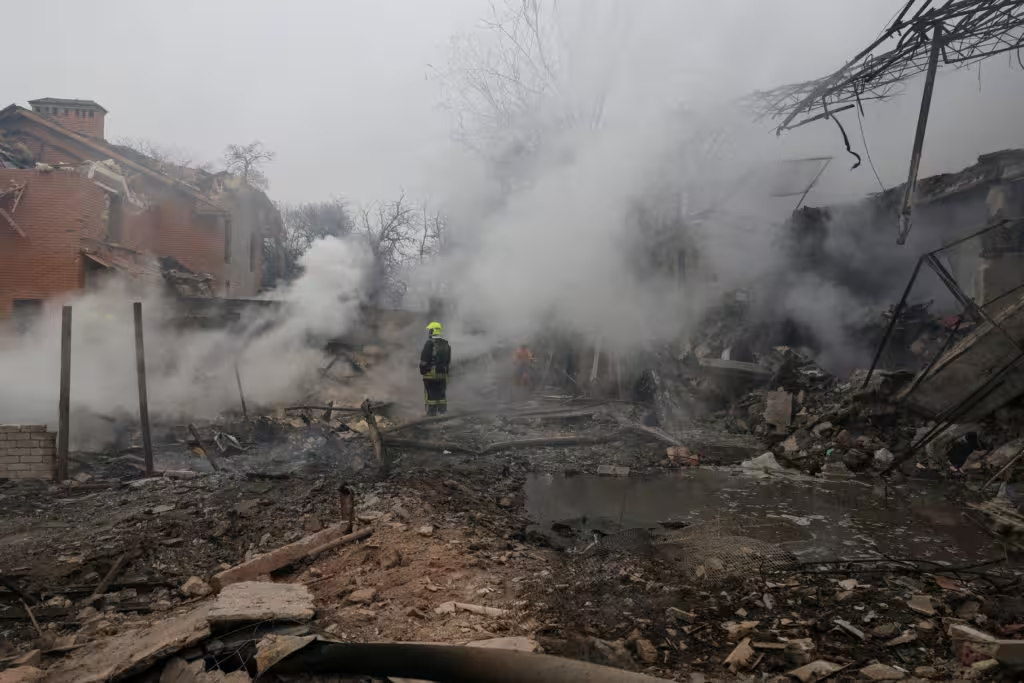
The stark duality of the modern battlefield was on full display in early April 2026. In the southern Ukrainian port city of Odesa, a Russian missile strike shattered the night, killing at least three people and wounding several more. The attack, which damaged residential buildings, is a grim reminder of the daily terror faced by Ukrainian civilians and the Kremlin’s continued strategy of intimidation against population centers.
Simultaneously, hundreds of miles away, Ukraine executed a different kind of mission. In a coordinated effort, Ukrainian drones reportedly targeted oil refineries and storage facilities deep inside Russian territory. While official details from Moscow are scarce, reports from regional governors and open-source intelligence suggest successful strikes on energy infrastructure. This represents a clear and deliberate expansion of Ukraine’s tactical playbook.
Ukraine’s Strategic Pivot: Why Target Russian Oil?
Ukraine’s focus on Russian energy assets is not random; it is a meticulously calculated strategy designed to achieve several critical wartime objectives:
- Crippling Military Logistics: Fuel is the fundamental requirement for modern mechanized warfare. By disrupting refinery output and storage, Ukraine aims to create fuel shortages that directly impact Russian tank columns, aircraft, and supply trucks on the front lines.
- Striking at the Economic Heart: Oil and gas exports are the primary source of revenue funding Putin’s war effort. Damaging this infrastructure hits the Kremlin’s coffers, reducing the financial resources available for missiles, tanks, and soldier salaries.
- Imposing Asymmetric Costs: Ukraine cannot match Russia in sheer volume of artillery or missiles. However, by using relatively inexpensive drones to destroy high-value economic targets, Kyiv makes the war profoundly costly for Moscow in a way that resonates with both the Russian elite and the public.
- Global Market Disruption: These strikes have contributed to fluctuations in global oil prices, demonstrating how a regional conflict can have worldwide economic effects and potentially increasing international pressure for a resolution.
The Russian Response: Escalation and Accusations
The Kremlin has reacted with predictable fury to these attacks on what it considers sovereign territory far from the conflict zone. Russian officials have condemned the strikes as “terrorist” acts and have vowed severe retaliation. This rhetoric is often used to justify further escalation against Ukrainian civilian infrastructure.
Furthermore, Moscow has attempted to frame Ukraine’s actions as being directed by its Western allies. They accuse the United States and NATO of providing targeting intelligence, a claim consistently denied by Western officials who maintain they do not enable or endorse strikes inside Russia. This narrative allows the Kremlin to portray the conflict as a direct proxy war with the West.
The Human Toll: Odesa’s Enduring Suffering
Amidst the discussion of strategy and economics, the human cost remains devastatingly real. The attack on Odesa is not an isolated incident but part of a sustained campaign against Ukraine’s Black Sea coast. The city, a historic jewel and crucial export hub, has endured relentless missile and drone attacks since the war’s beginning.
Each strike, like the one in April 2026, leaves behind more than just rubble:
- Families torn apart by the loss of loved ones.
- A population living under constant threat, with sleep interrupted by air raid sirens.
- Critical infrastructure, including power grids and port facilities, degraded or destroyed.
This terror tactics are intended to break Ukrainian morale, but they have largely hardened the resolve of the people, transforming cities like Odesa into symbols of resilient defiance.
The Global Ripple Effect: Energy, Politics, and the Path Ahead
Ukraine’s drone campaign against Russian refineries has sent shockwaves beyond the battlefield. The immediate effect has been a tangible reduction in Russia’s refinery capacity, estimated to be significantly impacted. This has several knock-on effects:
- Domestic Fuel Prices: Russia has been forced to impose temporary bans on gasoline exports to stabilize its own domestic market and prevent price spikes, an unpopular move that could stir discontent.
- International Oil Markets: While global prices have seen volatility, the larger impact is on Russian oil product exports. The loss of refining capability forces Russia to export more crude oil instead of more valuable refined products like diesel and jet fuel, cutting into its revenue.
- Diplomatic Tightrope: The strategy places Ukraine’s allies in a delicate position. While supporting Ukraine’s right to self-defense, Western nations are cautious about strikes that could trigger a broader escalation or destabilize global energy markets. The balancing act between empowering Ukraine and managing conflict expansion is more complex than ever.
A Protracted War of Endurance
The shift to targeting energy infrastructure signals that both sides are preparing for a long, grinding war of economic and military endurance. Russia is betting on its larger population and industrial base to outlast Ukraine. Ukraine, in turn, is leveraging innovation and strategic targeting to erode Russia’s economic ability to sustain the fight.
This new phase moves beyond the muddy trenches of the Donbas. It is a war fought with satellites and drones, in global commodity markets and in the financial corridors that fund armies. The attacks on Odesa and the Russian oil depots are two sides of the same brutal coin—one aimed at breaking spirit through terror, the other at breaking capacity through economic attrition.
As the conflict drags into another year, the world watches to see which strategy will prove more decisive: Russia’s blunt-force trauma against cities, or Ukraine’s precise scalpel aimed at the arteries of the Russian war economy. The outcome will define not only the future of Ukraine but the security architecture of Europe for generations to come.

