
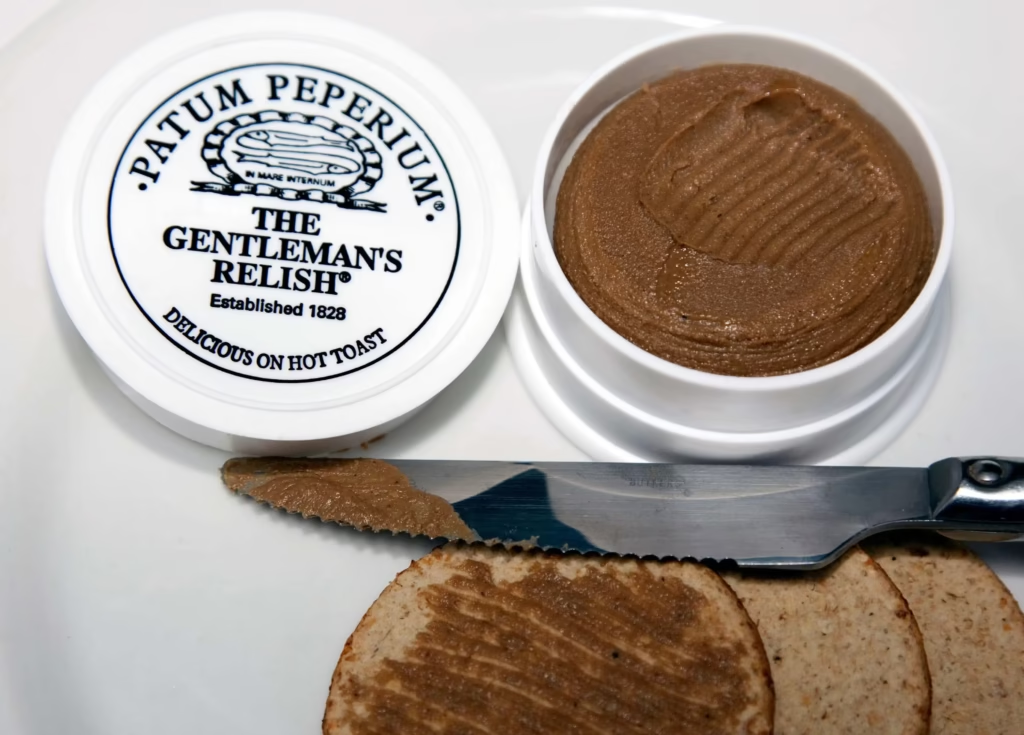
The End of Gentleman’s Relish: A Beloved Anchovy Spread Discontinued
For over two centuries, a small, dark pot of pungent paste has been a quiet fixture in British pantries and on the tables of fine dining establishments. Gentleman’s Relish, the iconic anchovy spread created by John Osborn in 1828, has officially been discontinued. The news, confirmed by its maker, Elsenham Quality Foods, marks the end of an era for a condiment that transcended its ingredients to become a symbol of a certain kind of British taste—both literally and culturally.
The spread, also known as Patum Peperium, will no longer be produced, leaving fans and chefs at renowned institutions like London’s Rules restaurant, its last major culinary bastion, scrambling for their final pots and mourning the loss of a unique culinary artifact.
A Storied History in a Pot
To understand the weight of this discontinuation, one must appreciate the history sealed within each jar. Gentleman’s Relish was never a product of mass-market appeal. Its recipe, a closely guarded secret blend of anchovies, butter, herbs, and spices, remained unchanged for generations. It was the very definition of a niche product, beloved by those who acquired its distinctive taste.
Its name alone speaks volumes about its original market: Victorian gentlemen. It was positioned as a savory, sophisticated spread for toast or biscuits, often enjoyed as a late-night snack or a quick, flavorful bite. It represented a bygone era of clubland London and country house breakfasts. Over time, its appeal broadened, but it always retained an air of tradition and peculiarity. It wasn’t for everyone, but for its devotees, it was irreplaceable.
The Final Holdout: Rules Restaurant
Perhaps the most poignant symbol of Gentleman’s Relish’s modern place was its enduring presence at Rules, established in 1798 and London’s oldest restaurant. For decades, the restaurant served the relish as a complimentary starter with bread and butter, a tiny, potent welcome to a world of historic British cuisine. It was a ritual. The arrival of that small white pot, with its distinctive gold and red label, was as much a part of the Rules experience as the wood-paneled walls and the martinis.
The restaurant’s management has expressed profound disappointment at the decision. For them, and for regular patrons, it wasn’t just a condiment; it was a tangible link to culinary continuity, a thread connecting 21st-century diners to the tastes of the 19th century. Its removal from the table leaves a gap that no modern alternative can truly fill.
Why Discontinue a Classic?
The reasons behind Elsenham Quality Foods’ decision are a familiar refrain in the world of heritage food production. While not explicitly detailed, the factors likely include:
- Declining and Niche Demand: The market for a strong, anchovy-based paste is inherently limited. Consumer tastes have shifted, and maintaining production for a small, albeit loyal, customer base often becomes economically unviable.
- Rising Production Costs: The cost of ingredients, energy, glass, and labels has soared across the food industry. For a specialist product with a low volume, these increases can render the business unsustainable.
- Complexity of a Secret Recipe: Maintaining a centuries-old secret process with specific ingredients can become a logistical and costly challenge, especially if it relies on particular suppliers or manual methods.
- Corporate Strategy Shifts: Parent companies often streamline portfolios, focusing on higher-volume, higher-growth products, leaving slow-moving classics vulnerable.
The result is a common tragedy in the food world: a product that is beloved but not bought in sufficient quantity to secure its future.
More Than a Spread: The Cultural Void
The discontinuation of Gentleman’s Relish is about more than losing a topping for toast. It represents the erosion of a specific kind of gastronomic heritage. These quirky, traditional products are the punctuation marks in the story of a nation’s food. They speak to different palates, different times, and social customs that have faded.
Its disappearance follows a worrying trend of vanishing British food icons. Like the loss of a regional biscuit or a particular brand of chutney, each extinction homogenizes our culinary landscape. Food becomes more globalized, more uniform, and the delightful, sometimes challenging, eccentricities that define a culture’s eating habits are smoothed away.
For food historians and enthusiasts, Gentleman’s Relish was a living artifact. Its taste was a direct, unfiltered connection to the past. The strong, salty, umami-rich flavor was a shock to modern palates often accustomed to milder, sweeter profiles. In that shock was its value—it refused to compromise or modernize.
Can It Be Saved? The Hope of a Last-Minute Reprieve
In the wake of the announcement, there is a faint hope. The story of a discontinued product sparking public outcry and a subsequent revival is not unheard of. The question is whether the passion of its adherents can translate into a viable commercial proposition.
Could a smaller, artisanal producer acquire the rights and the secret recipe? Could a crowdfunding campaign demonstrate enough committed demand to justify a small-batch production run? For now, Elsenham has stated it is focusing on its “core business,” but the door may not be completely closed if the right offer or initiative emerges.
A Final Toast with Buttered Soldiers
For now, those with a remaining pot in their cupboard will treat it like liquid gold, using it sparingly and reverently. The final ritual spread on a warm crumpet or a piece of crisp toast will be a bittersweet moment.
The end of Gentleman’s Relish reminds us that food culture is not static. It evolves, and sometimes, it loses pieces of itself along the way. This particular piece was small, potent, and proud. It was an unapologetically bold flavor from a different age, and its absence will be felt on the shelves of specialty food shops and, most keenly, on the starched tablecloths of Rules restaurant.
Its legacy is a lesson in appreciating the unique and the traditional while we still have it. So, if you are fortunate enough to find one last jar in a forgotten corner of a deli, buy it. Savor it. And remember that you are tasting not just anchovies and spice, but a thick slice of British history that, after nearly 200 years, has finally reached its end.

