
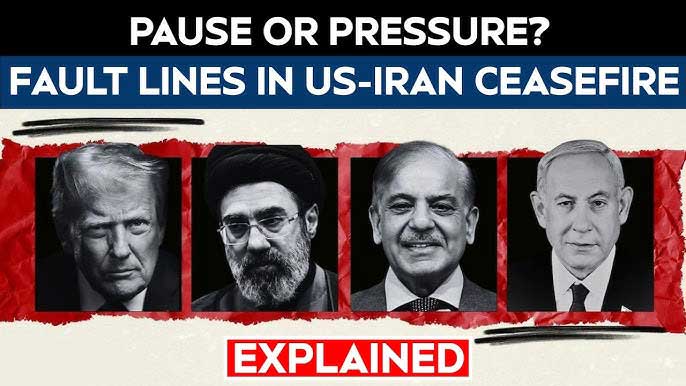
The Fragile U.S.-Iran Truce Shatters: What’s Next for the Middle East?
The tense, unwritten ceasefire between the United States and Iran has officially reached its breaking point. After months of simmering hostility and calibrated provocations, the delicate understanding that prevented all-out conflict has collapsed, plunging an already volatile region into a new phase of profound uncertainty. This isn’t just a diplomatic setback; it is a flashing red alert for global stability, with immediate consequences for energy markets, international shipping, and the security architecture of the entire Middle East.
For policymakers and observers, the collapse confirms a grim reality: the underlying fissures in the U.S.-Iran relationship are too deep for temporary de-escalation to heal. We are now witnessing the dangerous repercussions of a failed diplomatic gambit, where every military movement and rhetorical threat carries the potential to ignite a wider war.
From Tense Pause to Open Confrontation: The Ceasefire That Never Was
To understand the gravity of the current moment, one must first recognize that the so-called “ceasefire” was always a misnomer. It was never a signed agreement but rather a tacit, fragile understanding born from mutual exhaustion and a shared, if unspoken, desire to avoid a direct military clash. This pause was characterized by:
- A reduction in targeted military strikes between proxy forces and U.S. assets.
- An informal slowdown in provocative naval maneuvers in the Persian Gulf.
- A temporary stall in the escalation of nuclear program advancements.
However, this calm was perpetually thin. The fundamental drivers of the conflict—geopolitical rivalry, crippling economic sanctions, and a decades-long shadow war fought through proxies—remained fully intact. The recent escalations were not an aberration but the inevitable result of this unsustainable stalemate. Incidents accumulated, trust eroded, and the narrow channel for communication dried up, leading to the decisive rupture we see today.
Global Shockwaves: The Far-Reaching Impact of a Broken Truce
The fallout from this collapse extends far beyond Washington and Tehran. The entire international community must brace for the ripple effects, which are already beginning to manifest.
Energy Markets and Economic Security
The Strait of Hormuz, a chokepoint for roughly one-fifth of the world’s oil, immediately becomes a potential flashpoint. Any significant threat to shipping traffic or infrastructure in the region triggers immediate volatility in global oil prices. For economies still recovering from pandemic and inflation shocks, this poses a direct threat to growth and stability. Consumers worldwide may feel the pinch at the gas pump, while nations dependent on Gulf energy imports are forced to re-evaluate their strategic reserves and supply chains.
Regional Alliances and Proxy Battlegrounds
The Middle East is a chessboard where the U.S.-Iran rivalry is played out. The ceasefire’s end signals a green light for intensified proxy conflicts, destabilizing entire nations.
- Yemen: The Houthi movement, backed by Iran, may escalate attacks, complicating a fragile peace process and threatening regional shipping.
- Syria and Iraq: Attacks on remaining U.S. forces by Iran-aligned militias are likely to increase, testing American resolve and potentially drawing responses that could pull host nations deeper into the conflict.
- Israel and the Gulf States: Traditional U.S. allies, particularly Israel and Saudi Arabia, may feel compelled to take more unilateral action against perceived Iranian threats, raising the risk of a multi-front regional war.
International Diplomacy and Nuclear Proliferation Fears
All diplomatic efforts, most critically the negotiations to revive the Joint Comprehensive Plan of Action (JCPOA), or Iran nuclear deal, are now in severe jeopardy. The collapse of the ceasefire signals a return to a “maximum pressure” environment, making meaningful dialogue nearly impossible. The urgent question of Iran’s nuclear program becomes even more acute, as Tehran may respond to increased pressure by accelerating uranium enrichment, bringing it closer to weapons-grade capability and potentially triggering a preventive strike.
Navigating the Brink: Is There a Path Back from the Edge?
The situation is dire, but not yet irredeemable. Avoiding a catastrophic regional war requires urgent, sober, and pragmatic statecraft from all involved parties. The following steps are critical:
Immediate Crisis Communication: Even in the absence of formal relations, establishing a backchannel for communication to manage incidents and prevent miscalculation is non-negotiable. A single misinterpreted radar blip or drone movement could spark a conflict no one wants.
De-escalation of Rhetoric: Inflammatory public statements from leaders on all sides only serve to box in policymakers and fuel nationalist fervor. A conscious tamping down of rhetoric is a necessary first step to create space for diplomacy.
International Mediation: Neutral parties or traditional mediators like Oman, Qatar, or European powers must intensify efforts to broker a new, more sustainable understanding. The global community has a vested interest in preventing this crisis from exploding and should leverage all collective diplomatic weight.
Addressing Core Grievances: A lasting solution is impossible without addressing the root causes. This means serious discussions on the future of sanctions, security guarantees for Gulf states, and the contours of Iran’s regional role. These are monumental challenges, but they are the only foundation for a permanent peace.
A Stark Reminder and a Critical Crossroads
The shattered U.S.-Iran ceasefire is a stark reminder that in the Middle East, unresolved tensions do not simply fade away; they fester and eventually erupt. The region stands at a critical crossroads. One path leads to a renewed cycle of violence with unimaginable humanitarian and economic costs. The other requires a herculean, collective diplomatic effort to step back from the brink.
The coming days and weeks will be decisive. The world is watching, hoping that cooler heads will recognize the immense cost of war and choose the difficult but necessary path of dialogue. The stability of the Middle East and the security of global markets depend on it.

