
Ukraine’s Secret Role in Middle Eastern Drone Defense Revealed
In a stunning revelation that blurs the lines of modern warfare, Ukrainian President Volodymyr Zelenskyy has disclosed that Ukrainian forces have been actively intercepting Iranian-made attack drones over the airspace of Middle Eastern nations. This admission, emerging from the relentless defense against Russia’s full-scale invasion, uncovers a previously unacknowledged layer of international military cooperation and positions Ukraine as an unexpected, yet critical, player in regional security.
The Unveiling of a Covert Defense Network
During a recent address, President Zelenskyy stated that Ukrainian personnel have successfully shot down Shahed-type drones “in the skies of other countries, specifically in the Middle East, during the war started by Iran.” While he did not name the specific partner nations, the implication is profound. It suggests that Ukrainian operators—likely special forces or intelligence units—have been deployed to assist allies like Jordan, Saudi Arabia, or potentially others, in countering the very same drone threat that rains down on Ukrainian cities nightly.
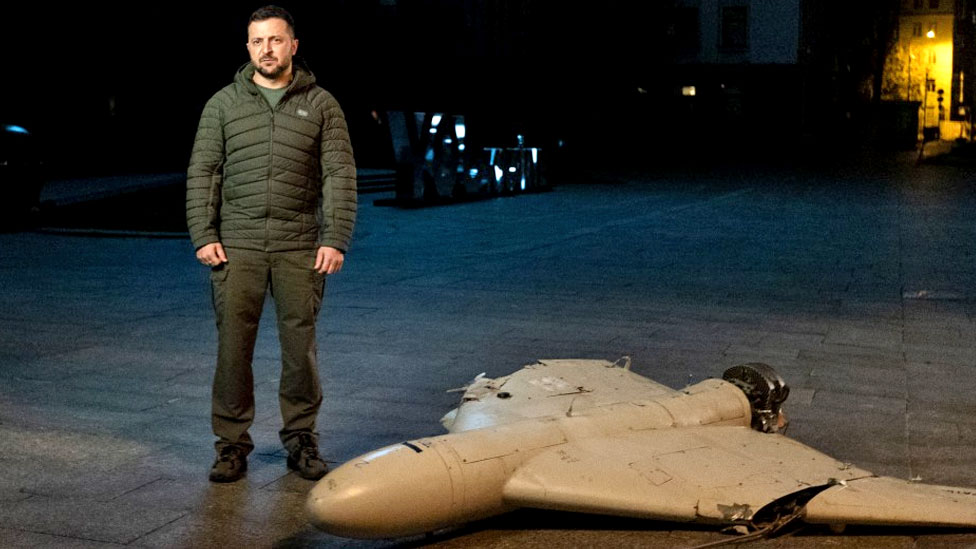
This collaboration is rooted in a shared adversary: Iran’s drone proliferation. For Ukraine, the Shahed-136 “kamikaze” drones are a symbol of Russian terror, used to target civilian infrastructure and exhaust air defenses. For Middle Eastern partners, variants of these drones have been a persistent threat, launched by Iranian-backed militias against critical oil facilities, international shipping, and urban centers.
A Symbiosis of Hard-Earned Expertise
Ukraine’s value in this partnership cannot be overstated. Through nearly two years of constant bombardment, Ukraine has become the world’s foremost laboratory for countering Iranian drone technology. This expertise is now being exported in real-time.
What Ukraine Brings to the Table:
- Unmatched Tactical Experience: Ukrainian forces have developed, through brutal necessity, highly effective and adaptive tactics for identifying, tracking, and neutralizing Shahed drones using a mix of sophisticated Western systems and innovative, low-cost solutions.
- Intimate Technical Knowledge: Through the analysis of countless downed drones, Ukrainian intelligence has an unparalleled understanding of the Shahed’s guidance systems, weaknesses, launch protocols, and potential electronic warfare vulnerabilities.
- Proven Interoperability: Ukraine has successfully integrated a patchwork of air defense systems from multiple NATO countries, providing a unique model for partners using similar equipment.
The Strategic Calculus: Why This Partnership Makes Sense
This revelation is not merely about technical assistance; it’s a strategic masterstroke with multiple layers of benefit for all involved.
For Middle Eastern Partners: Nations threatened by Iranian drones gain immediate, battle-tested support without having to commit their own forces to a long, costly learning curve. It enhances their sovereign defense capabilities and sends a strong deterrent message to Tehran about the consequences of its proxy warfare.
For Ukraine: The benefits are multifaceted. First, it represents a form of tangible, international reciprocity for the military aid Kyiv receives. Second, it strengthens diplomatic ties with influential global players, building a broader coalition of support. Third, and perhaps most crucially, it allows Ukrainian forces to gather intelligence and hone tactics against the drone threat in different geographical and operational contexts, making their home defense even more robust.
For the West: This cooperation serves Western strategic interests by bolstering the defense of key allies against Iranian aggression, all while further degrading the perceived effectiveness of Iranian military exports—a core source of revenue and influence for the regime.
Broader Implications for Global Security
Zelenskyy’s disclosure signals a significant shift in how modern defense alliances can operate. It highlights the rise of “peer-to-peer” security partnerships, where a nation under active siege becomes a leading exporter of defensive knowledge. This challenges traditional hierarchies in international military aid.
Furthermore, it exposes the global nature of the drone threat. The war in Ukraine has proven that cheap, mass-produced drones can level the playing field against superior military forces. By jointly developing countermeasures, Ukraine and its Middle Eastern partners are writing the first chapters of the playbook on how to defend against this new era of asymmetric, automated warfare.
The cooperation also raises complex questions about escalation and attribution. While Ukraine is already at war with Russia (the primary user of the drones), its direct action against Iranian-made assets in a third country brings it into a more direct, albeit shadowy, confrontation with Iran itself.
Looking Ahead: The Future of Drone Warfare and Defense
The synergy between Ukraine and Middle Eastern nations is likely just the beginning. We can anticipate several developments:
- Deepened Intelligence Sharing: A formalized network for sharing real-time data on drone launch sites, flight patterns, and new variants.
- Joint Development Programs: Collaborative projects to create next-generation, cost-effective counter-drone systems, from jamming guns to laser defenses.
- Training Exchanges: Establishment of dedicated training facilities where Ukrainian veterans can systematically train allied forces in integrated air defense tactics.
President Zelenskyy’s revelation has pulled back the curtain on a hidden front in global security. It shows that Ukraine is not just a recipient of aid in a desperate fight for survival, but an emerging security exporter and a pivotal node in a new, agile network of democracies and partners confronting shared authoritarian threats. In defending its own skies, Ukraine has unexpectedly become a guardian for others, rewriting the rules of engagement in the drone age and proving that resilience forged in fire can become a shield for allies far beyond its own borders.

