Trump Warns Iran War Has No Backup Plan Amid Pakistan Talks
The geopolitical landscape of the Middle East remains on a knife’s edge, as former U.S. President Donald Trump issued a stark warning about the potential for conflict with Iran. His comments, emphasizing a lack of contingency planning, coincide with a significant diplomatic mission: the arrival of Iran’s Parliament Speaker, Mohammad Bagher Ghalibaf, in Pakistan for high-level talks. This juxtaposition of bellicose rhetoric and diplomatic outreach underscores the complex and volatile state of international relations in the region.
A Stark Warning from the Campaign Trail
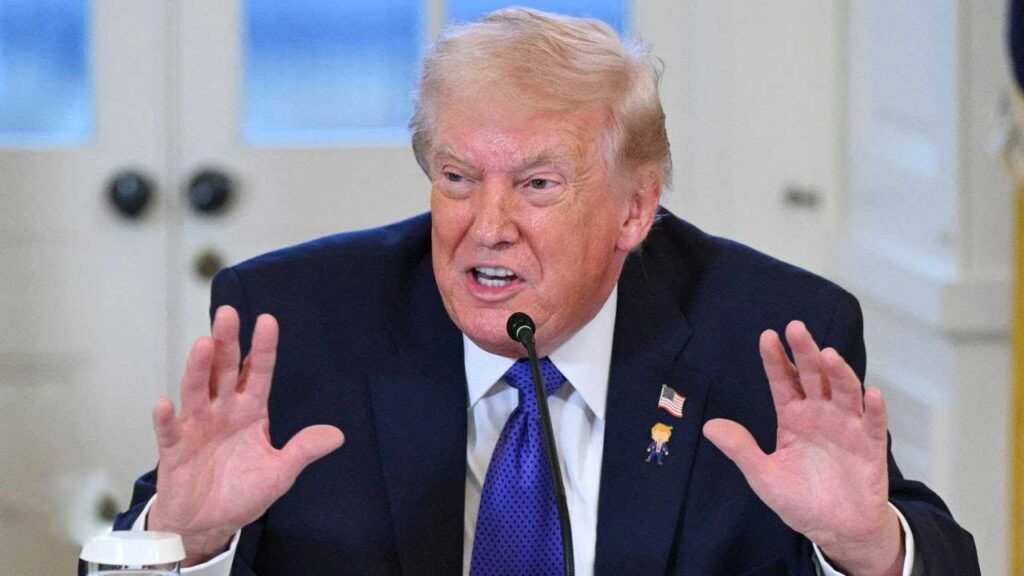
Speaking at a campaign event, Donald Trump, the presumptive Republican nominee for the 2024 presidential election, turned his focus to foreign policy and the ongoing tensions with Iran. He framed the current administration’s approach as weak, suggesting it has emboldened Tehran. His most alarming statement was a claim that the United States has “no backup plan” should a full-scale war with Iran erupt.
This warning, whether viewed as political posturing or a genuine critique of defense preparedness, sends a chilling message. It implies that any escalation beyond controlled strikes or proxy conflicts could plunge the region into a chaotic and unpredictable war with catastrophic humanitarian and economic consequences. Analysts suggest this rhetoric is aimed at drawing a sharp contrast with President Biden’s policy, which has focused on deterrence and de-escalation while pursuing difficult nuclear diplomacy.
Ghalibaf’s Strategic Visit to Pakistan
As Trump’s words reverberated, Iranian Parliament Speaker Mohammad Bagher Ghalibaf landed in Islamabad, marking a critical moment for Iran-Pakistan relations. Ghalibaf, a influential figure in Iranian politics and a former commander of the Islamic Revolutionary Guard Corps (IRGC), is leading a high-ranking delegation. The three-day visit is packed with meetings, including talks with Pakistan’s President, Prime Minister, and Chairman of the Senate.
The agenda is multifaceted and strategically vital for both nations:
- Border Security: A primary focus is the simmering issue of cross-border militancy. Both countries have accused each other of harboring militant groups that launch attacks across their shared, porous frontier. This visit seeks to mend fences after a brief exchange of military strikes in January and establish a more robust cooperative security mechanism.
- Economic Cooperation: Discussions are centered on enhancing trade and finally operationalizing key joint projects, most notably the long-delayed Iran-Pakistan gas pipeline. U.S. sanctions on Iran have severely hampered this venture, but both nations are exploring ways to circumvent these hurdles to address Pakistan’s acute energy crisis.
- Regional Diplomacy: The talks provide a platform to align positions on broader regional issues, including the situation in Afghanistan and the ongoing war in Gaza. For Iran, strengthening ties with Pakistan is a way to break its diplomatic isolation and build a united front against common challenges.
Decoding the Timing and the Message
The timing of Ghalibaf’s visit, against the backdrop of Trump’s warnings, is unlikely to be coincidental. It serves several strategic purposes for Tehran. First, it projects an image of diplomatic engagement and regional leadership, countering the Western narrative of Iran as a rogue state. By deepening ties with a neighbor like Pakistan, Iran works to solidify its own axis of influence.
Second, it is a direct signal to the United States and its allies. Demonstrating strong partnerships in the region shows that Iran is not without options and support, potentially raising the stakes for any military confrontation. Pakistan, which maintains a delicate balancing act between its historical ties with the Gulf Arab states/U.S. and its relationship with Iran, finds itself in a particularly sensitive position. Hosting Ghalibaf is a clear assertion of its independent foreign policy.
The Looming Shadow of Escalation
The underlying context for all these maneuvers remains the ever-present threat of a wider regional war. The conflict has been characterized by:
- A shadow war of drone strikes, cyberattacks, and proxy engagements.
- Direct, albeit measured, military exchanges between Israel and Iran.
- Severe economic pressure on Iran through stringent sanctions.
- An increasingly fragile and stalled nuclear deal (JCPOA) framework.
Trump’s “no backup plan” remark highlights the terrifying reality that, despite efforts at managed conflict, the potential for a miscalculation or an unexpected escalation is high. Military experts warn that an open war would have devastating effects, disrupting global oil supplies, triggering a massive humanitarian disaster, and potentially drawing in multiple state and non-state actors across the region.
Pathways Forward: Diplomacy or Disaster?
The current moment presents two divergent paths. The first is a continuation and intensification of the current cycle of threats and counter-threats, which incrementally increases the risk of a catastrophic breakdown. The second, more difficult path, is a return to serious, multi-track diplomacy.
Iran’s engagement with Pakistan is a small but significant piece of this diplomatic puzzle. If it leads to tangible improvements in border security and economic ties, it could reduce one flashpoint and build a modicum of trust. However, the core issues—Iran’s nuclear program, its regional activities, and the lifting of sanctions—require direct and sustained dialogue between Tehran and Washington, a prospect that seems distant in the current political climate.
As the world watches, the interplay between American electoral politics, Iranian diplomatic maneuvering, and Pakistan’s mediating role will be crucial. The hope is that channels of communication, like those being utilized in Islamabad, remain open and active. For the alternative—a war with “no backup plan”—is a scenario too grave for the region and the world to contemplate. The coming months will test whether diplomacy can prevail over the drumbeats of conflict.