Vice President Vance Concludes Inconclusive Pakistan-Iran Talks
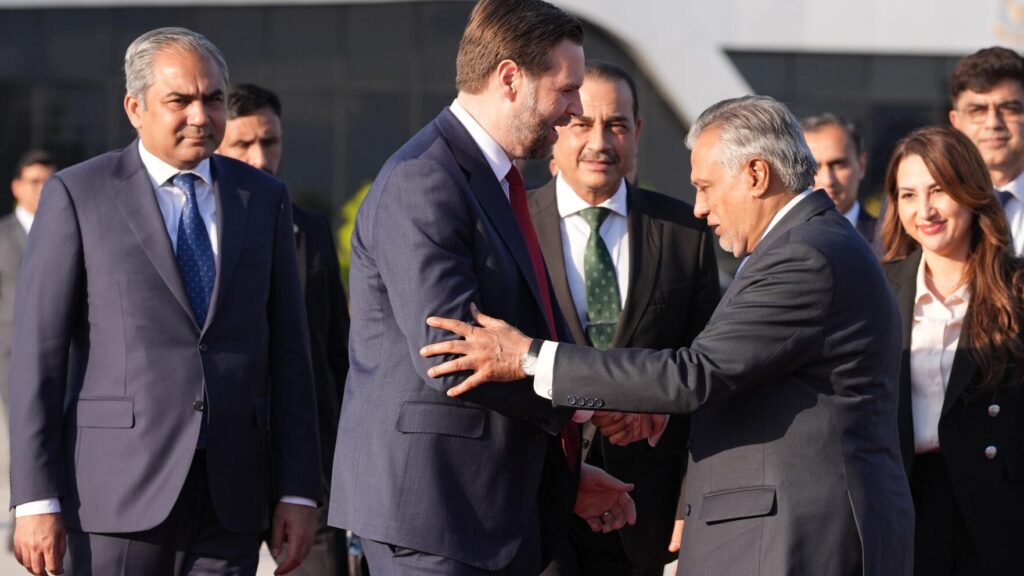
The high-stakes diplomatic mission undertaken by U.S. Vice President John Vance to de-escalate tensions between Pakistan and Iran has concluded without a formal agreement. Vance departed Islamabad after a series of intensive meetings aimed at halting a recent, dangerous cycle of cross-border military strikes and restoring a semblance of stability to a volatile region. While both nations have publicly expressed a commitment to dialogue, the absence of a concrete deal underscores the deep-seated and complex issues at play, leaving the specter of further conflict unresolved.
A Mission Born from Crisis
The Vice President’s urgent trip was a direct response to a significant flare-up in hostilities that rattled the international community. The situation escalated rapidly when Iran launched missile strikes into Pakistan’s Balochistan province, targeting what it claimed were bases for the militant group Jaish al-Adl. Pakistan responded swiftly with what it called “highly coordinated” military strikes into Iran’s Sistan-Baluchestan province, asserting it had hit hideouts used by separatist militants.
This exchange marked a severe breach of the often-tenuous but generally maintained understanding between the two neighbors, raising immediate fears of a wider regional conflict. The United States, already navigating multiple crises in the Middle East, dispatched Vance to Islamabad in an effort to prevent the situation from spiraling further out of control.
The Core Issues: Security, Sovereignty, and Strategic Rivalries
The failure to reach an agreement during Vance’s visit points to the intractable nature of the grievances held by both Islamabad and Tehran. At the heart of the dispute are long-standing accusations that each country harbors or turns a blind eye to militant groups that launch attacks across the border.
Pakistan’s Primary Concerns
For Pakistan, the Iranian strike was viewed as a blatant violation of its sovereignty and territorial integrity. The Pakistani government faces its own internal security challenges in Balochistan from separatist groups and was infuriated by what it saw as an unprovoked attack. Key Pakistani demands likely presented during the talks included:
- A formal assurance from Iran against future violations of Pakistani airspace.
- Increased intelligence cooperation to monitor and dismantle militant networks operating along the border.
- Recognition of the cross-border nature of the Baloch separatist threat and a joint strategy to address it.
Iran’s Strategic Calculations
Iran’s actions were driven by a combination of domestic security concerns and broader regional posturing. Following the recent terrorist attack in Kerman and under internal pressure to appear strong, the Iranian regime sought to demonstrate its willingness to project power beyond its borders. Iran’s stance in the talks likely centered on:
- Pressuring Pakistan to take more decisive action against Jaish al-Adl, which Tehran designates as a terrorist organization.
- Asserting its right to self-defense against perceived threats, regardless of origin.
- Navigating the complex dynamics of its rivalry with Saudi Arabia, a key ally of Pakistan, and its overall position in the Middle East.
The U.S. Role: Mediator with Limited Leverage
Vice President Vance’s mission highlighted both the continued influence and the inherent limitations of American diplomacy in the current geopolitical landscape. The U.S. has strong, albeit complicated, ties with Pakistan and is locked in a protracted adversarial relationship with Iran. This positioned Vance as an interested mediator, but one whose influence is checked by decades of mistrust.
The U.S. objectives were clear: prevent a new war, protect its own strategic interests in South Asia, and ensure the conflict did not benefit other global rivals like China or Russia, who are both cultivating closer ties with Iran. However, convincing two proud nations to back down publicly, especially without offering significant incentives or concessions, proved to be a bridge too far in a single round of talks.
What “No Agreement” Actually Means
While the headlines focus on the lack of a signed deal, diplomatic analysts suggest the talks may not have been a complete failure. The mere fact that high-level discussions took place under U.S. auspices following military exchanges is itself a de-escalatory step. Several key outcomes can be inferred:
- Communication Channels Remain Open: Both sides have agreed to keep talking, often the first and most crucial step in crisis diplomacy.
- Military Pause: The cross-border strikes have ceased for now, creating a fragile ceasefire that provides space for further dialogue.
- Establishment of Red Lines: The talks likely served to communicate the severe consequences of further military action more clearly.
However, the fundamental lack of trust remains. Without a verifiable mechanism to address the core issue of militant safe havens, the cycle of accusation and potential retaliation is likely to continue.
The Regional and Global Implications
The inconclusive end to Vance’s mission has ripple effects far beyond the Pakistan-Iran border. It exposes the fragility of state relations in a region already burdened by the war in Gaza, instability in Afghanistan, and the ongoing Houthi attacks in the Red Sea. For the broader Middle East and South Asia, this situation presents several dangers:
- It creates an opening for non-state actors to exploit tensions and provoke further clashes.
- It forces regional powers like Saudi Arabia, the UAE, and China to recalculate their own diplomatic and security approaches.
- It demonstrates the challenges for the United States in managing multiple, simultaneous foreign policy crises where its leverage is inconsistent.
A Path Forward from Deadlock
The road to a lasting resolution remains steep. For future dialogue to succeed, a shift in approach may be necessary. This could involve:
- Technical-Level Engagement: Moving from high-political talks to working groups focused on specific, actionable items like joint border patrols or real-time intelligence sharing.
- Multilateral Facilitation: Incorporating other neutral or influential parties, such as Oman or China, which has relationships with both capitals, to help broker more detailed agreements.
- Confidence-Building Measures: Small, reciprocal steps—such as returning ambassadors (who were withdrawn during the crisis) or reopening border trade points—to rebuild a minimal level of trust.
Vice President John Vance’s departure from Islamabad marks the end of a chapter, but not the end of the story. The Pakistan-Iran border remains a tinderbox, and the world has been reminded that in an era of complex alliances and deep-seated grievances, even urgent, high-level diplomacy offers no guarantees. The responsibility now falls to Islamabad and Tehran to choose whether the path of cautious dialogue will prevail over the instinct for retaliatory force. The stability of an already troubled region may depend on their choice.