
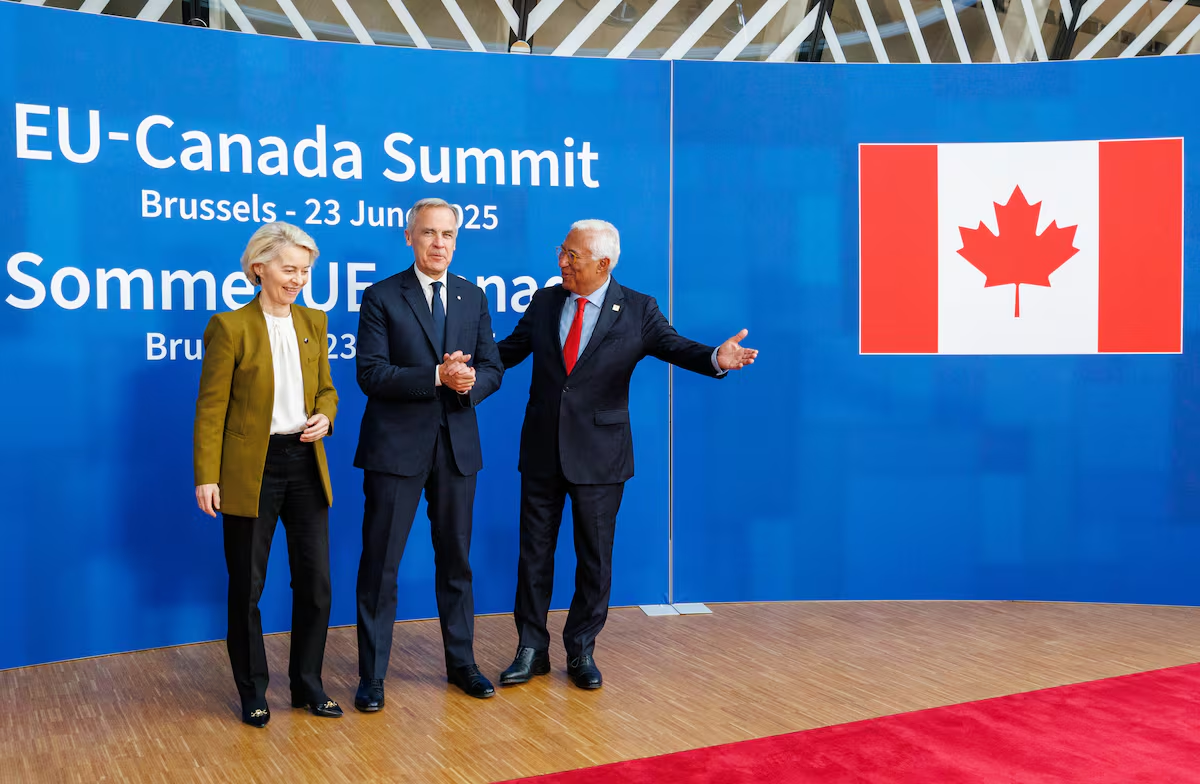
In a landmark decision that reshapes the geopolitical landscape, Canada has formally announced its accession to the European Union’s defense pact, the Permanent Structured Cooperation (PESCO). This move, confirmed on December 2, 2025, marks the first time a non-European Union and non-NATO ally has been granted such a status, bridging the North Atlantic in an unprecedented formal security arrangement. The integration of a major G7 nation and key transatlantic partner into the EU’s defense framework signals a decisive shift towards deeper, more institutionalized cooperation in the face of evolving global threats.
Understanding PESCO: The EU’s Defense Ambition
Before delving into Canada’s pivotal role, it’s essential to understand the mechanism it is joining. Established in 2017, Permanent Structured Cooperation (PESCO) is the cornerstone of the European Union’s strategic autonomy in defense. It is a framework that allows willing and able EU member states to jointly develop defense capabilities, invest in shared projects, and enhance the operational readiness of their armed forces.
Unlike NATO, which is a collective defense alliance centered on the North Atlantic, PESCO focuses on building a coherent and integrated European defense technological and industrial base. Its projects span a wide range of areas, including:
- Next-generation military equipment (e.g., tanks, drones, cyber systems).
- Enhanced military mobility across European borders.
- Joint training and simulation centers.
- Maritime surveillance and space-based capabilities.
Canada’s entry into this club is not as a full member but as a “Third State Participant,” a status that allows it to contribute to and benefit from specific PESCO projects on a case-by-case basis, subject to unanimous approval from the existing EU members.
The Strategic Rationale: Why Canada, and Why Now?
The decision is a strategic masterstroke with motivations rooted in the complex security environment of the mid-2020s.
1. Countering Authoritarian Expansionism
The ongoing war in Ukraine and increasing assertiveness from other global powers have underscored the fragility of the rules-based international order. For Canada, a nation with a vast Arctic coastline facing renewed great-power competition, aligning more closely with European defense initiatives provides a multilateral platform to project stability and deter aggression. It deepens coordination with European partners who are on the front lines of the continent’s security challenges.
2. Enhancing Arctic Security
The Arctic is a region of growing strategic importance, with melting ice opening new sea lanes and resource exploration opportunities. Both Canada and several EU states (like Sweden, Finland, and Denmark) have significant Arctic interests. Through PESCO projects focused on maritime surveillance, domain awareness, and cold-weather operations, Canada can collaborate directly with key European Arctic nations, creating a more unified approach to safeguarding the High North.
3. Diversifying Defense Partnerships
While Canada remains a steadfast NATO ally, its defense spending and capabilities have often been a point of discussion within the alliance. PESCO offers an alternative avenue for collaboration that is project-focused and capability-driven. It allows Canada to plug into cutting-edge European defense technology projects without the broader political burden-sharing debates that characterize NATO discussions.
4. Economic and Industrial Benefits
For the Canadian defense industry, this is a gateway to the European market. Participation in PESCO projects means Canadian firms can compete for contracts, engage in joint research and development, and integrate into continental supply chains. This fosters innovation, creates jobs, and ensures the Canadian Forces have access to interoperable, state-of-the-art technology.
Implications for NATO and the Transatlantic Bond
A critical question arising from this development is its impact on the North Atlantic Treaty Organization. Officials from both sides were quick to emphasize that PESCO participation is complementary to, not a replacement for, NATO. The EU’s stated goal is “strategic autonomy,” not strategic independence.
In practice, Canada’s dual membership strengthens the transatlantic link. It acts as a unique bridge, ensuring that capability developments within PESCO are aligned with NATO standards, reducing duplication. A Canada that is more deeply embedded in European defense planning can be a more effective and responsive NATO ally. This move essentially weaves a second, reinforcing thread into the fabric of transatlantic security, making the overall structure more resilient.
Challenges and the Road Ahead
The path forward is not without its hurdles. Canada’s participation will require:
- Increased Defense Investment: To be a credible partner, Canada will likely need to bolster its defense spending to contribute meaningfully to joint projects.
- Navigating Bureaucracy: As a third state, Canada will have to navigate the EU’s complex decision-making processes and will not have a vote in the overall direction of PESCO.
- Managing Sovereignty Concerns: Some domestic voices may question the ceding of any degree of defense industrial policy to a foreign framework, requiring clear communication from Ottawa about the benefits.
Furthermore, this decision may prompt other close EU partners, such as the United Kingdom, Norway, or the United States, to consider similar arrangements, potentially leading to a more complex but interconnected web of defense partnerships.
A Defining Moment for Global Security Architecture
Canada’s accession to the EU defense pact is more than a diplomatic formality; it is a symbolic and substantive recalibration of international alliances. It acknowledges that the security challenges of the 21st century—from hybrid warfare and cyberattacks to geopolitical rivalry—require flexible, deep, and multifaceted cooperation that transcends traditional bloc boundaries.
By choosing to sit at the EU’s defense table, Canada is making a clear statement: the security of Europe and North America is indivisible. It is betting on a future where integration, interoperability, and shared innovation are the keys to safeguarding democratic values and global stability. As the first transatlantic nation to take this step, Canada is not just joining a pact; it is helping to architect a new era for transatlantic security.

