
Israel’s Engineered Famine in Gaza: A Crisis Unfolding in the Shadows
While the world’s attention is transfixed on escalating tensions between Iran and Israel, a slower, more deliberate catastrophe is reaching its horrific climax in the Gaza Strip. Beyond the immediate violence of airstrikes and ground operations, a man-made famine is being systematically engineered, leveraging starvation as a weapon of war. This policy, conducted under the blinding glare of a separate geopolitical crisis, threatens to claim more lives than the bombs themselves, marking one of the gravest humanitarian failures of our time.
The Mechanics of Manufactured Hunger
The famine in Gaza is not a tragic byproduct of conflict; it is a predictable outcome of a comprehensive siege. For months, Israel has imposed a near-total blockade on the Palestinian enclave, controlling all access points for food, water, medicine, and fuel. This strategy has effectively weaponized the basic necessities of life.
Strategic Strangulation: The Blockade in Detail
The process of engineering starvation is multifaceted:
- Severe Restriction of Aid Trucks: Despite international pleas, the number of aid trucks allowed into Gaza remains a fraction of the pre-conflict average and far below what is needed to stave off famine. Lengthy inspections and arbitrary rejections of critical supplies create fatal bottlenecks.
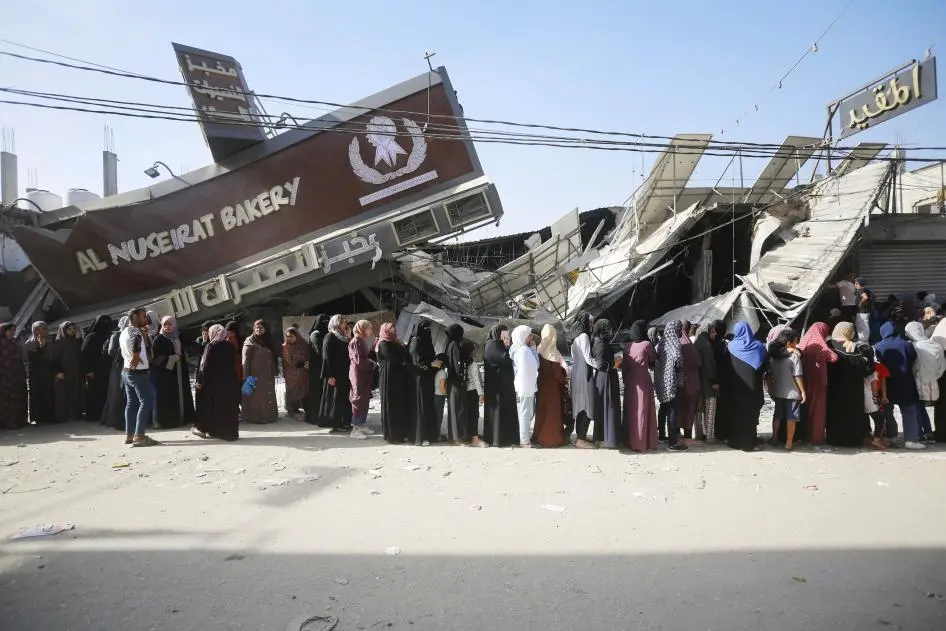
- Targeting of Agricultural and Food Infrastructure: Farmland, fishing boats, food processing plants, and bakeries have been repeatedly destroyed or made inaccessible, obliterating Gaza’s capacity to produce its own food.
- Crippling the Aid Distribution Network: Humanitarian workers, particularly from UNRWA, have been killed, and their facilities attacked. A lack of security and fuel makes the final delivery of the little aid that enters nearly impossible in many areas, especially the devastated north.
This coordinated effort has collapsed Gaza’s food system from the inside out, creating a landscape where hunger is the omnipresent enemy.
A Crisis Overshadowed: The Iran-Israel Lens
The recent direct confrontations between Iran and Israel have created a dangerous diversion. Global media cycles and diplomatic channels are saturated with analysis of missile barrages and regional escalation. This focus, while critical, has inadvertently pushed Gaza’s silent slaughter to the periphery.
In the shadow of high-stakes state-on-state conflict, the incremental, daily suffering of Palestinians—the children dying from malnutrition, the families foraging for weeds—fails to capture sustained headlines. This distraction, whether strategic or incidental, allows the famine to deepen with reduced political cost for its perpetrators. The world risks witnessing a famine in real-time while looking the other way.
The Human Toll: Beyond Statistics
The data from international bodies is apocalyptic. The Integrated Food Security Phase Classification (IPC), the global benchmark for assessing hunger, warns that famine is imminent or already occurring in northern Gaza. Over a million people face catastrophic hunger. But behind these numbers are unbearable human stories.
- Children as the Primary Victims: Infants are dying from dehydration and starvation. Those who survive face lifelong physical and cognitive stunting from acute malnutrition.
- The Collapse of Medical Care: Hospitals, lacking power and supplies, are overwhelmed with starving children they cannot treat. Diseases like cholera and hepatitis threaten to rip through malnourished populations.
- Desperation and the Erosion of Society: The social fabric is tearing as people are forced to fight over scraps of aid. The trauma of watching one’s children starve is a psychological weapon with generational consequences.
This is the grim reality of an engineered famine: the systematic breakdown of the body and society.
International Law and the Crime of Starvation
Using starvation as a method of warfare is explicitly prohibited under international humanitarian law. The Rome Statute of the International Criminal Court defines it as a war crime. The deliberate blocking of aid, the destruction of food sources, and the imposition of a siege that collectively punishes a civilian population all point to potential violations that are both moral and legal catastrophes.
Despite this, the international response has been characterized by paralysis. While many nations issue statements of concern, tangible action—such as enforcing arms embargoes or enacting serious sanctions to compel aid access—has been woefully inadequate. This inaction grants de facto impunity.
The Path Forward: Demanding Accountability and Action
Ending the famine in Gaza requires immediate and uncompromising steps that must not be delayed by other global crises.
- An Unconditional Ceasefire: This is the non-negotiable first step. Aid cannot be delivered effectively under ongoing bombardment and military operation.
- Opening All Crossings and Lifting the Siege: Israel must allow a massive, uninterrupted flow of aid through all available land crossings. Airdrops and maritime corridors are insufficient and symbolic compared to the capacity of trucks.
- Protecting Humanitarian Workers: Guarantees of safety for aid agencies are essential to restore the distribution network.
- International Pressure and Legal Accountability: The world must move beyond rhetoric to concrete measures that hold perpetrators accountable. States with leverage must use it to stop the use of starvation as a weapon.
Conclusion: A Choice of Conscience
The engineered famine in Gaza is a test of the world’s conscience. It proves that in the 21st century, mass starvation can still be deliberately orchestrated. The concurrent Iran-Israel tensions must not serve as a smokescreen for this atrocity. We must see the crisis in Gaza with clear eyes: it is a politically manufactured disaster, a war crime unfolding in slow motion.
History will judge not only those who executed this policy but also those who stood by, distracted, while it happened. The children of Gaza are not collateral damage; they are the targets of a starvation policy that the world has the power, and the legal obligation, to stop. The time for action, before thousands more perish from hunger, is now.

