
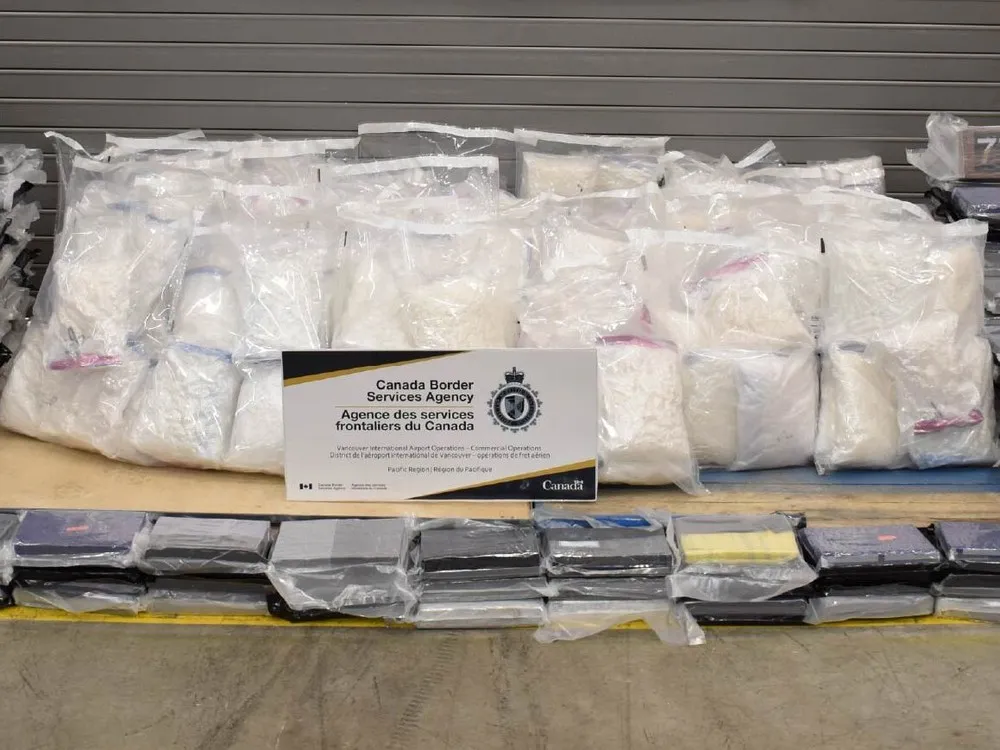
A newly released intelligence report has revealed the staggering scale of Canada’s fentanyl crisis, detailing the seizure of more than 386 kilograms of the deadly synthetic opioid in just five months. The findings, compiled by federal law enforcement and intelligence agencies, paint a stark picture of a sophisticated and relentless supply chain that is flooding communities with a substance exponentially more powerful than heroin. This massive haul, intercepted between late 2023 and early 2024, represents millions of potential lethal doses and underscores the critical, ongoing battle at the nation’s borders and within its cities.
The Anatomy of a National Crisis: Key Findings from the Report
The intelligence assessment goes beyond raw seizure numbers, providing crucial insights into the methods, routes, and evolving tactics of the criminal networks fueling the epidemic. The report serves as a strategic blueprint, highlighting both the successes of interdiction efforts and the daunting challenges that lie ahead.
Unprecedented Quantities and Lethal Doses
The sheer volume of 386 kilograms is difficult to comprehend. To put it in perspective, a mere 2 milligrams of fentanyl is considered a potentially lethal dose. The seized amount therefore represents approximately 193 million lethal doses removed from circulation. This highlights not just the scale of the trafficking operation but the profound level of danger posed to public health. The seizures included both powdered fentanyl and a rapidly growing number of fentanyl-laced counterfeit prescription pills designed to mimic oxycodone or Xanax, which are particularly dangerous for unsuspecting users.
Primary Trafficking Routes and Methods
The report identifies sophisticated methods used to smuggle fentanyl into and across Canada:
- International Mail and Courier Systems: A significant portion of seizures originated from international postal and express consignment systems, with traffickers using small, frequent shipments to avoid detection.
- Commercial Vehicle Concealment: Large-scale shipments were often hidden within legitimate commercial cargo, using complex concealment methods in tractor-trailers crossing land borders.
- Multi-Compartment Vehicles and Marine Traffic: Criminal organizations have adapted by using vehicles with sophisticated hidden compartments and exploring maritime smuggling routes.
The Chemical Precursor Problem
A critical focus of the report is on the upstream supply chain. Most fentanyl entering Canada is not manufactured here but is synthesized from precursor chemicals largely sourced from Asia. These chemicals, which are often legal for industrial purposes, are diverted and shipped to clandestine labs, frequently in Mexico, where they are synthesized into fentanyl before being trafficked north. Disrupting this chemical flow is identified as a complex but essential international challenge.
Beyond the Border: The Domestic Impact and Response
While interdiction at the border is vital, the report emphasizes that the crisis is fundamentally a domestic public health emergency. The influx of cheap, potent fentanyl has devastated communities, leading to record numbers of overdoses and deaths. The intelligence underscores the direct link between international trafficking and local tragedy.
The Rise of Polydrug Supplies
One of the most alarming trends detailed is the proliferation of polydrug mixtures. Fentanyl is increasingly being found combined with other potent substances like benzodiazepines (often referred to as “benzodope”) or veterinary tranquilizers like xylazine. These combinations are especially resistant to naloxone, the standard overdose-reversal drug, and lead to more complex and deadly overdoses, straining emergency medical services.
Law Enforcement and Public Health Coordination
The crackdown highlighted in the report is part of a multi-pronged strategy. Efforts include:
- Enhanced Screening Technology: Deploying advanced scanners and chemical detection devices at major mail centers and ports of entry.
- Integrated Intelligence Units: Task forces that combine resources from the RCMP, Canada Border Services Agency (CBSA), financial intelligence units, and local police to target high-level traffickers and money laundering operations.
- Community Harm Reduction: The report implicitly supports the need for a parallel, robust public health response, including increased access to naloxone, supervised consumption sites, and safer supply programs to address the root cause of demand.
The Global Context and Future Challenges
Canada’s fentanyl crisis does not exist in a vacuum. The report places it within a broader North American and global pattern of synthetic opioid dominance driven by profit-motivated criminal enterprises. These networks are agile, quickly adapting to law enforcement tactics by shifting routes, methods, and even the drugs they traffic.
Adapting to a Shifting Threat
As pressure mounts on fentanyl, intelligence suggests traffickers are already exploring next-generation synthetic opioids, such as nitazenes, which can be even more potent. This demands constant vigilance and adaptation from forensic labs and policy makers. The enduring challenge will be to keep pace with the pharmaceutical expertise of clandestine chemists working for cartels.
A Call for Sustained, Collaborative Action
The seizure of 386 kilograms is a tactical victory that undoubtedly saved lives. However, the intelligence report concludes that there is no single enforcement “solution” to a crisis of this magnitude. It calls for:
- Continued international cooperation with source and transit countries, particularly on precursor chemical control.
- Increased investment in front-line border security and detection capabilities.
- A unwavering commitment to treating substance use as a health issue, scaling up prevention, treatment, and harm reduction services to reduce the domestic demand that drives the market.
The five-month crackdown chronicled in this report is a snapshot of an ongoing war. It demonstrates both the capability of Canadian authorities to make significant seizures and the relentless, adaptive nature of the threat. The 386-kilogram figure is not just a metric of enforcement success; it is a sobering indicator of the vast quantity of poison that criminal organizations are attempting to import. Moving forward, the path to saving lives requires a balanced, persistent, and compassionate strategy that addresses both the supply crossing our borders and the profound need within our communities. The intelligence is clear; the imperative to act on all fronts has never been greater.

