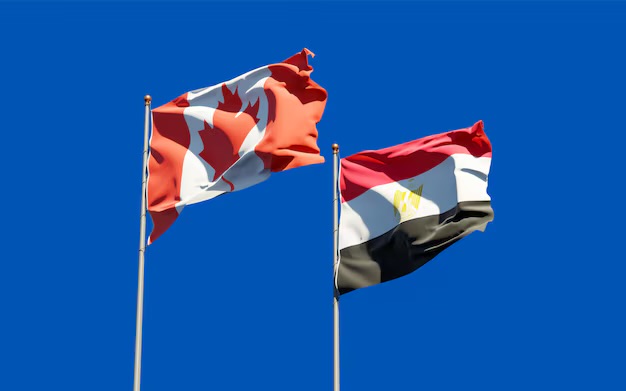
In an era defined by global interconnection, the ability to communicate across cultures is no longer a luxury but a critical economic and social imperative. Nations are increasingly looking beyond their borders for educational partnerships that can equip their future generations with this vital skill set. Following a landmark collaboration with South Korea, Egypt is now setting its sights on a new, promising horizon: a strategic partnership with Canada to revolutionize its approach to multilingual education. This potential alliance promises to build a unique model, blending Egypt’s rich linguistic heritage with Canada’s world-renowned expertise in bilingualism and multiculturalism.
Building on Momentum: From Seoul to Ottawa
Egypt’s recent educational pact with South Korea served as a significant catalyst. Focused on integrating cutting-edge technology and Korean language programs into Egyptian schools, it underscored a clear national strategy: to diversify educational offerings and align them with the competencies demanded by the global market. This move was not just about adding another language; it was a statement of intent to create a more agile, future-ready workforce.
The logical next step in this ambitious journey points directly toward Canada. Why Canada? The answer lies in its proven, lived experience. Canada isn’t just a country with two official languages; it is a society where bilingualism (English and French) is woven into the fabric of its identity, policy, and success. Furthermore, its celebrated model of multiculturalism provides a blueprint for integrating diverse linguistic communities without sacrificing social cohesion. For Egypt, a nation at the crossroads of Africa and the Arab world with its own complex linguistic landscape of Arabic, English, and French, Canada’s experience is uniquely relevant.
The Pillars of a Potential Egypt-Canada Educational Alliance
A collaborative framework between Egypt and Canada would likely rest on several interconnected pillars, designed to create a sustainable and impactful multilingual ecosystem.
1. Curriculum Co-Development and Teacher Empowerment
The core of any educational transformation lies in what is taught and who teaches it. A partnership could facilitate:
- Joint Curriculum Design: Developing specialized language programs that are contextually relevant to Egypt, potentially enhancing French immersion models or creating innovative Arabic-English-French trilingual streams.
- Robust Teacher Training Exchanges: Establishing programs for Egyptian educators to train in Canadian institutions, focusing on modern pedagogical techniques for second language acquisition. Conversely, Canadian experts could lead in-service training workshops in Egypt.
- Digital Resource Sharing: Leveraging Canada’s advanced EdTech sector to create and share interactive digital learning platforms tailored for Egyptian students.
2. Policy Dialogue and Academic Integration
Beyond the classroom, systemic support is crucial. This partnership could foster:
- High-Level Policy Workshops: Egyptian and Canadian policymakers could share insights on national language strategy, accreditation standards, and measuring the socio-economic impact of multilingualism.
- University Linkages and Dual Degrees: Strengthening ties between Egyptian and Canadian universities to offer joint degrees, particularly in education, linguistics, and international relations, creating a pipeline of highly skilled graduates.
- Research Collaborations: Funding joint research projects on topics like early childhood bilingualism, language assessment, and the role of multilingualism in innovation.
3. Cultural Immersion and Student Mobility
Language learning thrives on authentic experience. Key initiatives could include:
- Expanded Scholarship and Exchange Programs: Dramatically increasing the number of Egyptian students studying in Canada, and encouraging Canadian students to choose Egypt for Arabic language and regional studies, fostering deep people-to-people ties.
- Virtual Exchange Platforms: Creating structured online forums and project-based learning modules where Egyptian and Canadian students can collaborate directly, practicing language skills in real-world contexts.
The Tangible Benefits: Why This Partnership Matters
The potential outcomes of such a deep collaboration extend far beyond the education sector, promising a multiplier effect across Egyptian society and its economy.
For the Economy: A multilingual workforce is a powerful magnet for foreign investment. Companies seeking a hub for operations in Africa and the Middle East would find a significant advantage in a talent pool fluent in Arabic, English, and French. It directly enhances competitiveness in sectors like diplomacy, international trade, tourism, and technology.
For Society: Multilingual education, guided by principles of multicultural understanding, can be a profound tool for social tolerance and global citizenship. It encourages empathy, breaks down cultural barriers, and equips young Egyptians to engage confidently with a diverse world.
For Educational Prestige: Successfully implementing a Canadian-inspired model would position Egypt as a regional leader in innovative education. It would attract students from across Africa and the Arab world, keen to benefit from this unique linguistic and pedagogical environment.
Navigating the Road Ahead: Challenges and Considerations
Of course, forging a new path is not without its hurdles. Key challenges will need thoughtful navigation:
- Resource Allocation: Implementing a high-quality multilingual program requires sustained investment in training, materials, and technology.
- Curriculum Balance: Ensuring the addition of robust French or other language streams does not come at the expense of Arabic proficiency or national identity is paramount.
- Equity of Access: A major challenge will be to design programs that are not exclusive to elite urban schools but can be scaled and adapted to benefit students across the nation.
- Assessment Standards: Developing clear, fair, and standardized methods to evaluate multilingual competency will be essential for the program’s credibility.
Conclusion: A Vision for a Linguistically Empowered Future
The prospective partnership between Egypt and Canada in multilingual education is more than a simple exchange of best practices. It represents a strategic alignment of visions. Egypt seeks to empower its youth as global actors, while Canada possesses a proven toolkit for building a cohesive, prosperous, and multilingual society.
By learning from Canada’s successes and adapting them to Egypt’s unique cultural context, the two nations have the opportunity to create a groundbreaking educational model. This model would not only produce graduates who are linguistically adept but also culturally intelligent and innovative thinkers. After the pivotal step with South Korea, a deep collaboration with Canada could indeed mark the beginning of a new era—one where Egypt solidifies its role as a bridge between civilizations, powered by the profound ability of its people to understand, speak, and shape the world in multiple languages. The foundation for this new path is being laid, and its potential to transform futures is immense.