Hegseth Claims War With Iran Would Be a Global Benefit: A Deep Dive Into the Fallout
Introduction: A Provocative Statement That Demands Examination
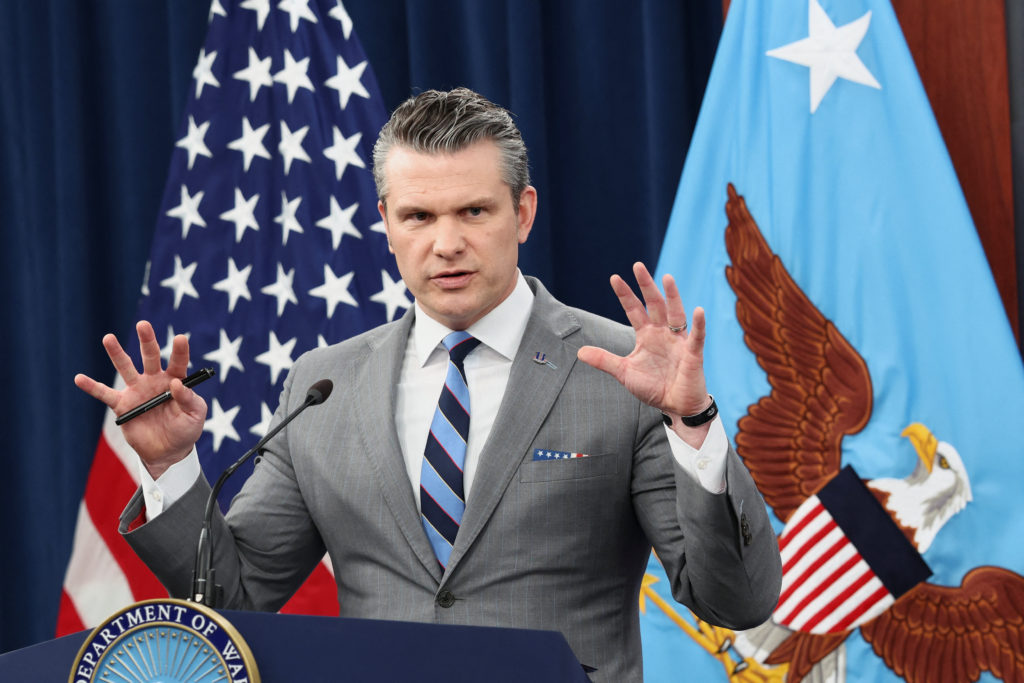
Defense Secretary Pete Hegseth has ignited a firestorm of controversy with a single, loaded statement: that a U.S. military confrontation with Iran would represent a gift to the entire world. The comment, captured during a press briefing and widely circulated by PBS NewsHour, has forced policymakers, military strategists, and everyday citizens to confront an uncomfortable question—could war ever be framed as benevolence?
Hegseth’s choice of words was deliberate, and the reactions have been anything but muted. This article unpacks the context, the political implications, the expert dissent, and what this means for America’s foreign policy trajectory.
Defense Secretary Pete Hegseth has ignited a firestorm of controversy with a single, loaded statement: that a U.S. military confrontation with Iran would represent a gift to the entire world. The comment, captured during a press briefing and widely circulated by PBS NewsHour, has forced policymakers, military strategists, and everyday citizens to confront an uncomfortable question—could war ever be framed as benevolence?
Hegseth’s choice of words was deliberate. The reactions, however, have been anything but muted.
He argued that a U.S.-led military campaign against Iran could effectively dismantle the Islamic Republic’s nuclear program and curtail its influence over regional proxies. He characterized such an intervention not as an act of aggression, but as a gift—a global service that would restore stability to the Middle East and protect international security interests.
The core of his argument hinges on three assumptions:
- Iran’s nuclear ambitions pose an existential threat to global peace.
- Diplomatic efforts have failed or are insufficient to halt progress.
- A swift, decisive military strike would neutralize the threat with minimal collateral damage.
These assumptions, however, are far from universally accepted. Critics argue that this rhetoric dangerously mirrors the justifications used to launch previous prolonged conflicts in Iraq and Afghanistan—wars that were initially sold as quick, surgical interventions but ultimately resulted in decades of instability.
Hegseth’s remark has fractured political opinion along predictable yet sharp lines.
Supporters of the statement argue:
- Iran has been a destabilizing force in the Middle East for decades.
- Its support for groups like Hezbollah and Hamas threatens U.S. allies, including Israel and Saudi Arabia.
- A show of force could deter further aggression and reset the balance of power.
Opponents counter with equally compelling concerns:
- A war with Iran could escalate into a regional catastrophe involving multiple state and non-state actors.
- Global oil markets would face severe disruption, driving up energy costs worldwide.
- The humanitarian toll on Iranian civilians would be devastating and morally indefensible.
- U.S. military resources are already stretched thin across multiple theaters.
The statement also places the Biden administration in a delicate position. While Hegseth’s comments carry weight as a senior defense official, the White House has not formally endorsed the view. This disconnect raises questions about whether the administration is genuinely considering a more confrontational posture or whether the remarks represent personal opinion rather than official policy.
International relations and security experts have responded with a mix of alarm and measured analysis.
Dr. Amina Karim, a Middle East scholar at Georgetown University, was unequivocal in her criticism. “Calling war a gift trivializes the immense human suffering and geopolitical chaos that would follow. It’s a dangerous oversimplification that ignores the reality of modern conflict.”
She points to the long history of U.S. military interventions in the region, noting that each has produced unintended consequences. “The Iran-Iraq war in the 1980s cost hundreds of thousands of lives and accomplished nothing. The 2003 invasion of Iraq destabilized the entire region. History tells us that war in the Middle East rarely unfolds as planned.”
On the other side, some defense analysts agree with Hegseth’s premise—but only under specific conditions. A retired U.S. Army general, speaking on condition of anonymity, said that if Iran is truly an existential threat, then removing it could be seen as beneficial. However, he stressed that success depends on speed, precision, and a strong post-conflict plan.
He also warned that the United States has a poor track record of executing such plans. “The risk is that we win the military battle but lose the peace. That’s what happened in Iraq, and it could happen again in Iran on a much larger scale.”
Hegseth’s statement is more than a soundbite—it may signal a realignment in U.S. strategic thinking.
Recent indicators of a hardening stance include:
- Increased naval deployments in the Persian Gulf.
- Stricter sanctions enforcement against Iranian oil exports.
- Heightened rhetoric from Pentagon officials regarding Iran’s proxy forces.
These moves suggest that the administration is preparing the ground for a more confrontational approach. However, they also risk alienating key allies who continue to advocate for diplomatic engagement. European partners, in particular, have expressed concern that military escalation would derail ongoing nuclear negotiations and destabilize an already volatile region.
The broader implications are significant:
- Diplomatic channels with Iran could collapse entirely.
- Regional powers like Saudi Arabia and Turkey may be forced to choose sides.
- Global energy markets could experience sustained volatility.
- The U.S. could find itself isolated in international forums, facing accusations of aggression.
The phrase “gift to the world” is particularly striking because it reframes war not as a tragic necessity, but as a benevolent offering. This represents a significant departure from traditional diplomatic language, which typically describes military action as a last resort.
Language shapes perception. Calling war a gift may desensitize the public to the reality of conflict. It also normalizes preemptive military action and shifts the burden of proof—turning opposition into something that must be justified rather than support.
This framing is not accidental. It can be used to build public support, but it becomes dangerous if the assumptions behind it prove false.
As tensions continue to simmer, the world is watching closely to see whether these remarks will translate into concrete policy decisions.
Key developments to monitor include:
- Any increase in military exercises or force deployments near Iran’s borders.
- Statements from the White House clarifying or distancing itself from the remarks.
- Reactions from Tehran, which has already condemned the comments as belligerent.
- Shifts in public opinion, both domestically and internationally.
For now, the comments have succeeded in placing the debate over Iran back on the global front page. Whether this leads to meaningful policy discussion—or escalation—remains uncertain.
The notion that war could ever be a gift is inherently polarizing. It forces a balance between security and humanity, stability and sovereignty, rhetoric and reality. Words matter, especially when they come from senior officials.
Important questions remain:
- Who defines what constitutes a “gift” in international relations?
- What human costs are being minimized or ignored?
- Are past mistakes being repeated through rushed confrontation?
Ultimately, this debate is not only about Iran. It is about how a nation defines its role in the world—through diplomacy and alliances, or through force.