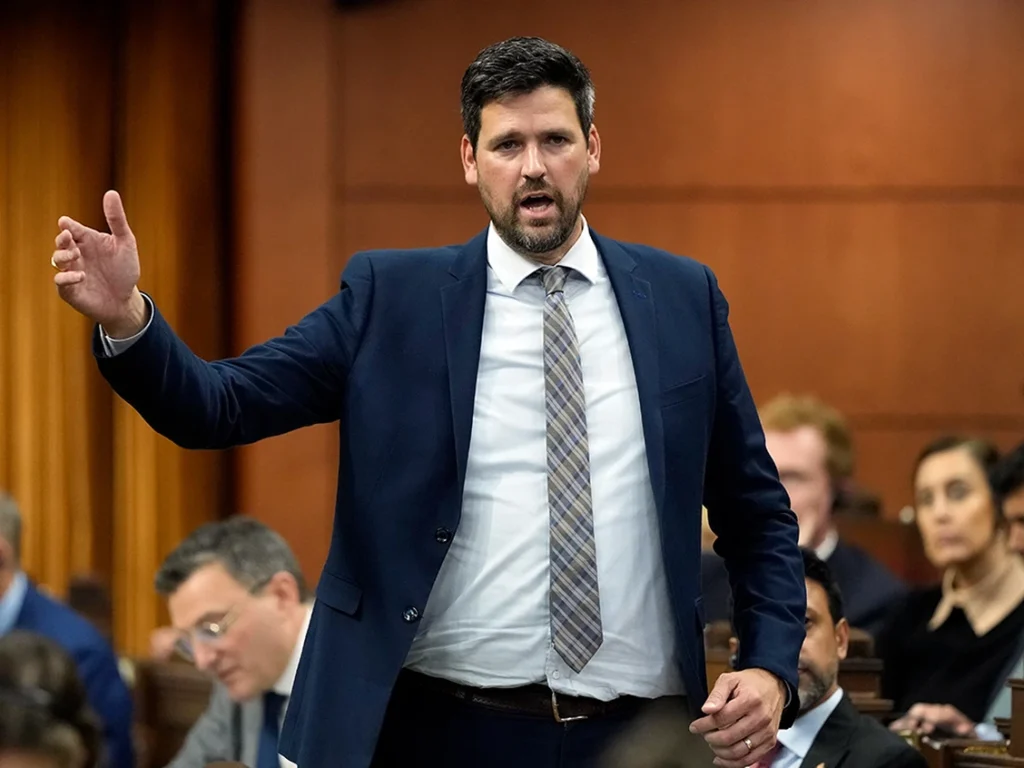
In the charged arena of Canadian politics, a critical debate over the balance between religious freedom and protection from hate speech has hit a significant roadblock. Accusations are flying in Ottawa that the governing Liberal Party is deliberately stalling parliamentary progress on a bill aimed at removing religious defences from the country’s hate speech laws. This legislative impasse, highlighted by the Bloc Québécois, reveals deep political tensions and raises urgent questions about the government’s commitment to modernizing Canada’s legal framework against hatred.
The Core of the Controversy: Bill C-367
At the heart of this political standoff is Private Member’s Bill C-367. Introduced by Bloc Québécois MP Martin Champoux, the bill seeks to repeal sections 319(3)(b) and 319(3)(c) of the *Criminal Code*. These sections currently provide a defence against wilful promotion of hatred if the statements in question were:
- Expressed in “good faith” and were relevant to a religious subject.
- An opinion on a religious subject, or
- Based on a belief in a religious text.
Proponents of the bill argue that these clauses create a dangerous legal loophole, allowing individuals to shield hateful rhetoric behind a veil of religious doctrine. They point to the 2023 report by the House of Commons Justice Committee, which unanimously recommended the removal of these defences to strengthen Canada’s fight against antisemitism, Islamophobia, and other forms of hate-motivated prejudice.
The Bloc’s Accusation: A Deliberate Delay
The Bloc Québécois has taken a firm stance, accusing the Liberal government of employing procedural tactics to prevent the bill from moving forward. According to the Bloc, the Liberals have been:
- Refusing to schedule the bill for debate at the crucial second reading stage.
- Using their control of the parliamentary agenda to prioritize other legislation.
- Creating a logjam that effectively kills the bill without a formal vote.
Bloc Québécois leader Yves-François Blanchet has framed this inaction as politically motivated. He suggests the Liberals, fearing a backlash from certain religious communities, are choosing to sidestep a difficult but necessary conversation. “They are afraid of the electoral consequences,” Blanchet stated, alleging the government is putting political calculation ahead of a clear moral and legal imperative identified by their own MPs on the Justice Committee.
Liberal Response: Complexity and Consultation
The government, for its part, denies any bad faith. Official responses from Justice Minister Arif Virani’s office emphasize that the issue is incredibly complex and requires careful, thoughtful deliberation. They highlight the need to balance the crucial objective of combating hate speech with the constitutionally protected right to freedom of religion and expression.
Liberals argue that a Private Member’s Bill may not be the appropriate vehicle for such a sensitive change, hinting that government-led legislation with extensive consultation might be preferable. This stance, however, does little to satisfy critics who note that the consultation and study have already been completed by the parliamentary committee.
Why This Debate Matters Now
The stalling of Bill C-367 is not happening in a vacuum. It occurs against a backdrop of rising hate crimes and polarized public discourse across Canada. Incidents targeting religious and cultural groups have spurred calls for more robust legal tools. The existing religious defences are seen by many legal experts and advocacy groups as antiquated, a relic from a time when the understanding of hate speech’s harm was less developed.
Furthermore, the debate touches on a fundamental Canadian challenge: navigating a multicultural society where deeply held beliefs must coexist with the absolute right to live free from vilification and threat. Removing the religious defence would signal that the promotion of hatred is never acceptable, regardless of its purported inspiration.
The Political Tightrope
The Liberal government finds itself on a political tightrope. On one side, there is pressure from the Bloc, the NDP (who support the bill’s intent), and advocacy groups to act decisively. On the other, there is genuine concern about alienating faith communities who may perceive the change as an attack on religious expression. In a minority Parliament where every vote and issue can become a flashpoint, the calculation is fraught with risk.
Potential Paths Forward
The impasse leaves several possible outcomes:
- Procedural Pressure: The opposition could use various parliamentary tactics to force a debate, shining a brighter public spotlight on the government’s hesitation.
- Government Legislation: The Liberals could introduce their own, potentially more nuanced, bill to address the committee’s recommendation, thereby taking ownership of the issue.
- Legislative Death: The bill could simply die on the Order Paper when the next election is called, kicking the issue down the road indefinitely.
What is clear is that the delay itself has become a political statement. It communicates caution, perhaps uncertainty, at a moment when many are calling for clarity and courage.
Conclusion: A Test of Resolve
The stalled debate on removing religious defences from hate speech laws is more than a parliamentary procedural story. It is a test of Canada’s resolve to update its laws for a modern, diverse society. It challenges lawmakers to close loopholes that can protect hate while thoughtfully upholding fundamental freedoms.
As accusations of stalling continue to fly, Canadians are left to watch whether their government will navigate this complex terrain with decisive action or continued delay. The outcome will send a powerful message about Canada’s commitment to being a place where diversity is not just tolerated, but actively protected from the corrosive effects of hatred. The world is watching how Canada handles this delicate balance between safeguarding sacred freedoms and condemning intolerable speech.