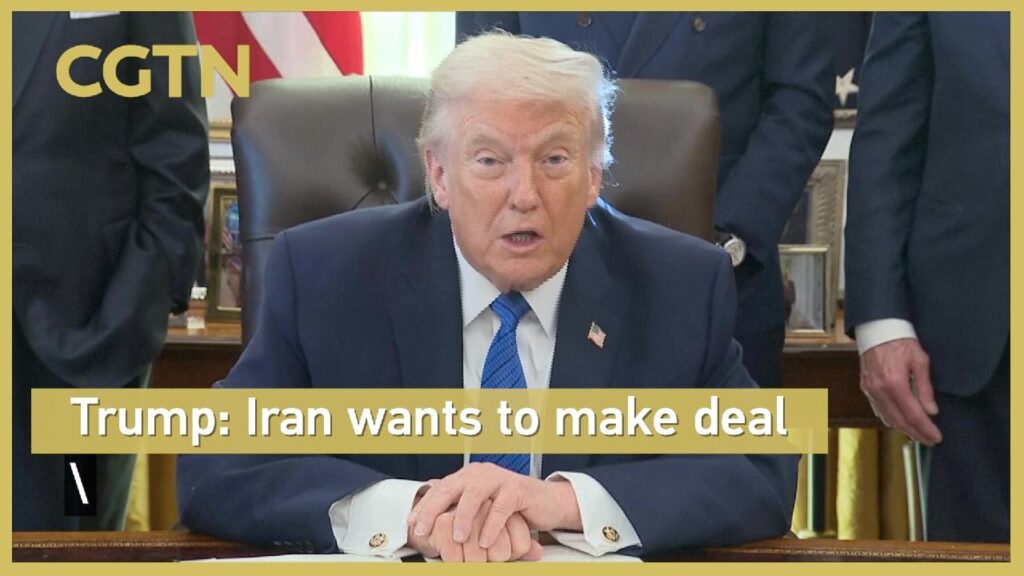
Former US President Donald Trump has once again weighed in on relations with Iran, stating that Tehran “desires to make a deal” and that the United States has “plenty of time” to negotiate. His remarks have reignited debate over diplomatic strategy, regional stability, and the future of US-Iran relations at a moment of heightened geopolitical uncertainty.
Trump’s comments suggest a belief that US leverage remains strong, allowing Washington to wait for more favorable terms rather than rushing into negotiations. The statement reflects a broader philosophy that shaped his previous approach to Iran — one centered on economic pressure, strategic patience, and a belief that time favors American interests.
A Familiar Message on Iran Negotiations
Trump’s assertion that Iran wants a deal is consistent with messaging he used during his presidency. He frequently argued that sanctions pressure had weakened Iran’s economy and forced its leadership to seek relief through negotiations.
By emphasizing that the US has “plenty of time,” Trump reinforces the idea that Washington should not compromise prematurely. Instead, he suggests that sustained pressure will eventually push Tehran toward concessions on nuclear activity, regional influence, and security guarantees.
This framing positions the US as patient and confident, while portraying Iran as eager but constrained.
Strategic Patience as a Negotiating Tool
At the core of Trump’s statement is the concept of strategic patience. Rather than accelerating talks, this approach prioritizes leverage, timing, and endurance.
Trump has long argued that rushing diplomacy weakens bargaining power. In his view, time amplifies economic strain on Iran while allowing the US to maintain flexibility and control over the pace of negotiations.
This strategy contrasts with approaches that emphasize rapid engagement, highlighting a fundamental divide in how US leaders view diplomacy with adversarial states.
Sanctions and Economic Pressure Remain Central
Trump’s confidence that Iran wants a deal is rooted in the belief that economic sanctions remain highly effective. During his presidency, sanctions targeted Iran’s energy exports, banking sector, and access to international markets.
The resulting economic strain, including inflation, currency depreciation, and reduced foreign investment, was frequently cited as evidence that pressure was working.
Trump’s latest comments suggest he believes these effects continue to influence Iranian decision-making, even years after leaving office.
Iran’s Calculations and Regional Context
From Iran’s perspective, negotiations are shaped by a complex mix of domestic pressures, regional dynamics, and global alliances. While economic relief is a strong incentive, Iranian leaders must also balance internal political considerations and perceptions of sovereignty.
Trump’s claim that Iran wants a deal does not necessarily imply agreement on terms. Rather, it underscores a recognition that talks remain possible, even amid deep mistrust.
Regional tensions, including conflicts involving allies and proxies, further complicate the diplomatic landscape.
Time as Leverage in Diplomacy
The statement “we have plenty of time” reflects Trump’s belief that time itself is a bargaining asset. By not appearing rushed, the US can signal strength and confidence, potentially shaping expectations on the other side.
However, critics argue that time can also work against negotiators if conditions worsen or opportunities are missed. Prolonged stalemates risk escalation, miscalculation, or shifts in global alignment.
This tension makes time both a strategic advantage and a potential liability.
Domestic Political Implications
Trump’s comments on Iran also carry domestic political significance. Foreign policy remains a defining issue for his supporters, many of whom favor a hardline stance on adversaries.
By reiterating his approach, Trump reinforces his image as a leader who prioritizes strength, leverage, and results over prolonged diplomacy. This message resonates with voters who view compromise with skepticism.
At the same time, opponents argue that such rhetoric risks prolonging conflict and undermining diplomatic progress.
How Markets and Allies May Interpret the Statement
International markets and US allies closely monitor rhetoric surrounding Iran. Statements signaling patience and confidence can reduce immediate fears of escalation, but they can also prolong uncertainty.
Energy markets, in particular, are sensitive to developments involving Iran, a major oil producer. Diplomatic signals influence expectations around supply, sanctions enforcement, and regional stability.
Allies may interpret Trump’s remarks as a reminder that US policy toward Iran could shift again depending on leadership and strategy.
Comparing Diplomatic Approaches
Trump’s approach contrasts sharply with strategies that emphasize multilateral engagement and incremental compromise. His philosophy prioritizes bilateral leverage, economic pressure, and a willingness to wait.
Supporters argue this method forces clarity and accountability. Critics counter that it reduces trust and limits diplomatic options.
The debate highlights a broader question about how the US should manage long-term rivalries in an increasingly multipolar world.
Risks of Prolonged Negotiation Stalemates
While patience can strengthen leverage, prolonged standoffs carry risks. Extended sanctions can entrench hardline positions, increase regional instability, and raise the stakes of miscalculation.
Trump’s assertion that there is “plenty of time” assumes that conditions remain manageable. Whether that assumption holds depends on regional developments, global alliances, and internal dynamics within Iran.
This uncertainty underscores the complexity of long-term diplomatic strategy.
What Comes Next in US-Iran Relations
Trump’s remarks do not signal immediate policy changes, but they shape expectations about future negotiations. They suggest that any renewed talks would likely emphasize leverage-first diplomacy, with timing controlled by Washington.
As global attention shifts among multiple geopolitical challenges, Iran remains a key focal point for US foreign policy debate.
The path forward will depend on leadership decisions, regional stability, and whether both sides see advantage in moving from rhetoric to action.
Conclusion: Confidence, Patience, and Unresolved Tensions
Trump’s statement that Iran desires to make a deal and that the US has plenty of time encapsulates his broader approach to foreign policy — one grounded in leverage, confidence, and strategic patience.
While the assertion signals optimism about America’s negotiating position, it also highlights unresolved tensions and unanswered questions about the future of US-Iran relations.
As diplomacy, pressure, and timing continue to intersect, the world will watch closely to see whether patience leads to progress — or prolongs uncertainty in one of the Middle East’s most enduring standoffs