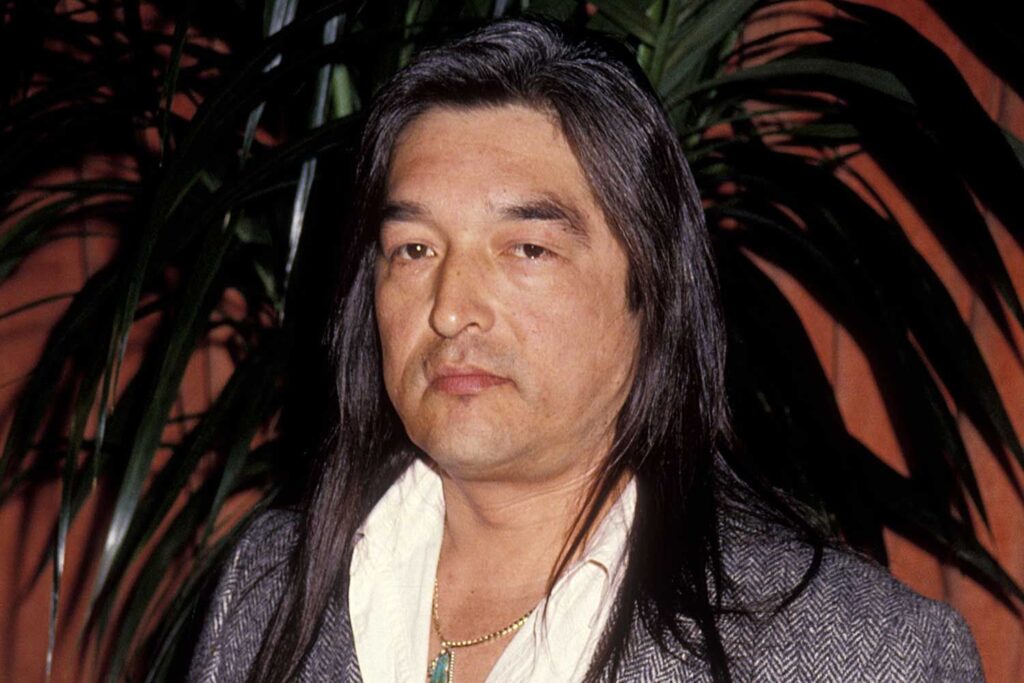
The world of film and television has lost a towering presence. Graham Greene, the acclaimed Oneida actor whose powerful performance in *Dances With Wolves* catapulted him to international fame, has passed away at the age of 73. News of his passing, confirmed by his representatives, has sent waves of sorrow through the entertainment industry and beyond, prompting a collective reflection on a career defined by dignity, depth, and an unwavering commitment to authentic representation.
Greene’s journey was not that of a typical Hollywood star, but rather a testament to the power of truth in storytelling. His legacy is one of broken barriers and profound emotional resonance, leaving an indelible mark on the landscape of cinema.
From Ontario Workshops to Oscar Recognition
Born on June 22, 1952, on the Six Nations Reserve in Ontario, Canada, Graham Greene’s path to acting was unconventional. He worked as a high-steel worker, a musician, and a sound technician before finding his true calling on the stage. His early work in Canadian theater and television laid a foundation of raw, natural talent.
However, it was the year 1990 that forever changed his life and career. Cast as Kicking Bird, the wise and patient Lakota holy man in Kevin Costner’s epic western *Dances With Wolves*, Greene delivered a performance of stunning subtlety and strength. He brought a soulful humanity to the role, serving as a bridge between cultures in the film. His portrayal earned him a well-deserved Academy Award nomination for Best Supporting Actor, a landmark moment for Indigenous representation in Hollywood.
A Career Defined by Versatile Strength
While *Dances With Wolves* was his breakthrough, Greene refused to be pigeonholed. He built a formidable and diverse career spanning over four decades, appearing in more than 100 film and television projects. His filmography is a masterclass in range:
- The Green Mile (1999): He brought a quiet, mystical presence to the role of Arlen Bitterbuck, a death row inmate.
- The Maverick (1994): Showcased his ability to handle lighter, comedic fare alongside Mel Gibson and Jodie Foster.
- Wind River (2017): In this modern neo-western, he delivered a poignant performance as the grieving father Ben, highlighting the ongoing crisis of missing Indigenous women.
- Longmire (2012-2017): Television audiences adored him as Malachi Strand, a complex and charismatic character in the popular series.
Greene’s voice also became familiar to a younger generation through his voice acting work, most notably as the shamanistic Powhatan in Disney’s *Pocahontas* (1995).
More Than an Actor: An Advocate and a Bridge
Graham Greene understood the weight of his platform. In an industry that had long marginalized or stereotyped Indigenous peoples, he consistently chose roles with respect and integrity. He was not just playing characters; he was representing communities, histories, and spirits.
He became a vital bridge, using his visibility to advocate for better, more nuanced roles for Indigenous actors and for stories told from an authentic perspective. His very presence in major motion pictures challenged outdated narratives and opened doors for the generations that followed. Actors like Adam Beach, Wes Studi, and today’s rising stars have all walked paths made more accessible by Greene’s pioneering work.
A Personal Legacy of Warmth and Humor
Those who worked with him and knew him personally consistently spoke of a man filled with warmth, generosity, and a sharp, grounding sense of humor. On set, he was known as a professional who brought a sense of calm and camaraderie. He carried the gravitas of his most serious roles lightly, often being the person who could lighten the mood with a well-timed joke.
This duality—the ability to convey profound sorrow on screen while radiating genuine kindness off it—was the essence of Graham Greene. He was a artist deeply connected to his craft and his culture, yet entirely approachable and human.
The Enduring Impact of an Authentic Voice
The passing of Graham Greene is not just the loss of a talented performer; it is the silencing of a unique and essential voice. His career coincided with and actively propelled a shift in how Indigenous stories are told in mainstream media. He proved that audiences worldwide would connect with Indigenous characters who were fully realized, complex, and human—not caricatures.
His work encouraged a more thoughtful examination of history, a greater appreciation for Indigenous wisdom, and a demand for inclusivity behind and in front of the camera. The respect he commanded was hard-earned and universally given.
- He embodied resilience: His characters often carried the weight of history with a stoic grace.
- He championed authenticity: He sought truth in every role, ensuring cultural accuracy and respect.
- He inspired generations: For young Indigenous people, he was a visible symbol of possibility and pride.
As we remember Graham Greene, we revisit his filmography not merely as entertainment, but as a collection of lessons in empathy. From the sage Kicking Bird gazing at the vanishing buffalo to the heartbroken father in *Wind River*, he invited us to see, to feel, and to understand perspectives long overlooked.
His voice may be stilled, but the echoes of his performances, the doors he opened, and the standard of integrity he set will continue to resonate. Graham Greene’s life was a gift to the art of storytelling, and his legacy is a permanent, dignified imprint on the heart of cinematic history. He showed us that the most powerful performances are those rooted in truth, and for that, he will be deeply and forever missed.