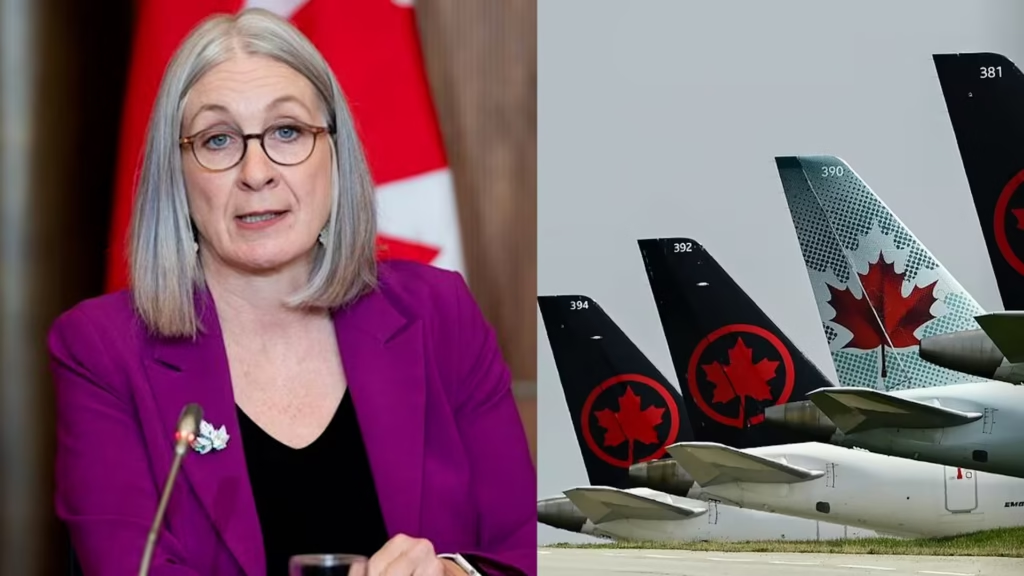
Air Canada Launches New Arbitration Program for Passenger Disputes
For years, frustrated air travelers in Canada have faced a common dilemma: what do you do when an airline denies your claim for compensation after a delayed flight, lost luggage, or another service disruption? The path has often felt like a dead end, leading many to abandon their claims or face the daunting prospect of small claims court. Now, Air Canada is piloting a new initiative that could fundamentally reshape how passenger disputes are resolved. The airline has launched a binding arbitration program, offering a potential alternative to the often lengthy and costly court process.
This move comes amidst heightened scrutiny of airline customer service and a regulatory environment increasingly focused on passenger rights. Let’s dive into what this new program entails, how it works, and what it could mean for you as a traveler.
Navigating the Turbulence: The Old System vs. The New Path
Historically, a passenger whose claim was rejected by Air Canada had limited formal recourse. The options were typically:
- Accept the airline’s decision and drop the claim.
- File a complaint with the Canadian Transportation Agency (CTA), which has faced significant backlogs, sometimes stretching for years.
- Pursue the matter in provincial small claims court, which requires time, effort, and often some understanding of legal procedures.
The new arbitration program is designed to sit between the airline’s initial denial and these more formal channels. It is a voluntary, binding, and final process. If a passenger chooses arbitration, they agree to abide by the arbitrator’s decision, forfeiting the right to take the same claim to court or the CTA.
How the Air Canada Arbitration Process Works
The program is structured as a test project with clear parameters:
- Eligibility: It applies to certain domestic passenger claims that have already been denied by Air Canada. This includes issues like flight delays, cancellations, and denied boarding where a passenger seeks monetary compensation.
- Opt-In: Participation is entirely voluntary for the customer. After a final denial from the airline, eligible claimants will be notified of the arbitration option.
- Cost: A critical feature is that Air Canada covers the cost of the arbitration. For the passenger, there is no financial risk to participate.
- Administrator: The process is being administered by the British Columbia-based Civil Resolution Tribunal (CRT), which already handles small claims and strata disputes in the province. The CRT will provide the platform and appoint a neutral arbitrator.
- Scope: Initially, the pilot is limited to claims under CAD $2,000, aligning with the upper limits of many small claims courts.
Weighing the Benefits: A Smoother Journey for Claims?
Proponents of the system highlight several potential advantages for consumers:
- Speed: Arbitration is designed to be significantly faster than waiting for a CTA ruling or navigating court schedules. Decisions could be rendered in weeks or months, not years.
- Accessibility: The process is conducted online and is meant to be user-friendly, removing the formal barriers of the court system. Passengers don’t need a lawyer.
- No Financial Burden: With Air Canada footing the bill, passengers can pursue their claim without worrying about upfront fees or the risk of incurring costs.
- Finality: A binding decision provides a clear endpoint to the dispute.
For Air Canada, the benefits may include reducing the volume of claims going to the overwhelmed CTA, managing legal costs, and potentially improving its customer service image by offering a perceived fair and independent review.
Potential Headwinds and Points of Caution
However, consumer advocates and legal experts are approaching the pilot with cautious skepticism. Key concerns include:
- Voluntary but Pressured? While optional, there is a concern that passengers, especially those unfamiliar with their rights, may see arbitration as the only “official” next step after an airline denial, without realizing they have other options.
- Binding Nature: The “final and binding” clause is a double-edged sword. If a passenger receives an unfavorable ruling, they have no appeal mechanism. In court, there is typically a right to appeal.
- Precedent and Transparency: Arbitration decisions are usually private and do not set public legal precedents. This means the outcomes won’t create a body of public case law that other passengers can reference, potentially keeping systemic issues out of the public eye.
- Scope of Claims: The pilot currently excludes certain types of claims, such as those related to baggage delays (as opposed to loss) or personal injury. It also does not cover claims from Aeroplan members or related to cargo.
The Bigger Picture: A Shift in Airline Passenger Rights
This pilot does not exist in a vacuum. It launches against the backdrop of Canada’s Air Passenger Protection Regulations (APPR), which set mandatory compensation standards for disruptions within an airline’s control. The CTA’s backlog has been a persistent problem, undermining the effectiveness of these regulations by delaying enforcement.
Air Canada’s arbitration model is being closely watched as a potential template for the industry. If deemed successful, it could prompt other airlines to adopt similar systems. Regulators may also view it as a viable alternative to ease the burden on the CTA. However, its success will be judged on its fairness, accessibility, and the real-world outcomes for passengers.
What Should Passengers Do?
If you find yourself with a denied claim from Air Canada during this pilot phase, here are steps to consider:
- Know Your Rights: First, understand what you are entitled to under the APPR. The CTA website provides clear guides on compensation for delays, cancellations, and denied boarding.
- Read Carefully: If you receive an offer to enter arbitration, read the terms thoroughly. Understand that agreeing means you cannot later go to court or the CTA for the same issue.
- Evaluate Your Options: Consider the value of your claim, the evidence you have, and your comfort with the process. For a straightforward claim under $2,000, the speed and zero cost of arbitration may be appealing. For more complex cases or if you wish to set a public precedent, small claims court may still be preferable.
- Seek Advice: If unsure, consider seeking brief advice from a legal clinic or consumer advocacy group.
Final Approach: A Work in Progress
Air Canada’s new arbitration program is a significant experiment in alternative dispute resolution for the aviation sector. Its core promise—a faster, free, and simpler path to justice—is undoubtedly attractive for consumers bogged down by bureaucracy. The true test will be whether it delivers consistently fair and independent decisions that uphold passenger rights as vigorously as the public system intends.
As this pilot project unfolds, it will be crucial for passengers, advocates, and regulators to monitor its outcomes closely. The goal should be a system that resolves disputes efficiently without diminishing the hard-won protections Canadian travelers now expect. For now, the program offers a new potential runway for resolution, but passengers must taxi carefully, fully aware of the destination before they agree to take off.