The Departure of Air Canada’s CEO Reveals Quebec’s Lingering Language Divide
The sudden resignation of Air Canada CEO Michael Rousseau has sent shockwaves through the Canadian business and political landscape. While framed as a personal decision, the underlying catalyst was a linguistic and cultural firestorm that erupted nearly a year prior. This episode is far more than a corporate leadership change; it is a stark, modern case study in how language remains a potent, non-negotiable pillar of identity in Quebec, and a critical business consideration that no national company can afford to ignore.
A Speech That Ignited a Firestorm
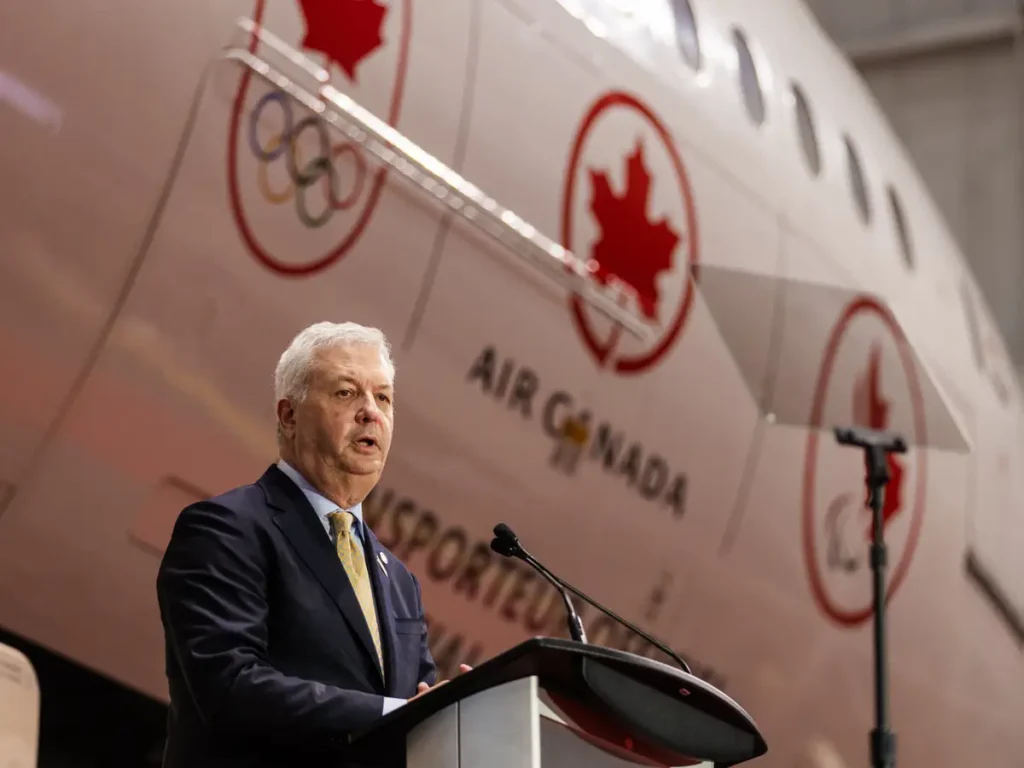
To understand the significance of Rousseau’s exit, we must revisit the event that set this chain reaction in motion. In November 2021, the CEO addressed the prestigious Palais des congrès de Montréal. His speech, focused on Air Canada’s financial performance, was delivered entirely in English. This, in itself, was not the primary issue. The controversy exploded during the subsequent Q&A session.
When a journalist asked Rousseau, in French, why he hadn’t learned the language after living in Montreal for over a decade, his reply was damning. He stated that Montreal was a “very English-speaking city” and that he had been “able to live in Montreal without speaking French.” The remarks were perceived not as an offhand comment, but as a profound dismissal of Quebec’s Francophone majority and its core cultural values. The backlash was immediate, severe, and sustained.
The Unforgiving Backlash: Political and Public Fury
The reaction from Quebec’s political class was unified and fierce. From the Premier of Quebec to the federal Minister of Official Languages, leaders across the spectrum condemned the comments as disrespectful and out of touch. The message was clear: leading a national symbol like Air Canada, which is subject to the Official Languages Act and has deep historical roots in Quebec, carries an obligation that transcends the balance sheet.
Public sentiment mirrored this outrage. Editorials, talk shows, and social media platforms were flooded with criticism. For many Quebecers, Rousseau’s words were a painful reminder of a time when English dominated the corporate boardrooms of Montreal, and a sign that such attitudes persisted. The incident touched a raw nerve, transforming the CEO from a corporate leader into a symbol of linguistic insensitivity.
Beyond Apologies: The Inescapable Reality of Language as Identity
Michael Rousseau did issue apologies, both immediately after the event and in the months that followed. He pledged to learn French intensively. However, the damage to his credibility as a leader who could authentically represent all of Canada, including its distinct Francophone society, appeared irreparable. This highlights a crucial lesson for any executive operating in Quebec:
*
- Language is Not Just Communication: In Quebec, French is the bedrock of cultural survival, a hard-fought right enshrined in law (like Bill 101) and in the collective psyche. Treating it as a mere “skill” is a fundamental misreading of the context.
*
- Symbolism Matters Immensely: As a former Crown corporation and the nation’s flag carrier, Air Canada is viewed as a public trust. Its leader is expected to embody national unity and respect for both official languages, not just in policy, but in personal practice.
*
- Apologies Have Limits: In matters of deep cultural identity, a public relations apology is often seen as the minimum requirement, not an absolution. Rebuilding trust requires demonstrable, sustained change, which Rousseau’s subsequent language lessons could not swiftly achieve.
The Ripple Effect: Implications for Corporate Canada
The Rousseau saga is a cautionary tale with far-reaching implications for any business with operations or significant interests in Quebec. It underscores that success in la belle province requires more than a translated website or bilingual customer service agents.
Executive Leadership and Cultural Competence
The modern C-suite, especially for high-profile national companies, must view bilingualism and cultural competence as core leadership competencies, not optional extras. Boards of directors are now on notice: a candidate’s ability to navigate Quebec’s unique linguistic landscape is a material factor in risk assessment and succession planning. The cost of getting it wrong—in reputational damage, political friction, and consumer goodwill—is astronomically high.
Quebec’s Evolving Linguistic Landscape
This incident also illuminates the evolving, yet unwavering, nature of Quebec’s language politics. While Montreal is a cosmopolitan, multilingual hub, the political and cultural assertion of French has only strengthened in recent years, with the provincial government introducing even stronger language laws (Bill 96). Rousseau’s comment that Montreal is “very English-speaking” was not just inaccurate to many; it was a direct contradiction of the official project to reinforce French as the common public language. For a corporate leader to echo a perspective that the state is actively working to counter was a profound strategic error.
Conclusion: A Watershed Moment for National Business
The departure of Air Canada’s CEO is a watershed moment. It conclusively demonstrates that in 21st-century Quebec, language is inseparable from identity, respect, and ultimately, social license to operate. The episode serves as a powerful reminder that for companies wishing to thrive in Canada, authentic engagement with French Canada is non-negotiable.
The lesson for corporate Canada is unambiguous: true leadership requires an understanding that goes beyond markets and metrics. It demands a genuine respect for the foundational narratives of the communities a company serves. In Quebec, that narrative is inextricably linked to the French language. Michael Rousseau’s tenure at Air Canada will be remembered not for its financial results, but for the costly, public lesson it provided: in Quebec, speaking the language is speaking to the heart of the nation.