
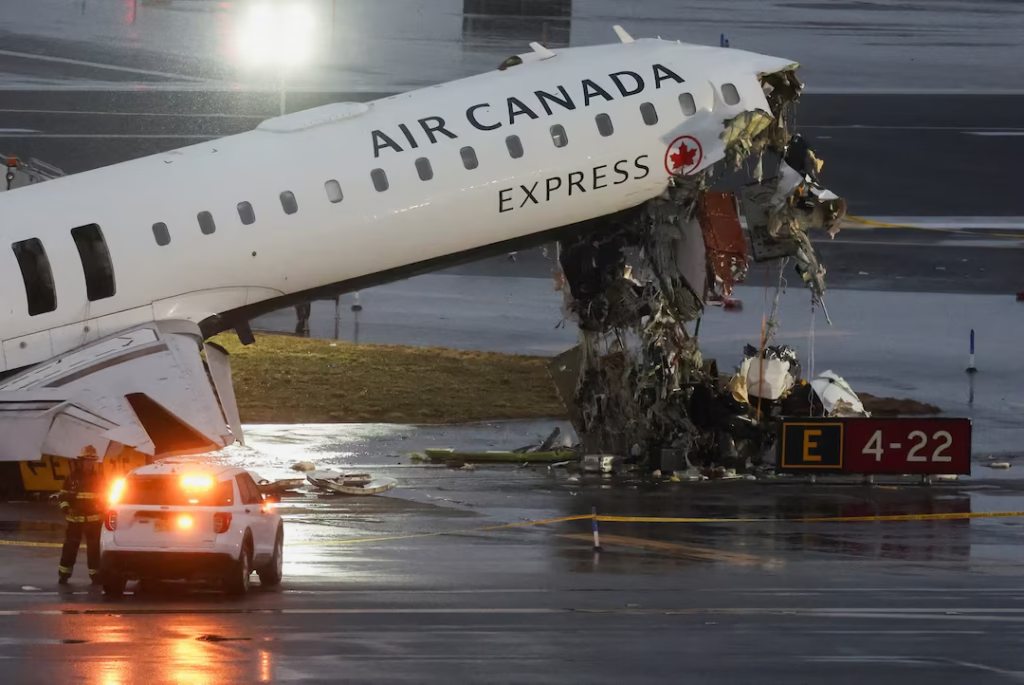
Air Canada Express Incident at LaGuardia: Plane Collides with Vehicle
A routine Saturday morning at one of America’s busiest airports was disrupted by a startling incident when an Air Canada Express flight collided with a ground vehicle on the tarmac. The event, which occurred at New York’s LaGuardia Airport (LGA) on March 23, 2026, has brought renewed focus to the complex and high-stakes environment of airport ground operations. While initial reports indicate no serious injuries, the collision serves as a critical reminder of the constant vigilance required to ensure safety both in the air and on the ground.
What Happened at LaGuardia Airport?
According to official statements from the Port Authority of New York and New Jersey and the Federal Aviation Administration (FAA), the incident involved an Air Canada Express Embraer 175 regional jet. The aircraft, operating as flight AC-8912, had just arrived from Toronto’s Pearson International Airport (YYZ) and was taxiing to its assigned gate at Terminal B when the collision occurred.
The aircraft made contact with an airport maintenance vehicle, specifically a “heavy-duty sweeper,” while navigating the taxiway. The impact caused visible damage to the vehicle and is believed to have affected the aircraft’s right-side landing gear area. Crucially, all 76 passengers and 4 crew members onboard the jet were safely deplaned via air stairs on the taxiway and transported to the terminal by bus. No injuries were reported among those on the plane or the vehicle’s operator.
Immediate Aftermath and Response
The response to the incident was swift and comprehensive, highlighting established airport emergency protocols.
- Emergency Services Mobilized: Port Authority police and fire rescue units were immediately dispatched to the scene as a standard precaution.
- Airport Operations Impacted: The disabled aircraft on the taxiway led to significant disruptions. The FAA implemented ground stops and delays for arriving flights, causing a ripple effect throughout the morning schedule. Several flights were diverted to nearby airports, including Newark Liberty International (EWR) and John F. Kennedy International (JFK).
- Launch of Investigations: The primary investigation was taken over by the National Transportation Safety Board (NTSB), the federal agency responsible for determining the probable cause of transportation accidents. The FAA is also supporting the investigation. Initial steps include securing the scene, interviewing the flight crew and vehicle operator, and reviewing ground radar data and cockpit voice recordings.
Understanding the Risks of the “Ramp” Area
To the average traveler, the tarmac or “ramp” area might seem like a wide-open space, but it is a densely choreographed and high-risk environment. This incident underscores the ever-present dangers of ground operations, often referred to as “ramp safety.”
The airport apron is a hive of simultaneous activity, with aircraft taxiing, pushback tugs maneuvering, fuel trucks driving, baggage carts weaving, and various service vehicles like the sweeper involved in this case all operating in close proximity. Communication between flight decks, air traffic control (ground control), and vehicle drivers is constant and must be flawless. Factors like poor visibility, adverse weather, fatigue, procedural non-compliance, or simple miscommunication can create a recipe for a “ramp incident” or, in more serious cases, a “ground collision.”
Historical Context and Safety Evolution
While collisions between aircraft and ground vehicles are rare, they are not unprecedented. Each incident has contributed to the evolution of safety protocols:
- Enhanced Technology: Many modern airports now employ ground radar systems (ASDE-X) that track the precise location of all vehicles and aircraft on the movement areas, providing an extra layer of oversight for controllers.
- Improved Vehicle Design: Ground service vehicles are increasingly equipped with enhanced lighting, reflective markings, and proximity sensor systems to make them more visible to pilots.
- Strict Procedural Controls: The use of standardized hand signals, mandatory high-visibility clothing for ground personnel, and defined vehicle pathways are all results of lessons learned from past incidents.
The LaGuardia event will undoubtedly be scrutinized to see if any of these systems failed or if new measures are needed.
What’s Next: Investigation and Industry Implications
The NTSB’s investigation will be thorough and could take 12-18 months to complete before a final report is issued. Investigators will be looking at several key areas:
- Human Factors: What was the sequence of communication between the pilots, ground control, and the vehicle driver? Were all parties aware of each other’s locations? Were there any distractions or misinterpretations?
- Procedural Compliance: Was the vehicle operating in an authorized area? Were the pilots following the assigned taxi route as cleared by ground control?
- Environmental Conditions: What was the visibility and weather like at the time of the incident? Was there any glare, rain, or other factors that could have impaired vision?
- Airport Infrastructure: Are the taxiway layouts, signage, and lighting at LaGuardia’s Terminal B apron area adequate for safe operations during peak traffic?
The findings will lead to safety recommendations directed at the FAA, Air Canada, the Port Authority, and potentially aircraft and vehicle manufacturers. These recommendations are not mandatory but carry significant weight and are almost always adopted by the industry.
Passenger Experience and Trust
For the 76 passengers onboard, what began as a normal flight ended in an unexpected and undoubtedly unsettling experience. Being deplaned on a taxiway is a clear signal that something unusual has occurred. However, the professional response by the crew—ensuring a calm and orderly evacuation—and the lack of injuries are positive outcomes from a serious situation.
Incidents like this test the public’s trust in the aviation system. Transparency from the investigating bodies and the airlines involved is paramount. Air Canada has stated it is fully cooperating with authorities and has offered support to its customers. The ultimate goal is to learn from the event to prevent recurrence, thereby strengthening that trust by demonstrating a relentless commitment to safety at every level of operation.
Conclusion: A Wake-Up Call on the Ground
The collision between the Air Canada Express jet and the ground vehicle at LaGuardia is a stark reminder that aviation safety extends far beyond the flight itself. It encompasses every single movement from the gate to the runway and back again. While the aviation industry boasts an incredible safety record in the air, the ground environment continues to present complex challenges.
As traffic returns to normal at LaGuardia, the investigative work begins in earnest. The lessons learned from this Saturday morning incident will be analyzed, shared globally, and integrated into training and procedures worldwide. In the relentless pursuit of perfect safety, even an event with no injuries is treated with the utmost seriousness, ensuring that every close call makes the entire system stronger for the millions of passengers who take to the skies every day.

