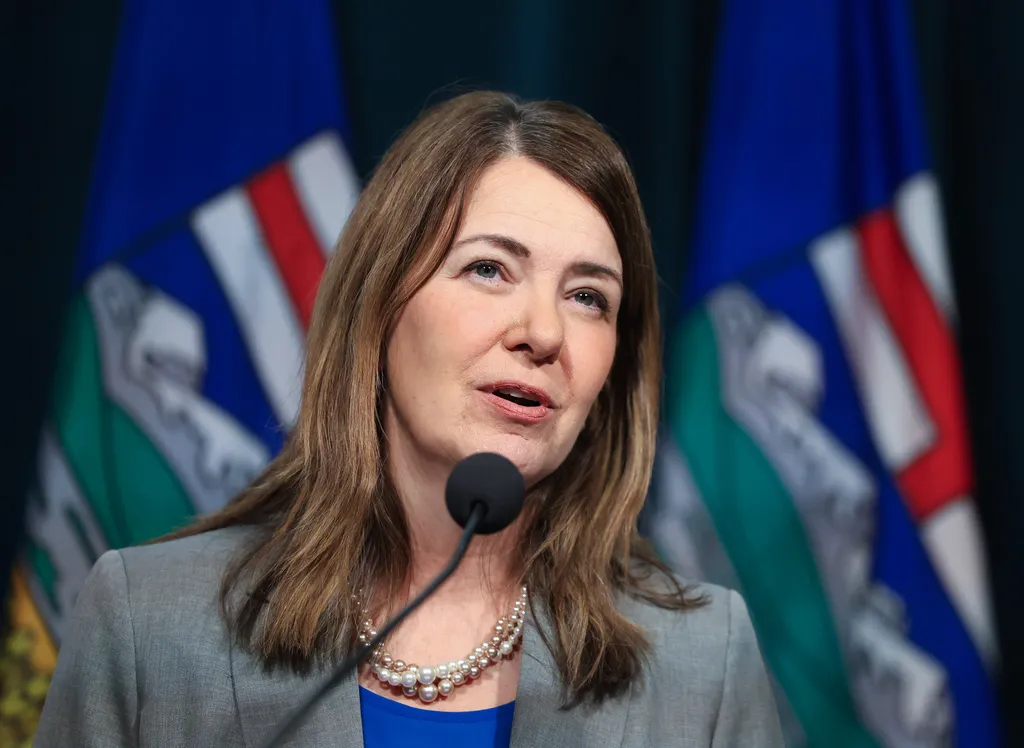
Alberta Premier Responds to MLA’s Separation Petition Support
A significant internal debate has surfaced within Alberta’s governing United Conservative Party (UCP), placing Premier Danielle Smith in the delicate position of managing her caucus’s public divisions. The controversy stems from a public statement of support by UCP MLA Jason Stephan for a petition advocating for Alberta’s separation from Canada. Premier Smith’s response, which sought to clarify government policy while acknowledging the frustrations of her base, highlights the ongoing tension between grassroots sentiment and the practicalities of governing within Confederation.
MLA’s Public Endorsement Ignites Political Firestorm
Jason Stephan, the UCP MLA for Red Deer-South, publicly aligned himself with a petition launched by the group Take Back Alberta. The petition calls on the Alberta legislature to pass a motion to begin the process of separating from Canada, citing grievances related to federal equalization payments, environmental policies, and what it describes as federal overreach.
In a social media post, Stephan stated his support for the petition’s goals, framing it as a necessary step to assert Alberta’s economic and constitutional rights. His endorsement was not a quiet backbench murmur but a prominent amplification of a deeply contentious issue, immediately drawing attention from across the political spectrum and forcing a response from the Premier’s office.
The Core of the Separatist Argument
The petition and Stephan’s support tap into a long-standing, though often fluctuating, undercurrent of Western alienation. Proponents argue that:
- Alberta contributes disproportionately to federal equalization without receiving a fair return on investment in services or infrastructure.
- Federal climate and energy policies, such as the carbon tax and proposed emissions caps, are seen as deliberate attacks on the province’s core industry.
- A belief persists that Alberta’s sovereignty within Confederation is not being respected, necessitating a stronger, even unilateral, stance.
Premier Smith’s Nuanced Rebuttal and Caucus Management
Faced with a public challenge from within her own ranks, Premier Danielle Smith issued a careful and strategic response. She did not directly reprimand Stephan but instead used the moment to reiterate her government’s official position, drawing a clear line between advocacy for autonomy and the push for separation.
Smith emphasized that while her government is fiercely fighting for a fair deal within Canada—through the Alberta Sovereignty Within a United Canada Act and ongoing jurisdictional battles—openly pursuing separation is not its policy. She acknowledged the deep frustration felt by many Albertans, validating the emotion behind Stephan’s stance, but she steered the conversation back to her preferred framework: autonomy, not independence.
“My focus is on defending Alberta’s interests within Canada,” Smith stated, effectively framing separation as a counterproductive distraction from the tangible legal and political battles her administration is currently waging with Ottawa.
The Delicate Balance: Grassroots Pressure vs. Governing Reality
This incident is a microcosm of the tightrope Premier Smith must walk. A significant portion of the UCP’s base, particularly the faction mobilized by Take Back Alberta, holds strong separatist or pro-independence leanings. Stephan’s move can be seen as a direct appeal to that constituency.
However, as Premier, Smith is acutely aware of the immense practical and economic perils of a separatist agenda. From trade barriers and currency issues to the destabilization of billions in investment, the realities of separation are fraught. Her response aimed to placate the sentiment without endorsing the goal, a classic act of political caucus management designed to maintain unity without ceding ground on official policy.
Broader Implications for Alberta and Federal Relations
The public exchange between a premier and her own MLA on such a fundamental issue sends ripples beyond Edmonton.
- For the UCP: It exposes an ongoing ideological rift between pragmatic governance and populist principle. How Smith manages this rift will be critical to her party’s cohesion ahead of the next election cycle.
- For Alberta: It keeps the conversation about the province’s place in Canada at the forefront of political discourse, ensuring that federal policymakers cannot ignore the depth of discontent.
- For Ottawa: It serves as a stark warning. While Premier Smith may be tamping down separatist talk, the very fact that it emerges so prominently from a governing party caucus underscores the consequences of prolonged, unresolved conflict with the province.
Historical Context: Separation Sentiment as a Political Tool
Separatist sentiment in Alberta has historically ebbed and flowed, often peaking during times of economic downturn or intense federal-provincial conflict, such as the National Energy Program in the 1980s. It is frequently wielded as a political tool to gain leverage in negotiations with the federal government rather than as a concrete plan for nationhood.
Premier Smith’s strategy appears to fit within this tradition. By channeling separatist energy into sovereignty legislation and legal challenges, she aims to convert frustration into actionable policy pressure, hoping to achieve concessions from Ottawa that would, in theory, make separation a less appealing prospect to her supporters.
Looking Ahead: Unity, Division, and the Path Forward
The aftermath of MLA Jason Stephan’s petition support leaves several unanswered questions. Will other UCP MLAs publicly echo his sentiments, testing Premier Smith’s authority further? How will the official opposition, the Alberta NDP, leverage this division to argue that the UCP is too extreme to govern?
Most importantly, can Premier Smith successfully harness the powerful emotions behind the separatist argument to achieve her “fair deal” objectives, or will the forces she helped galvanize ultimately demand more than she is willing or able to give?
For now, the Premier has drawn her line. The government’s policy is to fight for Alberta within Canada, not for Alberta outside of it. However, the Stephan episode is a potent reminder that the line is thin, and the pressure from within her own party to cross it will remain a defining feature of her premiership. The balance between representing a frustrated base and governing a province within a national framework continues to be Danielle Smith’s greatest political challenge.