Alberta Whisky Definition: New Legal Standards for Distillers
For decades, the world of Canadian whisky has been defined by the traditions of Ontario and the East. But a seismic shift is underway, originating from the foothills of the Rockies. The Government of Alberta has officially established its own legal definition for “Alberta Whisky,” a move championed by Service Alberta Minister Dale Nally as a catalyst for innovation, economic growth, and global recognition. This isn’t just a bureaucratic update; it’s a declaration of independence for a province with a storied distilling history, aiming to carve out a distinct identity on the world stage.
A New Frontier for Canadian Whisky
The new standards, developed in close consultation with Alberta distillers, provide a clear and regulated framework for what can be labeled and sold as Alberta Whisky. This clarity is designed to protect both producers and consumers, ensuring that when someone buys a bottle bearing the name, they know exactly what craftsmanship and local character they’re getting.
At its core, the definition mandates three non-negotiable pillars:
- 100% Alberta Grain: Every kernel of corn, rye, wheat, or barley must be grown within the province’s borders. This farm-to-bottle requirement roots the spirit deeply in Alberta’s agricultural terroir.
- 100% Alberta Water: The water used in production, from mashing to proofing, must be sourced from Alberta. This connects the whisky to the province’s pristine glacial and aquifer sources.
- 100% Alberta Processing: The entire production journey—mashing, fermenting, distilling, aging, and bottling—must occur within Alberta. This guarantees total control and authenticity of the process from start to finish.
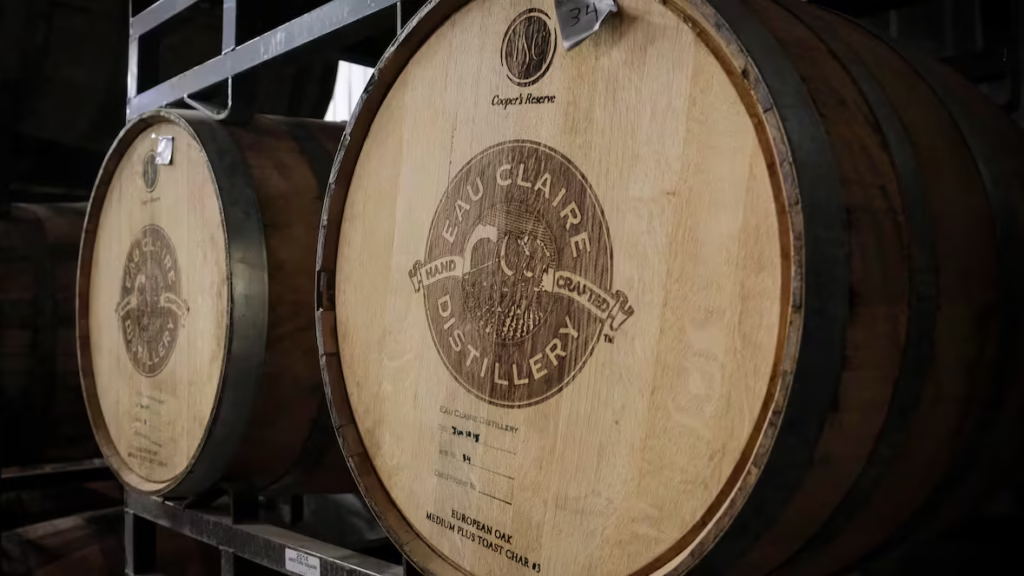
Crucially, the rules also stipulate that the whisky must be aged in new, charred oak barrels for a minimum of three years, aligning with some of the strictest international standards for straight whiskies.
Why This Move Matters: Innovation and Identity
For Minister Dale Nally, this is fundamentally about economic development and cutting red tape. By creating a protected designation, the government provides local distillers with a powerful marketing tool and a unique selling proposition in a crowded global market. It allows them to tell a compelling story of local provenance that resonates with consumers seeking authenticity.
“This empowers our distillers to innovate and create high-quality products that stand out,” Nally stated. The definition provides a stable foundation upon which craft distillers can experiment with confidence, knowing their adherence to these high standards will be recognized and valued.
The move has been met with significant enthusiasm from the local industry. Distillers now have a clear “recipe” for achieving the Alberta Whisky designation, which can help them secure shelf space both domestically and internationally. It also fosters a stronger collective identity, similar to how Scotch is protected by Scottish law or Bourbon by American regulations.
Expert Insight: A Long-Awaited Clarification
Canadian whisky author and expert Davin de Kergommeaux, who consulted on the new standards, hailed the decision as a critical step forward. He emphasizes that while many Alberta distillers were already producing spirits that met these high benchmarks, the formal definition provides essential legal clarity and consumer protection.
“Having a standard that people can rely on, that if it says ‘Alberta Whisky’ on the label, it means something very specific, is a great benefit to everyone,” de Kergommeaux noted. He compares it to the appellation system for wine, where geographic origin guarantees certain methods and quality.
This clarity helps distinguish true Alberta-made products from whiskies that may be blended or finished in Alberta but use ingredients from elsewhere. It elevates the designation from a vague marketing term to a certified mark of origin and quality.
The Bigger Picture: Alberta on the World Stage
Alberta is no stranger to whisky excellence. The province is home to behemoths like Alberta Distillers Limited, a giant in the production of rye whisky for bulk blending and major brands. However, the new definition is particularly impactful for the burgeoning craft distillery scene. For smaller artisans, the “Alberta Whisky” seal is a badge of honour that can command attention and premium pricing.
The regulation positions Alberta to compete not just as a component supplier, but as a distinct whisky region in its own right. Imagine a future where international connoisseurs discuss the robust, grain-forward profile of an Alberta Whisky alongside a peaty Scotch or a sweet Kentucky Bourbon. This is the potential the province is now unlocking.
What It Means for Whisky Drinkers
For consumers, the benefits are tangible:
- Guaranteed Provenance: You can trust that a bottle of Alberta Whisky is a genuine product of the province’s land and craft.
- Encouragement of Quality: The strict standards around aging and production methods ensure a baseline of high-quality craftsmanship.
- Enhanced Storytelling: Each bottle now carries a richer narrative about local agriculture, pristine water, and Albertan skill, making the drinking experience more meaningful.
- Informed Choice: It creates a clear distinction on liquor store shelves, helping you make decisions based on defined characteristics rather than ambiguous branding.
Aging, Blending, and the Path Forward
An important aspect of the new rules addresses the art of blending. The definition allows for the blending of different Alberta Whiskies, as long as each component in the blend itself meets the 100% Alberta standards. This preserves the crucial role of the master blender in creating complex, balanced final products while maintaining integrity.
The three-year minimum aging requirement in new oak also signals a commitment to depth and maturity, moving beyond young or unaged spirits to compete in the premium aged whisky category.
As the industry adapts, the next steps will involve educating retailers, bartenders, and consumers about what the “Alberta Whisky” designation truly means. Successful adoption will rely on this outreach, turning legal text into a recognizable and sought-after mark of quality.
Conclusion: Distilling a Legacy
The establishment of a legal definition for Alberta Whisky is more than a policy change. It is an investment in the province’s agricultural and manufacturing future, a celebration of its craft distillers, and an invitation to the world to taste a spirit shaped by the Alberta landscape. By setting a high bar rooted in local ingredients and production, Alberta is not just defining a whisky—it’s distilling its own legacy. For distillers, it’s a framework for growth. For drinkers, it’s a promise of authenticity. And for the world of whisky, it’s the exciting arrival of a new, clearly defined region ready to make its mark.