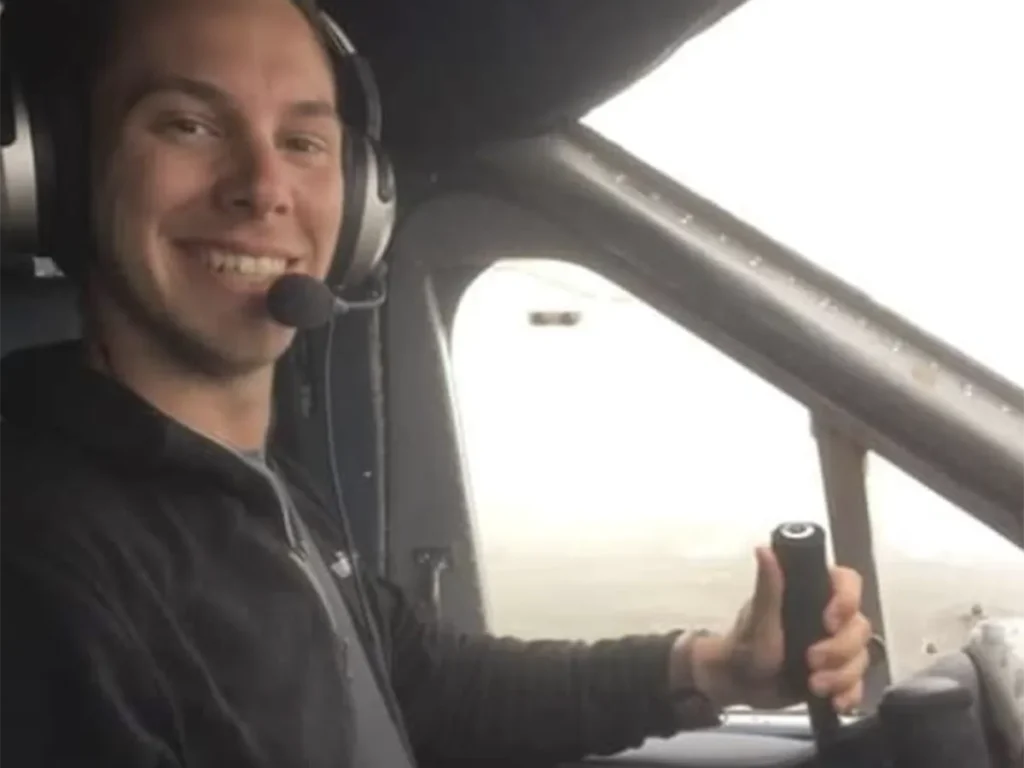
Remembering Pilot Antoine Forest: A Quebec Hometown in Mourning After Air Canada Incident
The close-knit community of Saint-Honoré, Quebec, is cloaked in a profound and somber silence. This quiet town, nestled in the Beauce region, is grappling with the sudden loss of one of its own: Captain Antoine Forest. The experienced Air Canada pilot was at the controls of Flight AC 872 from Toronto to New York’s LaGuardia Airport when the aircraft encountered a harrowing landing incident, resulting in a runway excursion. While all passengers and crew survived, the event has left an indelible mark, particularly in the hometown now mourning a man remembered not just for his skill in the cockpit, but for his character on the ground.
A Community’s Heartbreak: Saint-Honoré Mourns a Native Son
In Saint-Honoré, a place where everyone knows their neighbor, the news of the Air Canada incident sent shockwaves of fear that quickly turned to grief. Antoine Forest was more than a name in a news report; he was a local boy who had soared to great heights, literally and figuratively. The town’s mayor, along with residents who knew Forest and his family, expressed a collective heartbreak, emphasizing the deep connections that bind small communities.
The focus has swiftly shifted from the mechanics of the incident to the memory of the man. Forest is being remembered as a dedicated professional who achieved his dream, a point of pride for his hometown. His journey from the fields of Quebec to the captain’s seat of a major commercial airliner served as an inspiration to many young people in the region, proving that ambition and hard work could lead to extraordinary careers.
The Incident at LaGuardia: A Moment of Crisis and Calm
On the afternoon of the incident, Air Canada Flight AC 872 was on a routine approach to LaGuardia Airport’s Runway 4. Weather conditions were challenging, with heavy rain and reduced visibility reported in the area. During the landing roll, the Airbus A220-300 aircraft departed the runway surface, its nose gear collapsing as it came to a stop in a grassy area.
Despite the dramatic nature of the event, the successful evacuation of all 59 passengers and 3 crew members stands as a testament to the crew’s training and composure. The Transportation Safety Board of Canada (TSB) and the U.S. National Transportation Safety Board (NTSB) have launched a joint investigation to determine the precise sequence of events and contributing factors.
Key Details of the Air Canada Flight 872 Incident:
- Aircraft: Airbus A220-300 (C-GJZN)
- Route: Toronto Pearson (YYZ) to New York LaGuardia (LGA)
- Date & Time: June 20, 2024, during afternoon landing
- Weather: Heavy rain, low visibility
- Outcome: Runway excursion, nose gear collapse. All 62 souls on board evacuated safely with minor injuries reported.
Antoine Forest: A Legacy of Professionalism and Passion
Behind the headlines and investigation reports was Captain Antoine Forest, a pilot whose career reflected a deep commitment to safety and excellence. Colleagues and friends describe him as a meticulous and calm professional, respected by his peers. His path to Air Canada was one of dedication, a journey that began with a passion for aviation that likely took root long before he left Saint-Honoré.
In the aviation community, such incidents are met with a sober understanding of the immense responsibility pilots carry. The fact that the outcome was not tragic is being viewed through the lens of crew resource management and decisive action in an emergency. Forest’s role in that outcome, during what were likely the most critical seconds of his career, forms a crucial part of his professional legacy.
The Human Impact Beyond the Headlines
While the safety of the passengers is the paramount positive outcome, the incident has unleashed a cascade of human impacts. For the passengers, it was a terrifying experience that will require emotional processing. For the aviation industry, it is another case study in safety procedures and aircraft performance in adverse weather.
But for Saint-Honoré, the impact is deeply personal and rooted in loss. The town is now tasked with the difficult duty of remembrance. Candlelight vigils, shared stories on social media, and quiet support for the Forest family have become the community’s response. They are not mourning a statistic or a news item; they are mourning a friend, a former classmate, a source of local pride whose life was cut short in the line of duty.
How Communities and the Aviation World Cope
- Local Support Networks: Community centers, churches, and municipal offices in areas like Saint-Honoré often become focal points for collective grief and logistical support for affected families.
- Critical Incident Stress Management (CISM): Airlines immediately deploy professional support teams for passengers, crew, and their families to address trauma and emotional distress following a serious incident.
- Investigative Rigor: The thorough, fact-based approach by agencies like the TSB and NTSB is essential not only for finding cause but for providing closure and driving future safety improvements.
A Final Approach: Honoring a Life of Service
As investigators pore over flight data and witness statements, the story of Flight AC 872 will continue to unfold in technical terms. However, in Quebec, the narrative is firmly centered on Antoine Forest. His life reminds us that behind every flight number, every safety announcement, and every uniform is an individual with a story, a hometown, and a dream that was lived.
The mourning in Saint-Honoré is a powerful reminder of the human connections that underpin our global transportation network. Captain Forest’s legacy will be complex—intertwined with a professional incident under investigation, but also defined by the universal themes of dedication, service, and the profound sadness of a community that has lost a shining light.
The skies may feel a little emptier for those who knew him, but the memory of his journey from the Beauce to the flight deck will endure as a poignant story of aspiration and the fragile, human reality behind the technology of modern travel.