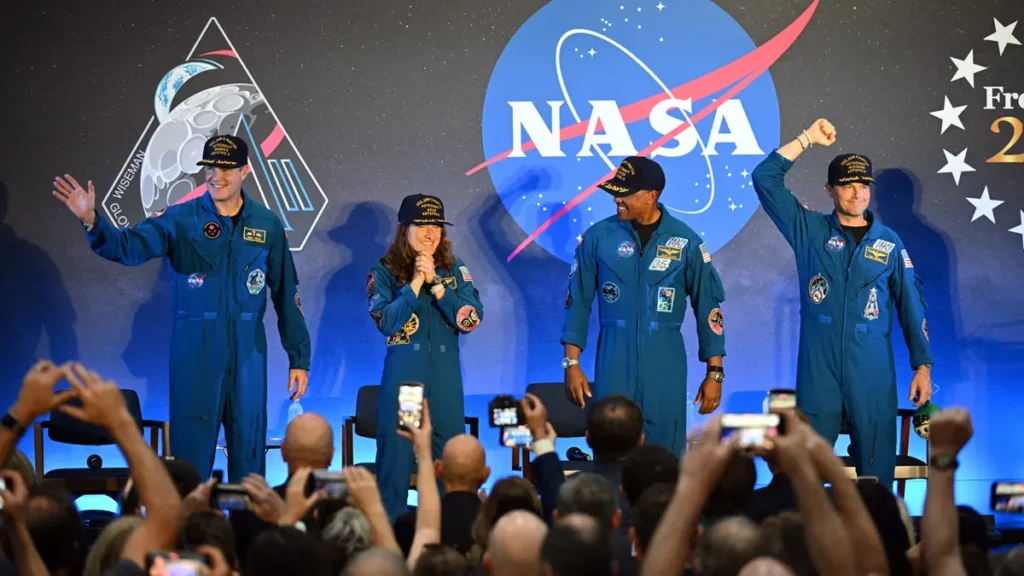
Artemis II Astronauts Share Unbreakable Bond After Historic Moon Mission
The four astronauts of NASA’s Artemis II mission have returned to Earth, but they haven’t come back alone. They’ve brought with them a profound and unshakeable connection forged in the fires of preparation for a journey no human has attempted in over 50 years: a trip around the Moon. While their spacecraft, Orion, is still being prepared, the crew—Reid Wiseman, Victor Glover, Christina Koch, and Jeremy Hansen—has completed an intense year of training and a critical operational milestone, emerging not just as a team, but as a family.
Their recent return from a grueling set of final integrated simulations in Texas marks the end of a pivotal chapter. This wasn’t just practice; it was the ultimate dress rehearsal, testing their ability to handle everything from nominal operations to dire emergencies as a single unit. The experience has cemented a bond they describe as essential for the safety and success of their pioneering flight.
Forged in the Fire of Simulation
The path to deep space is paved with simulated crises. At NASA’s Johnson Space Center, the Artemis II crew faced a battery of what the agency calls “integrated simulations.” These are high-stakes, high-fidelity tests that link the crew in their mock capsule with Mission Control in real-time, creating a seamless, pressurized environment where anything can—and does—go wrong.
More Than Just Technical Training
“We just finished up a series of simulations where we got to really put to test our training over the last year,” explained pilot Victor Glover. The goal was relentless: to practice responding to failures until their reactions became second nature. But the outcome was about more than technical proficiency. “What it’s really done is brought us together as a crew,” Glover said. “We trust each other implicitly.”
Commander Reid Wiseman echoed this sentiment, highlighting the emotional weight of the experience. “You go through so many challenges together,” he said. “You fail together, you succeed together, and you really learn about each other.” These simulations, often spanning long, intense days, strip away pretense and force a level of reliance and honesty that forms the bedrock of true camaraderie. They didn’t just learn procedures; they learned each other’s instincts, strengths, and how to communicate under extreme stress.
The Human Element of a Lunar Mission
While the Artemis program is a showcase of breathtaking technology—the powerful SLS rocket, the advanced Orion spacecraft—NASA officials and the crew themselves consistently return to the human element as the most critical component. This mission will carry the first woman, the first person of color, and the first non-American (Hansen represents the Canadian Space Agency) on a lunar voyage. Their unique perspectives are vital, but their unified team identity is paramount.
“We’ve been through the ringer together,” said mission specialist Christina Koch, who holds the record for the longest single spaceflight by a woman. “That bond is absolutely unbreakable at this point.” This bond is the invisible shield that will protect them during their 10-day journey, which will see them venture farther from Earth than any human since the Apollo era.
A Foundation of Trust for Unknown Challenges
Jeremy Hansen, the CSA astronaut who will become the first Canadian to journey into deep space, framed their connection as a fundamental safety system. “We depend on each other for our survival,” Hansen stated plainly. “That creates a bond that is very unique and very strong.” This trust is the buffer against the unknown. In the void between Earth and the Moon, where communication delays will grow and real-time help is impossible, their ability to function as a cohesive, trusting unit is their greatest asset.
The crew’s dynamic is a carefully balanced blend of expertise and personality:
- Wiseman brings prior spaceflight experience and steady command.
- Glover, as pilot, merges engineering precision with test-pilot calm.
- Koch contributes unparalleled endurance experience and operational rigor.
- Hansen adds a fresh, strategic perspective and crucial robotic arm expertise for the mission’s unique objectives.
Together, they have become a single organism, a “crew of four” that operates as one.
Looking Ahead: From Simulation to The Real Voyage
With this intense training block complete, the Artemis II astronauts now enter a period of continued, focused preparation as they await the final steps of spacecraft assembly and testing. The lessons from the simulations are being meticulously reviewed, but the intangible takeaway is already locked in: their unbreakable bond.
The Legacy of a Unified Team
As they look toward their launch, currently scheduled for no earlier than September 2025, the crew carries a responsibility that extends far beyond their flight. They are the pathfinders for the Artemis Generation, the ones who will re-prove human capabilities in deep space and set the stage for the future lunar landing of Artemis III.
Their message is clear: the journey to the Moon and beyond is not just a triumph of engineering, but a triumph of human collaboration. The steel of their spacecraft is matched by the steel of their trust in one another. They have learned that to navigate the cosmos, you must first understand the person in the seat next to you.
The Artemis II mission promises to deliver stunning views of the lunar far side and a historic perspective of our small, blue planet. But for Wiseman, Glover, Koch, and Hansen, the most significant view may be the one they share across the cockpit—a look of absolute, hard-earned trust between the four individuals chosen to lead humanity’s return to the Moon. Their bond, forged in simulation and strengthened by shared purpose, is now their most vital piece of equipment, and it is fully mission-ready.