
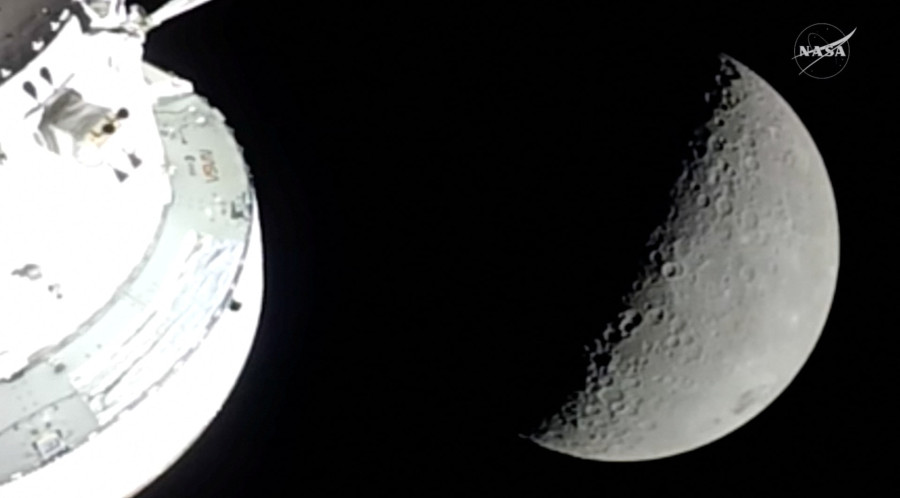
Artemis II Crew to Make History by Surpassing Apollo 13’s Legendary Distance Record
For over five decades, a record set not by intention, but by survival, has stood as the ultimate benchmark of human distance from Earth. The crew of the ill-fated Apollo 13 mission, in their desperate loop around the Moon to return home safely, inadvertently traveled farther from our planet than any humans before or since. Now, NASA’s Artemis II mission is poised to intentionally shatter that iconic record, marking a new chapter in human exploration and demonstrating the capabilities of the systems designed to take us back to the Moon and beyond.
A Record Born from Peril: The Apollo 13 Legacy
To understand the magnitude of Artemis II’s upcoming journey, we must look back to April 1970. The Apollo 13 mission, intended as the third lunar landing, was transformed into a desperate rescue operation after an oxygen tank exploded en route to the Moon. With their lunar module crippled, astronauts Jim Lovell, Jack Swigert, and Fred Haise used the Moon’s gravity in a slingshot maneuver to swing back toward Earth.
This lifesaving trajectory took them around the far side of the Moon, and in doing so, propelled them to a maximum distance of approximately 400,171 kilometers (248,655 miles) from Earth. For over 50 years, no human has ventured beyond that point. Their achievement, a testament to human ingenuity under extreme duress, became an untouchable milestone—until now.
Intentional Exploration vs. Heroic Survival
The key difference between the two missions lies in purpose. Apollo 13’s distance was a byproduct of a crisis. Artemis II’s mission profile is meticulously designed to test the limits of the new Orion spacecraft in deep space. While Apollo 13’s crew fought for their lives in a frozen, damaged craft, the Artemis II astronauts will be putting Orion’s state-of-the-art life support, communication, and navigation systems through their paces, validating the vehicle for future long-duration missions.
Artemis II: The Pioneering Voyage Beyond the Record
Scheduled to launch no earlier than September 2025, Artemis II will be the first crewed mission of NASA’s ambitious Artemis program. Its primary goal is not to land on the Moon, but to rigorously test all systems with astronauts aboard during a multi-day journey into a distant lunar orbit.
The four-person crew—commander Reid Wiseman, pilot Victor Glover, mission specialist Christina Koch, and Canadian Space Agency mission specialist Jeremy Hansen—will embark on a roughly 10-day mission. Their path will take them on a figure-eight trajectory extending well beyond the Moon, ultimately reaching a point more than 370,000 kilometers from Earth at its peak, surpassing Apollo 13’s maximum distance.
Mission Objectives: Proving Ground for Deep Space
This record-breaking journey is far more than a symbolic feat. It is a critical stress test. The mission is designed to prove that Orion can:
- Support a human crew safely in deep space for the duration of a lunar mission.
- Execute crucial maneuvers, including a trans-lunar injection and a return powered flyby of the Moon.
- Maintain reliable communication with mission control from unprecedented distances.
- Allow the crew to manually pilot the spacecraft, a key demonstration of operational control.
Every system, from the environmental control to the heat shield rated for a high-speed lunar return, will be scrutinized. The data gathered will be invaluable for ensuring the safety and success of Artemis III, the mission slated to return humans to the lunar surface.
The Vessel: NASA’s Orion Spacecraft
At the heart of this daring mission is the Orion spacecraft, a vehicle built specifically for the rigors of deep space. Unlike the Apollo command module, Orion boasts significantly more advanced technology and space for its crew.
- Crew Module: Provides about 30% more habitable volume than Apollo, giving the four astronauts more room to live and work during their journey.
- European Service Module (ESM): Built by ESA, this component supplies power, propulsion, thermal control, air, and water—essentially acting as the spacecraft’s powerhouse and life-support backbone.
- Launch Abort System: Designed to pull the crew module to safety in the event of an emergency during launch, a critical safety feature.
Orion’s design emphasizes sustainability and reusability for the crew module, aligning with the long-term vision of the Artemis program.
The Bigger Picture: Why This Record Matters
Breaking the Apollo 13 distance record is a headline-grabbing milestone, but its true importance is as a stepping stone. The Artemis program has a clear, ambitious roadmap:
- Artemis I: Completed in 2022, this uncrewed test flight successfully demonstrated Orion’s spaceworthiness on a journey to the Moon and back.
- Artemis II: The upcoming crewed mission to test all systems in deep space and set the new distance record.
- Artemis III: Will land the first woman and the next man on the lunar surface, targeting the lunar South Pole.
This progression builds the foundational experience necessary for sustainable lunar exploration. The lessons learned from operating Orion at its maximum distance, managing crew health, and maintaining systems far from Earth are directly applicable to the ultimate goal: human missions to Mars. The distance to Mars is measured in hundreds of millions of kilometers; Artemis II is the essential first proof that our spacecraft and crews can operate safely in the deep space environment for the required duration.
A New Chapter Dawns
When the Artemis II crew gazes out their window at a distant, shrinking Earth, they will see a sight no human has witnessed firsthand in over half a century. They will be pioneers in the truest sense, not by accident, but by design. Their mission honors the legacy of Apollo 13’s heroic crew by taking the baton of exploration they carried and running with it intentionally into the deeper darkness.
Shattering Apollo 13’s record is more than a numerical victory; it is a powerful statement of renewed purpose. It signals that humanity is once again ready to push the boundaries of the possible, using the Moon as a proving ground and springboard for the next giant leap. The Artemis II mission is the crucial bridge between the legendary achievements of the past and the extraordinary potential of our future in the solar system.

