
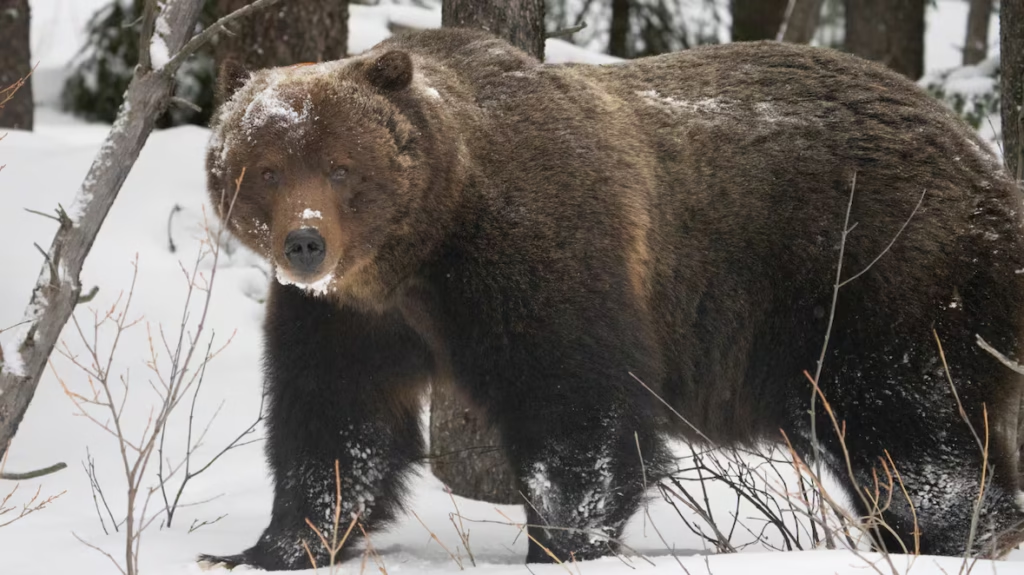
The Legend Awakens: Banff’s Iconic Grizzly Bear, The Boss, Returns for Spring
The deep, prolonged winter of the Canadian Rockies is finally loosening its grip. As the sun climbs higher and the snow recedes to reveal greening valleys, a powerful signal of the changing season has been confirmed. In the heart of Banff National Park, a living legend has stirred from his den. The iconic grizzly bear known far and wide as **“The Boss”** has emerged, marking one of the first significant grizzly appearances in Alberta for 2024. His return is more than a wildlife update; it’s an annual rite of passage for the ecosystem and a profound reminder of the wild heart that still beats within this majestic landscape.
More Than a Bear: The Making of a Legend
To the casual observer, he is a massive grizzly, a commanding presence of muscle and fur. But to wildlife officials, researchers, and seasoned park visitors, The Boss is a celebrity of survival, a testament to resilience in an increasingly fragmented world. Believed to be nearly 20 years old, he has defied the odds, as the average lifespan for a male grizzly in this region is significantly shorter. Weighing an estimated 600 pounds, his physique tells a story of dominance and experience.
His nickname wasn’t given lightly; it was earned through a lifetime of formidable behavior. The Boss has been the dominant male in the Bow Valley for years, and his genetic legacy is unparalleled—he is believed to have fathered the majority of grizzly cubs in the area over the past decade. But his legendary status is cemented not just by his progeny, but by his sheer will to live.
Most strikingly, he bears the physical evidence of his battles with modern civilization: a distinctively scarred and torn ear. These marks are badges of survival from at least three separate, catastrophic encounters with trains on the Canadian Pacific Railway line that runs through the park. Each collision should have been fatal, yet each time, The Boss recovered, returning to rule his rugged domain. His story is a powerful narrative of tenacity, making every sighting a moment of reverence.
An Ecological Keystone: The Role of an Apex Predator
The emergence of The Boss is a key indicator of ecological health. As an apex predator, grizzly bears play a critical role in maintaining the balance of the mountain environment. Their foraging habits help disperse seeds, their digging aerates soil and helps cycle nutrients, and their presence influences the behavior of other species. The early appearance of such a mature male suggests favorable denning conditions and signals to other wildlife that the cycle of life is progressing.
His movement across the landscape also highlights the concept of a “umbrella species.” By protecting the vast territories and connective corridors that a bear like The Boss requires, conservation efforts inadvertently safeguard countless other plants and animals that share his habitat. His survival is intertwined with the health of the entire Bow Valley watershed.
Coexisting with Majesty: Critical Safety Reminders for Park Visitors
The thrilling return of The Boss and other bears comes with a weighty responsibility for everyone who visits or lives near Banff National Park. This is their home, and we are guests. Encounters, while potentially awe-inspiring, must be managed with utmost caution and respect to ensure both human and bear safety. Parks Canada’s protocols are not suggestions; they are essential rules born from decades of research and, at times, tragedy.
As you plan your spring and summer adventures in bear country, committing these practices to memory is non-negotiable:
- Carry Bear Spray and Know How to Use It: This is your most effective defense in a close encounter. Keep it accessible—not buried in your backpack. Familiarize yourself with the safety clip and firing mechanism before you hit the trail.
- Hike in Groups and Make Noise: A group of three or more is statistically safer. Be loud in areas with poor visibility, like dense forest, near streams, or on windy days. Let your presence be known through conversation or occasional calls.
- Respect All Trail Closures and Wildlife Warnings: These measures are implemented for a critical reason. An area may be closed due to active bear feeding, a carcass, or a den site. Heeding these restrictions protects you and prevents bears from becoming habituated to humans.
- Never, Ever Approach Wildlife: Use binoculars, a spotting scope, or a long camera lens to observe. Maintaining a safe distance—at least 100 meters for bears—is paramount. Feeding or attempting to interact with wildlife is illegal and dangerously foolish.
- Secure All Attractants: Whether at a campground or a picnic site, store food, garbage, pet food, and even scented toiletries in hard-sided vehicles or designated bear-proof lockers. A “food-conditioned” bear is a tragedy waiting to happen.
The Ongoing Challenge: Conservation in a Busy Corridor
The story of The Boss is also a stark reminder of the pressures facing wildlife in the Bow Valley. This region is a breathtaking mosaic of wilderness, but it is also a major transportation and tourism corridor, crisscrossed by highways and railway lines. The very collisions The Boss survived are a leading cause of mortality for grizzlies in the area.
His continued survival highlights the vital importance of ongoing habitat conservation and connectivity projects. Initiatives like wildlife overpasses and underpasses on the Trans-Canada Highway are proven lifesavers, allowing animals to move safely across their ancestral ranges. Reduced speed zones, public education campaigns, and continued research are all part of the complex puzzle of coexistence.
A Symbol of Wild Resilience
Witnessing The Boss move through a subalpine meadow or fish along a riverbank is to witness a triumph. He is a relic of a wilder time, persisting against formidable odds. His scarred ear tells a story of past conflicts with our world, while his continued presence offers hope for a future where careful stewardship allows such legends to endure.
His spring 2024 emergence is an invitation—not just to potentially catch a glimpse of a legend, but to reflect on our role in his world. It’s a call to tread lightly, to prepare diligently, and to advocate for the protection of the corridors he and his kind need to survive. The return of The Boss isn’t just a seasonal event; it’s an annual checkpoint on our shared commitment to preserving the raw, untamed spirit of the Canadian Rockies. Let’s ensure that future springs are always heralded by the powerful footsteps of this magnificent bear.

