
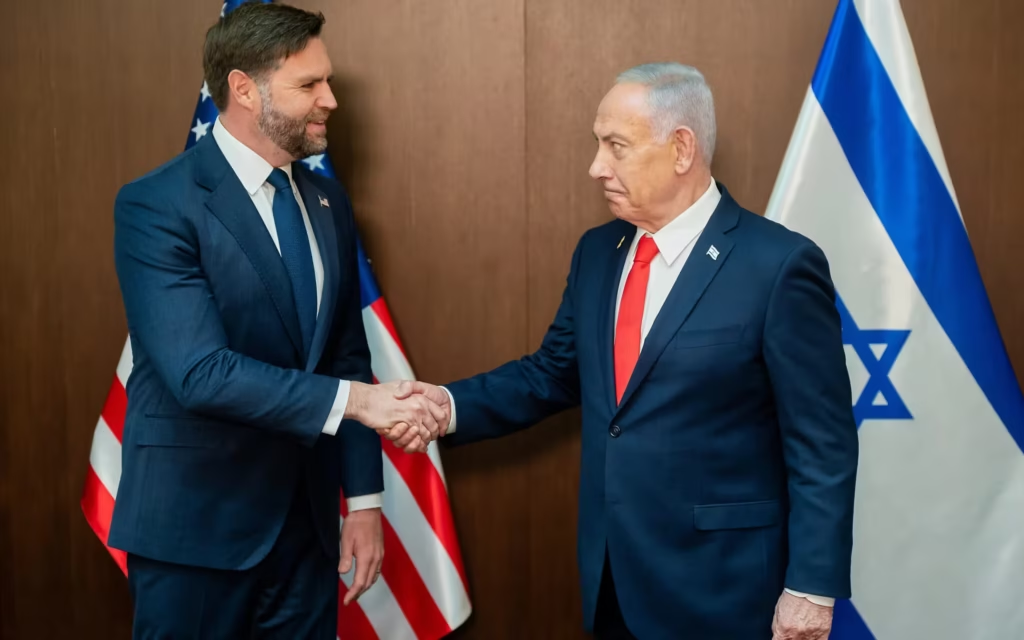
JD Vance Clashes With Netanyahu Over Israel’s Iran War Confidence
A recent, reportedly tense phone call between Israeli Prime Minister Benjamin Netanyahu and U.S. Senator JD Vance has exposed a significant rift in the strategic outlook on Iran between key American political figures and Israel’s leadership. The conversation, centered on Israel’s posture toward the Iranian regime, highlights a growing debate over the risks of overconfidence and the complex calculus of deterrence in the Middle East.
A Tense Exchange on Iran’s Future
The discussion, which took place against the backdrop of ongoing regional tensions, saw Senator Vance express deep concern over what he perceives as Israel’s excessive confidence in its ability to instigate regime change in Tehran. Vance, a prominent Republican and a potential future vice-presidential candidate, reportedly warned Netanyahu that this mindset could lead to miscalculation and a dangerous escalation, potentially dragging the United States into a broader conflict.
From Netanyahu’s perspective, the conversation was likely framed by Israel’s long-standing view of Iran’s nuclear program and its regional aggression as an existential threat. The Israeli Prime Minister has spent decades sounding the alarm on Iran, and his government’s recent military actions—from strikes on Iranian assets in Syria to the shadow war against nuclear scientists—reflect a doctrine of proactive defense. Netanyahu’s confidence may stem from a belief in Israel’s military and intelligence superiority, as well as a conviction that a firm stance is the only language the regime in Tehran understands.
The Core of the Disagreement: Strategy vs. Overreach
At the heart of the Vance-Netanyahu clash are two fundamentally different risk assessments:
- Vance’s Caution: The Senator represents a strain of thought, gaining traction in some GOP circles, that is deeply wary of foreign military entanglements. His argument hinges on the unpredictability of war with a nation like Iran, the potential for a massive regional conflagration, and the severe economic and strategic consequences for the U.S. He fears Israeli actions, driven by overconfidence, could create a scenario where American forces have no choice but to intervene.
- Netanyahu’s Resolve: For the Israeli leader, confidence is not overconfidence; it is a necessary component of deterrence. The belief that the Islamic Republic is a brittle regime that could collapse under sufficient pressure has informed Israeli strategy for years. From this viewpoint, demonstrating weakness or hesitation is more dangerous than showing strength, as it emboldens Iran and its proxies like Hezbollah and the Houthis.
This is more than a simple policy disagreement. It reflects a broader evolution within the Republican Party and a potential shift in the U.S.-Israel alliance. The unwavering, automatic support for Israeli actions is now being questioned by influential voices like Vance, who prioritize a more restrained, America-first foreign policy.
The Shadow of Gaza and Regional Instability
The call did not occur in a vacuum. The ongoing war in Gaza has dramatically heightened tensions across the Middle East, with Iranian-backed militias launching attacks against U.S. and Israeli targets. The situation has created a precarious tinderbox where one significant miscalculation could spark a wider war.
- The conflict has already seen direct strikes between Israel and Iran, such as the Israeli attack on an Iranian diplomatic compound in Damascus and the unprecedented direct missile and drone barrage launched by Iran toward Israeli territory.
- This cycle of action and retaliation moves the region into uncharted territory, moving beyond the years of “shadow war” into moments of open confrontation.
In this volatile context, Vance’s warnings carry added weight. The fear is that Israel, feeling embattled and victorious after facing a direct Iranian attack, might feel empowered to take even riskier actions against the regime’s core infrastructure, believing it can manage the consequences.
Implications for U.S. Foreign Policy and the 2024 Election
The public revelation of this private clash has immediate political ramifications. As the running mate to presumptive Republican presidential nominee Donald Trump, JD Vance’s views offer a preview of a potential Trump-Vance administration’s foreign policy. It suggests a possible return to the “maximum pressure” campaign on Iran, but coupled with a strong reluctance to engage militarily—a stance that could create friction with an Israeli government accustomed to more unambiguous support.
For President Joe Biden, the episode underscores the delicate balancing act he must maintain: steadfastly supporting Israel’s right to defend itself while urgently working to contain the Gaza war and prevent a regional explosion. The Biden administration has repeatedly communicated to Netanyahu its desire for de-escalation, a message that now appears to be echoed, albeit from a different ideological angle, by Senator Vance.
Looking Ahead: A Test of Deterrence and Diplomacy
The Vance-Netanyahu call is a symptom of the profound anxiety gripping the Middle East. It frames the central dilemma facing policymakers in Jerusalem, Washington, and beyond:
- Is a strategy based on demonstrating overwhelming strength and confidence the best way to deter a regime like Iran’s?
- Or does that very confidence increase the likelihood of a catastrophic war that no party truly wants?
The answers to these questions will define the security of the region for years to come. Israel’s assessment of Iran’s internal stability and its own military capabilities will continue to drive its actions. Meanwhile, in the United States, the debate between interventionist caution and unwavering alliance support is becoming a central fault line, especially within the Republican Party.
The path forward is fraught with danger. It will require nuanced statecraft, clear private communication, and a shared understanding of red lines to navigate the current crisis. The tense exchange between the Ohio Senator and the Israeli Prime Minister serves as a stark reminder that even between the closest of allies, perceptions of risk and confidence can diverge dramatically, with the peace of an entire region hanging in the balance. The world will be watching to see whether confidence prevails or caution guides the next critical decisions.

