
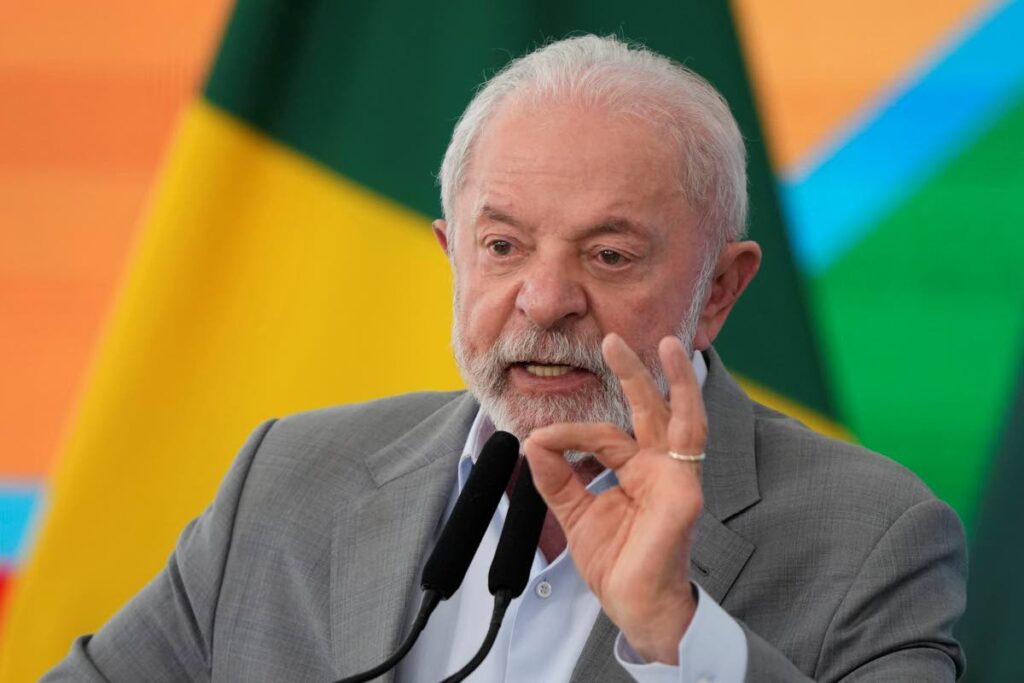
Brazil’s President Condemns Modern Interference in Former Colonies
In a powerful address that resonated far beyond South America, Brazil’s President has issued a scathing critique of contemporary geopolitical practices, denouncing what he describes as persistent interference by powerful nations in the affairs of previously colonized countries. Speaking at a major international forum, the leader framed this interference as a continuation of colonial-era mentalities, merely dressed in the language of modern diplomacy, economic pressure, and conditional aid.
This bold stance positions Brazil, a nation with its own complex colonial history, as a leading voice for the Global South. The President’s arguments challenge the foundational narratives of post-colonial world order, suggesting that true sovereignty for many nations remains elusive.
The Colonial Legacy and Its Modern Guises
The President’s core argument hinges on the idea that colonialism did not end with the lowering of foreign flags and the raising of independent ones. Instead, he posits, it evolved.
“The tools have changed, but the objective of domination often remains,” he asserted. Where once there were gunboats and explicit imperial decrees, there are now complex mechanisms of control that can be just as effective, and often more insidious.
He outlined several key areas where this “modern interference” manifests:
1. Economic Strangleholds and Debt Diplomacy
Many developing nations, rich in resources but lacking capital, find themselves trapped in cycles of debt with international financial institutions and wealthy creditor nations. The President argued that the conditions attached to loans—often mandating specific economic policies, privatization of national assets, or austerity measures—strip governments of their right to self-determination. This “debt diplomacy” becomes a powerful lever to influence domestic policy from afar.
2. Conditional Aid and Political Leverage
Humanitarian and development aid, a vital lifeline for many, is frequently weaponized. The President condemned the practice of tying aid to demands for political reforms, alignment on foreign policy votes, or the adoption of specific social agendas. This turns assistance from a right of solidarity into a tool for coercion, forcing nations to choose between the well-being of their people and their sovereign policy choices.
3. Sanctions as Collective Punishment
The speech took aim at the widespread use of unilateral economic sanctions, which he labeled a form of “collective punishment.” While sometimes framed as targeting specific regimes, these sanctions invariably cripple the broader economy, hurting ordinary citizens, stifling development, and creating humanitarian crises. They are, in his view, a blunt instrument of foreign policy that disproportionately affects those who have already suffered historical exploitation.
4. Media Narratives and “Moral Superiority”
A more subtle form of interference lies in the realm of perception. The President criticized how powerful nations and their media apparatuses often frame narratives, painting certain governments as illegitimate, corrupt, or “rogue states” without context. This manufactured moral high ground is then used to justify further political and economic interventions, undermining the legitimacy of elected leaders in the eyes of the world.
Brazil’s Position as a Global South Advocate
Brazil’s history as Portugal’s largest colony and its subsequent journey as a major, independent economy gives its President a unique platform. He is not speaking from a position of weakness, but from one of experienced resilience. His condemnation serves multiple strategic purposes for Brazil:
- Asserting Regional Leadership: It solidifies Brazil’s role as the natural leader of Latin America and a key representative of developing nations in forums like the G20, BRICS, and the UN.
- Promoting Multipolarity: The critique aligns with a broader desire for a more balanced, multipolar world where no single bloc of nations can dictate terms. It calls for a democratization of international relations.
- Defending National Sovereignty: By taking this stand, Brazil proactively defends its own right to chart its own course on issues like environmental policy in the Amazon, trade relations, and domestic social programs, without external pressure.
The Call for a New Framework of International Relations
The President’s speech was not merely a complaint; it contained a constructive call to action. He advocated for a fundamental shift in how nations interact, based on genuine partnership rather than paternalism.
Key pillars of this proposed new framework include:
- Unconditional Cooperation: Development aid and technical cooperation should be given without political strings attached, focused on capacity building and mutual benefit.
- Reform of Global Financial Institutions: Bodies like the IMF and World Bank need governance structures that better reflect the 21st century, giving developing nations a greater voice in the rules that affect them.
- Respect for Diverse Models: Acknowledging that there is no single path to development or democracy. Nations must be free to choose their own socio-economic systems based on their unique histories and cultural contexts.
- Dialogue Over Diktat: Resolving disputes through respectful diplomacy and multilateral forums, not through unilateral coercive measures.
Potential Impact and the Road Ahead
This forceful condemnation is likely to have significant ripple effects. It will be cheered by many leaders across Africa, Asia, and Latin America who have privately chafed under similar pressures but lack Brazil’s clout to speak so openly. It may also create friction with traditional Western powers accustomed to setting the terms of engagement.
The challenge now is to move from powerful rhetoric to tangible change. Brazil will need to build robust coalitions, propose specific policy alternatives in international bodies, and lead by example in its own foreign policy. Whether this marks the beginning of a more assertive and unified pushback from the Global South, or remains a singular diplomatic stance, will depend on the alliances forged in the coming months.
Ultimately, Brazil’s President has thrown down a gauntlet, challenging the world to examine the uncomfortable continuities between its colonial past and its present-day power dynamics. He has framed sovereignty not as a granted status, but as an ongoing struggle—one that requires constant vigilance against new forms of domination. In doing so, he has placed the issue of post-colonial equity and true self-determination firmly back on the top of the global agenda.

