Canadian Armoured Vehicles From Roshel Bolster ICE Security Operations
In a significant development at the intersection of defense technology and homeland security, a Canadian firm has secured a pivotal contract to enhance the operational capabilities of a major U.S. federal agency. Roshel, a Mississauga-based manufacturer of intelligent armored vehicles, has been tapped to provide its advanced Senator armored personnel carriers (APCs) to U.S. Immigration and Customs Enforcement (ICE). This move underscores the growing global reputation of Canada’s defense sector and highlights the evolving security requirements for federal law enforcement agencies tasked with complex and often high-risk missions.
Roshel: A Canadian Innovator on the Global Stage
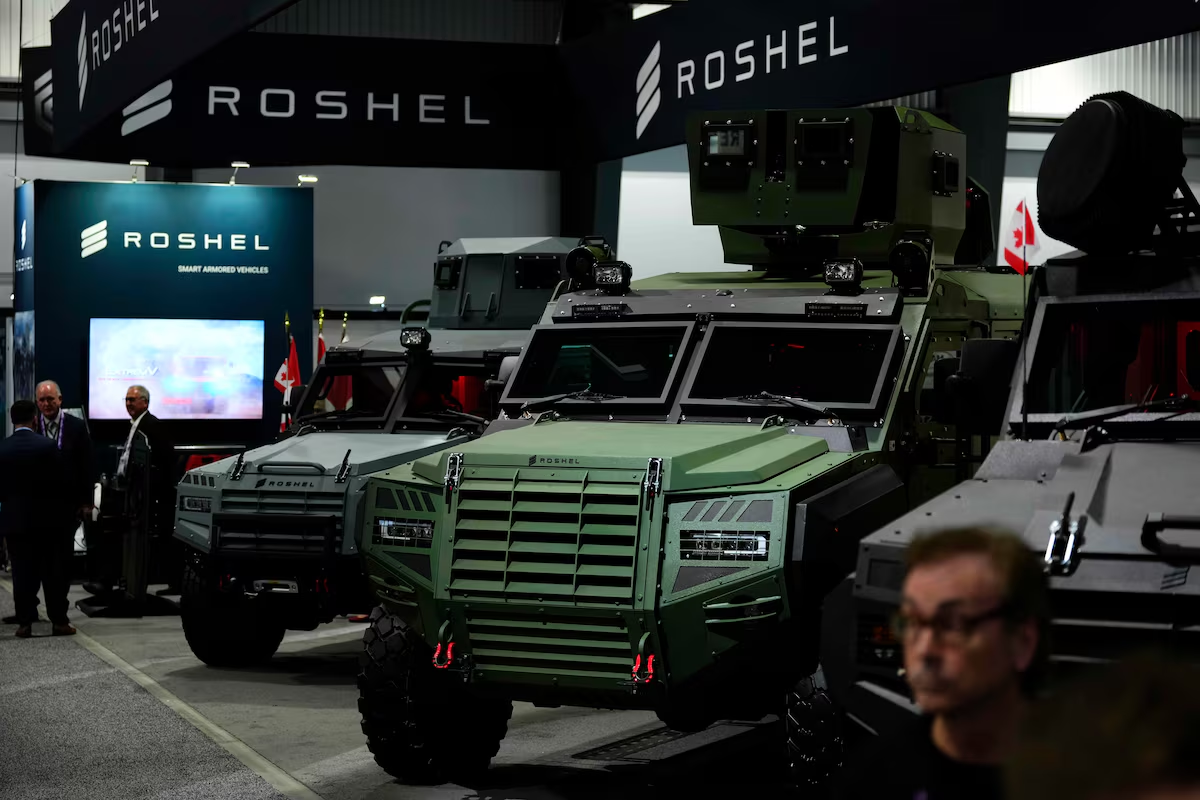
Founded in 2016, Roshel has rapidly emerged as a formidable player in the armored vehicle market. The company’s flagship product, the Senator APC, is built on a Ford F-550 chassis, blending robust North American automotive engineering with state-of-the-art armor and technology integration. What sets Roshel apart is its focus on “intelligent” armor solutions—vehicles equipped with advanced communication systems, surveillance capabilities, and modular designs that can be configured for a wide array of missions.
The Senator is certified to VPAM BRV 2009 VR7 ballistic protection level, meaning it can withstand high-powered rifle fire and explosive blasts. This level of protection is crucial for personnel operating in volatile environments, whether overseas or during domestic high-risk operations. Roshel’s success is not limited to this new ICE contract; the company has garnered international attention for supplying hundreds of vehicles to Ukraine in support of its defense against Russian aggression, proving the platform’s reliability in active conflict zones.
The ICE Contract: Enhancing Capabilities for Complex Missions
The contract with U.S. Immigration and Customs Enforcement represents a strategic expansion of Roshel’s reach into the demanding realm of domestic federal law enforcement. ICE’s Homeland Security Investigations (HSI) unit and Enforcement and Removal Operations (ERO) division conduct a wide range of activities, from combating transnational criminal organizations and human trafficking to executing high-risk arrests and removals.
The acquisition of Roshel’s armored vehicles is aimed at directly enhancing the safety and effectiveness of these operations. For ICE personnel, facing unpredictable threats during raids, warrant services, or the transport of high-risk individuals is a daily reality. The Senator APC provides a critical layer of mobile protection.
Key Benefits for ICE Operations
- Personnel Safety: The primary driver is the protection of agents and officers. The armored hull and blast-resistant design shield occupants from gunfire, improvised explosive devices (IEDs), and other ambush-style threats.
- Tactical Mobility: Unlike heavier military vehicles, the Senator is designed for urban and rural environments, offering the agility to navigate city streets while providing substantial protection.
- Operational Versatility: The vehicle’s modular interior can be configured for personnel transport, casualty evacuation, or as a mobile command post, making it a multi-role asset for various HSI and ERO scenarios.
- Deterrent Effect: The visible presence of a secure armored vehicle can de-escalate potentially volatile situations by demonstrating preparedness and reducing the likelihood of armed confrontation.
Analysis: Why This Partnership Matters
This contract is noteworthy for several reasons beyond the immediate tactical advantages. It signals a growing trend of interoperability and trust in allied defense industries. The U.S. turning to a Canadian company for such a sensitive security need highlights the deep integration and reliability of the North American defense industrial base.
Furthermore, it reflects the evolving nature of domestic security threats. Law enforcement agencies at the federal level are increasingly equipped with tools that were once primarily associated with military operations, a response to the heightened capabilities and weaponry of the criminal organizations they confront. The line between military-grade and law enforcement-grade equipment continues to blur in the interest of officer survival and mission success.
For Roshel, this contract is a major endorsement. Securing a deal with a high-profile U.S. federal agency like ICE serves as a powerful testament to the quality and reliability of their products. It opens the door for further contracts with other U.S. federal, state, and local law enforcement agencies looking to modernize their tactical fleets.
Broader Implications for Canada’s Defense Sector
Roshel’s success story is becoming a cornerstone narrative for Canada’s defense and security exports. It demonstrates that Canadian firms can be innovative, responsive, and competitive on the world stage. The company’s ability to rapidly design, manufacture, and deliver effective solutions has been proven in both warzones (Ukraine) and now in complex law enforcement environments (ICE).
This achievement may catalyze further growth and investment in the sector, encouraging other Canadian tech and manufacturing companies to pursue opportunities in the global security market. It also reinforces strategic economic ties between Canada and the United States, showcasing a tangible product of bilateral cooperation that enhances the security of both nations.
Addressing Potential Questions
A contract involving armored vehicles for an immigration enforcement agency is likely to generate discussion. It’s important to contextualize the use of such assets:
- These vehicles are defensive and protective tools, not offensive weapons. Their purpose is to save lives—the lives of federal agents and, by extension, the public and subjects during chaotic situations.
- Their deployment is typically reserved for a small subset of high-risk operations, not routine activities. The vast majority of ICE’s work does not involve tactical armored support.
- The procurement follows standard procedures for equipping federal law enforcement with the necessary tools to safely execute their legally mandated duties in an increasingly dangerous operational landscape.
Conclusion: A Strategic Step in Modern Law Enforcement
The partnership between Roshel and U.S. ICE is more than just a business transaction; it is a strategic alignment of advanced technology with critical operational needs. By integrating Roshel’s intelligent Senator armored vehicles into its fleet, ICE is taking a proactive step to mitigate risk and enhance the safety of its personnel during their most dangerous assignments.
For Canada, this contract is a point of national pride and economic significance, proving that homegrown innovation can meet some of the most stringent security challenges faced by allied nations. As threats continue to evolve, the collaboration between cutting-edge manufacturers like Roshel and frontline agencies like ICE will remain essential in ensuring that those who protect public safety have the best possible tools for the job. This deal solidifies Roshel’s position as a leader in armored mobility and marks a new chapter in cross-border security cooperation.