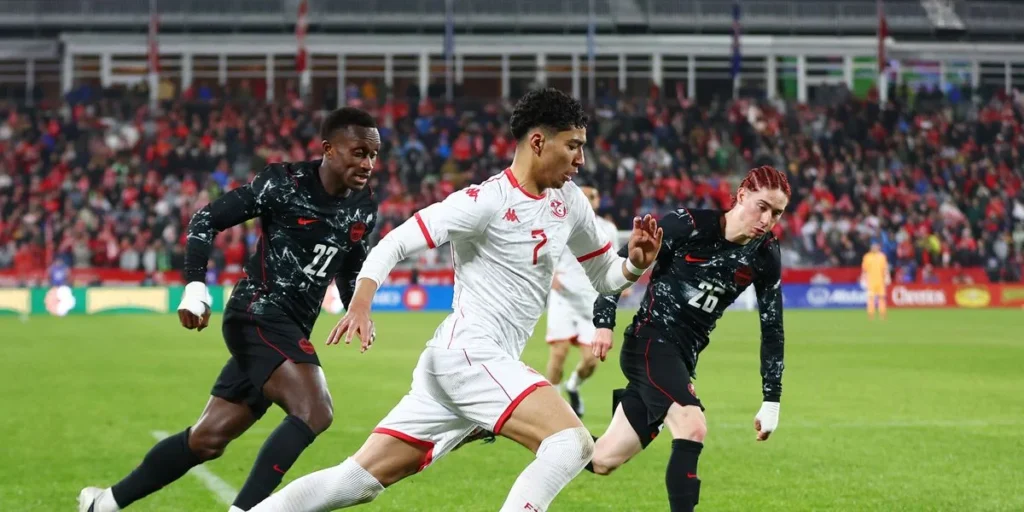
Canada’s 2026 World Cup Path: A Crucial Home Test Against Bosnia
The road to the 2026 FIFA World Cup, co-hosted by Canada, the United States, and Mexico, is officially underway. For the Canadian Men’s National Team, this journey represents a monumental opportunity to build on their historic 2022 qualification and establish themselves as a consistent force in CONCACAF and on the global stage. While the automatic host berth provides a safety net, the real work begins now: preparing a squad capable of not just participating, but competing with the world’s best. That preparation kicks into high gear with a pivotal and revealing first match on home soil—a stern test against Bosnia and Herzegovina.
The Significance of the First Home Match
This upcoming friendly is far more than just a routine pre-tournament exhibition. It marks Canada’s first match at home since being named a 2026 host, carrying immense symbolic and practical weight.
Symbolically, it’s the opening act of a new era. The match serves as a thank you to the fans who packed stadiums during the last qualifying cycle and a rallying cry for the nation to get behind the team for the long build-up to 2026. It’s a chance to showcase the growth of soccer in Canada and generate the kind of home-field atmosphere that will be crucial during the tournament itself.
Practically, it is an invaluable measuring stick. Bosnia and Herzegovina, currently ranked 71st by FIFA, present a perfect blend of European discipline, technical quality, and physicality. They are a team that can punish mistakes and force Canada to problem-solve in real-time. For Head Coach Mauro Biello and his staff, this match is a critical laboratory to evaluate player combinations, tactical setups, and the squad’s mentality against a respected opponent from a different confederation.
Navigating a Shifting International Landscape
Canada’s path has been indirectly smoothed by the unexpected struggles of traditional European powerhouses. Most notably, the continued absence of four-time world champion Italy from major tournaments has a ripple effect. Their failure to qualify for the 2022 World Cup and their shaky form means one less titan potentially stands in the way during the group stage or knockout rounds in 2026. It opens up the possibility for more balanced groups and creates a landscape where well-organized, ambitious teams like Canada can realistically target advancement.
However, this should not breed complacency. The void left by teams like Italy is being filled by hungry, emerging nations and solid European sides like Bosnia. The global game is more competitive than ever, and Canada must use every match, especially against European opposition, to close the experience gap.
What Canada Must Prove Against Bosnia
The Bosnia test is specifically designed to answer key questions facing the squad as it evolves:
- Life After Atiba: How does the midfield structure itself without the legendary calming presence of Atiba Hutchinson? This game is a major test for the duo of Stephen Eustáquio and Ismaël Koné to control the tempo.
- Defensive Solidity: Can the backline, potentially marshalled by Moisés Bombito or Derek Cornelius, maintain organization against a clever attack featuring veterans like Edin Džeko? Set-piece defense will be under a microscope.
- Attacking Fluency: With Alphonso Davies likely deployed in an advanced role and Jonathan David leading the line, can Canada create sustained, dangerous possession against a compact block? The service from the wings and midfield will be crucial.
- Squad Depth: With several European-based stars possibly unavailable or managing minutes, which MLS and other domestic-based players will step up to claim a role in the long-term 2026 plans?
The Long-Term Vision: More Than Just One Game
While the Bosnia match is a focal point, it is merely the first step in a meticulously planned three-year build-up. The Canadian Soccer Association’s strategy must be multi-faceted:
Strategic Scheduling: Canada must seek out and regularly face opponents from diverse styles and confederations—South American technicality, African athleticism, Asian discipline, and of course, European tactical rigor. Each match is a learning opportunity.
Player Development Pipeline: The success of the 2026 team hinges on the continued progression of current stars and the emergence of the next wave. Integrating promising talents like Jacen Russell-Rowe or Kyle Hiebert into the senior environment during these friendlies is essential.
Building a Winning Mentality: Hosting a World Cup comes with immense pressure. Canada must cultivate a squad that thrives under expectation, that can grind out results in tight games, and that believes it belongs on the same field as any opponent. That mentality is built through tough matches like the one against Bosnia.
A Nation Ready to Rally
The excitement across Canada for 2026 is palpable. From coast to coast to coast, cities are preparing to welcome the world. This home match against Bosnia is the spark that ignites the national journey. It’s a chance for fans to see the future of Canadian soccer in person and for the team to feel the energy of a nation fully behind them.
The result, while important, is secondary to the performance and the lessons learned. A strong showing will build confidence and validate the process. A difficult match will expose areas for urgent improvement, which is equally valuable with time still on the clock.
Conclusion: The Journey Begins Now
Canada’s automatic qualification for the 2026 World Cup is not an endpoint; it’s a starting pistol. It grants the luxury of a long-term, process-oriented build-up free from the desperation of must-win qualifiers. The match against Bosnia and Herzegovina is the first true examination under this new paradigm. It is a crucial test of character, tactics, and depth against a capable and motivated European side.
For the players, it’s a chance to stamp their claim for 2026. For the coaches, it’s a vital data point. And for a nation of fans, it’s the thrilling beginning of a shared dream—to not only host a World Cup but to field a team that can make history on the grandest stage of all. The path to 2026 is long, but every great journey starts with a single, decisive step. For Canada, that step is taken at home, against Bosnia.