
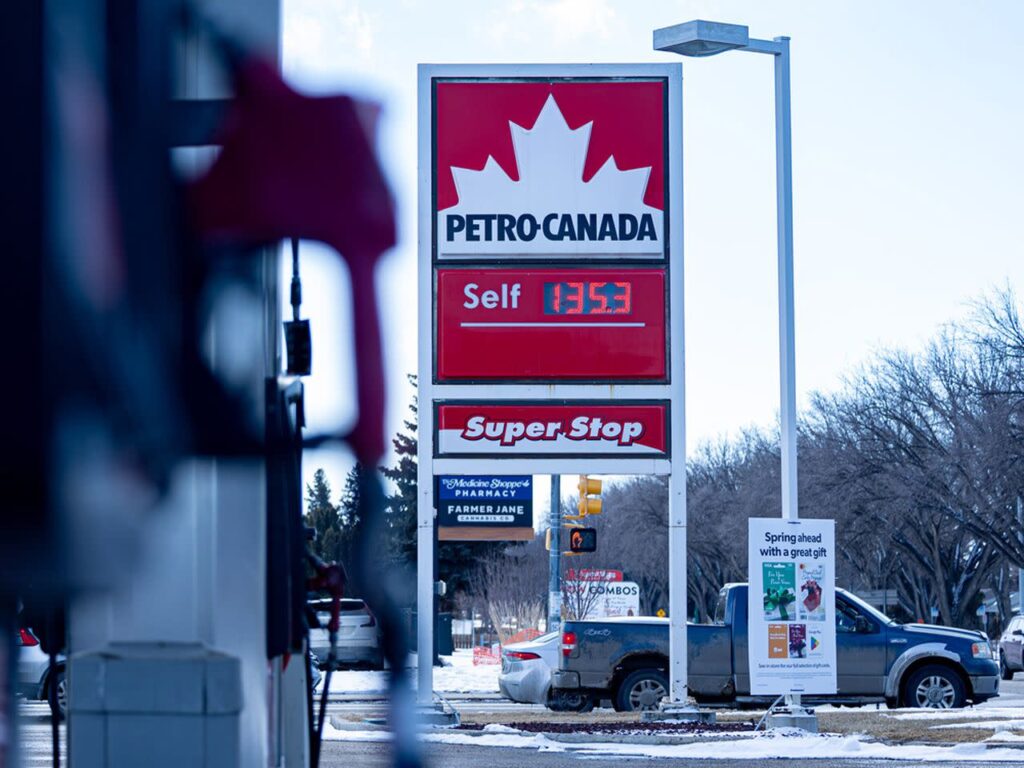
# Why Canadians Should Fuel Up Now Before Gas Prices Rise
If you’ve pulled into a gas station recently and done a double-take at the posted price, you’re not alone. A welcome and noticeable dip in fuel costs has provided a bit of relief for drivers across Canada. However, this period of lower prices is not a permanent trend, but rather a fleeting opportunity. Industry experts are nearly unanimous in their warning: this relief is temporary, and the clock is ticking. Understanding the forces behind this trend can help you make informed decisions and potentially save a significant amount of money in the coming months.
## The Perfect Storm: What’s Causing Gas Prices to Fall?
The current drop at the pumps isn’t due to a single factor, but a confluence of seasonal shifts and market dynamics creating a temporary surplus and lower demand.
The Seasonal Transition
We are in the annual “shoulder season” for gasoline demand. The harsh winter driving conditions have passed, reducing the need for fuel for heating and treacherous commutes. Conversely, the peak summer driving season—marked by long weekends, road trips, and vacations—has not yet begun. This lull means overall consumption is at a yearly low, allowing inventories to build up.
Global Oil Market Fluctuations
The price you pay for gasoline is intrinsically linked to the global price of crude oil, which is constantly in flux. Recent pressures, including concerns about global economic growth and increased production from non-OPEC nations, have contributed to a softer crude market. While unstable, this temporary dip at the wholesale level is filtering down to consumers.
Refining Margins and Inventory Levels
Refineries are finishing their maintenance schedules and switching from producing winter-blend gasoline to the more environmentally stringent (and costly) summer blend. During this transition period, and with current healthy inventory levels, the margin between crude oil costs and wholesale gasoline prices has narrowed, offering a break before the summer premium kicks in.
## The Calm Before the Storm: Why Lower Prices Won’t Last
Analysts caution that drivers should enjoy this period while it lasts, as several powerful factors are poised to push prices back up, potentially sharply and quickly.
The Inevitable Summer Surge
The most predictable and significant factor is seasonal demand. Statistics Canada and industry reports consistently show that fuel consumption jumps dramatically between the May long weekend and Labour Day. More cars on the road for leisure travel directly translates to higher prices as the market responds to increased demand. Historically, the highest average annual gas prices are recorded between June and August.
Geopolitical Instability
The global oil market is a barometer for world tensions. Conflicts in oil-producing regions, decisions by OPEC+ regarding production cuts, or sanctions on major exporters can cause immediate and severe price spikes. In today’s interconnected world, a disruption thousands of miles away can impact the price at your local pump within days.
The Cost of Cleaner Fuel
As mentioned, refineries are now producing summer-blend gasoline. This fuel is designed to evaporate less easily in warm weather, reducing smog. However, this process is more complex and expensive, adding an estimated 5 to 15 cents per litre to production costs compared to the winter blend. This seasonal surcharge will soon be reflected in retail pricing.
Currency Exchange Rates
Oil is traded in U.S. dollars. If the Canadian dollar weakens against its U.S. counterpart, it becomes more expensive to purchase the same barrel of oil. This exchange rate risk adds another layer of potential upward pressure on fuel costs.
## Proactive Strategies: How to Maximize Your Savings at the Pump
With higher prices on the horizon, a proactive approach can help mitigate the impact on your household budget. Here are actionable steps you can take.
### 1. Fuel Up Strategically
Don’t wait for the empty light. If your tank is half-full and you see a good price, topping up now locks in the current lower cost. This is especially wise if you have a longer commute or a known trip coming up.
### 2. Become a Price-Tracking Expert
Technology is your best ally. Utilize free apps and websites like:
* GasBuddy
* Waze
* CAA’s Gas Price Tracker
These tools use crowd-sourced data to show real-time prices at stations near you, often predicting daily trends. Many also offer loyalty programs or cash-back opportunities.
### 3. Optimize Your Driving Habits
Small changes in how you drive can lead to significant fuel savings over time.
* Observe Speed Limits: Fuel efficiency typically decreases significantly at speeds over 90 km/h.
* Avoid Idling: Modern engines do not need a “warm-up” period. If you’re stopped for more than 60 seconds (except in traffic), turning off the engine saves fuel.
* Accelerate and Brake Smoothly: Aggressive driving (rapid acceleration and hard braking) can lower your highway gas mileage by up to 30%.
### 4. Maintain Your Vehicle for Peak Efficiency
A well-tuned car is a more fuel-efficient car. Key maintenance checks include:
### 5. Rethink Your Travel
* Combine Errands: Plan one efficient trip instead of several short ones.
* Consider Carpooling or Public Transit: Even one day a week reduces your fuel consumption by 20%.
* Explore Staycations: With high travel fuel costs, discovering local attractions can be easier on your wallet.
## The Bottom Line for Canadian Drivers
While the exact timing and magnitude of price increases are subject to volatile global forces, the directional trend is clear. The combination of rising seasonal demand, costlier summer fuel blends, and geopolitical risks creates a perfect recipe for higher prices in the very near future.
Filling your tank now is a simple and effective hedge against this inevitable climb. By combining this immediate action with smart driving habits and diligent use of price-tracking tools, you can take control of your fuel budget. Stay informed, plan ahead, and make every litre count—your wallet will thank you as the summer driving season gets into full swing.
—
### FAQs: Navigating Gas Price Fluctuations in Canada
#### Q: Why do gas prices vary so much from city to city, or even street to street?
A: Provincial and municipal taxes are a major factor, with some regions imposing significantly higher fuel taxes than others. Additionally, local competition, station operating costs, and real-time pricing strategies set by retailers create hyper-local variations. A busy highway station often charges more than one a few blocks away in a residential area.
#### Q: Is there truly a best day of the week to buy gas?
A: While not an absolute rule, industry analysis often reveals a weekly cycle. Prices tend to be lower early in the week (Monday through Wednesday) as demand is lower. They often rise heading into the weekend (Thursday through Sunday) in anticipation of increased travel. Tracking your local stations via an app will reveal the most reliable pattern in your area.
#### Q: Should I use premium gasoline for better fuel efficiency?
A: Only if your owner’s manual specifically recommends or requires it. Most vehicles are engineered to run perfectly on regular 87-octane fuel. Using premium in a car designed for regular provides no meaningful benefit in performance or fuel economy and is a waste of money.
#### Q: How much do taxes contribute to the price at the pump?
A: Taxes are a substantial component. They typically include a federal excise tax, a provincial excise tax, and GST/HST. In some provinces, carbon taxes also apply. In total, taxes can account for anywhere from 30 to 45 cents of every litre you purchase, depending on your province.

