
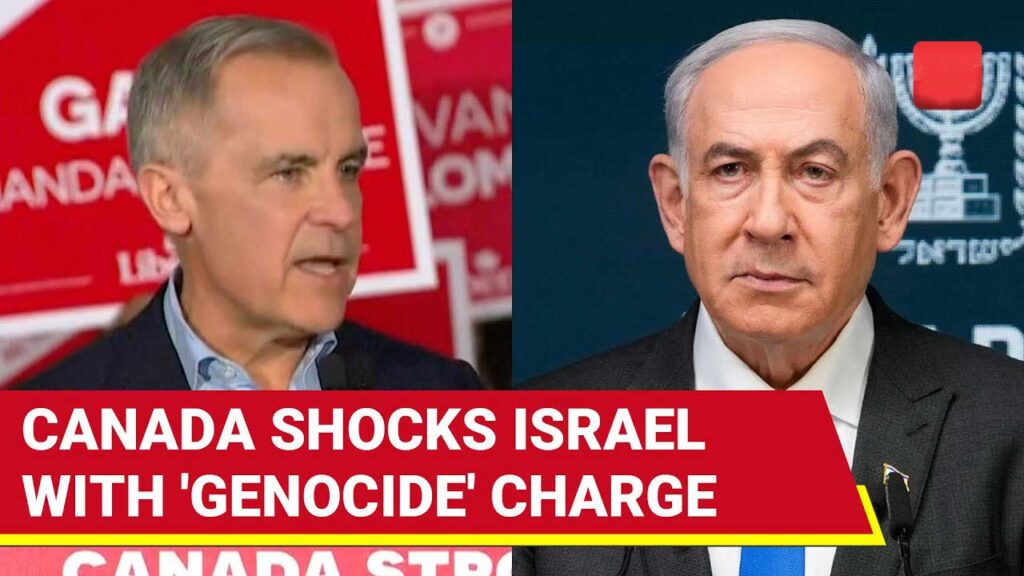
Canada Rules Out Sanctions Against Israel Amid Escalating Lebanon Border Conflict
In a definitive statement that clarifies Canada’s position during a period of intense regional volatility, Prime Minister Mark Carney has announced that the Canadian government is **not considering imposing sanctions on Israel** in response to its military strikes in Lebanon. This declaration comes as cross-border hostilities between Israel and Hezbollah intensify, raising fears of a full-scale regional war and placing immense pressure on allied nations to articulate their foreign policy stance.
The Prime Minister’s remarks underscore a deliberate and cautious approach by Ottawa, one that seeks to balance its steadfast support for Israel’s right to defend itself with urgent calls for de-escalation and the protection of civilian lives on all sides. This position places Canada in close alignment with key international partners, notably the United States, while navigating a deeply polarized domestic and global landscape.
The Precarious Context: Rising Tensions on Israel’s Northern Border
To understand the weight of Carney’s statement, one must first grasp the dangerous escalation unfolding along the Israel-Lebanon frontier. For months, this border has been a simmering flashpoint, with near-daily exchanges of fire between the Israeli military and Hezbollah, the Iranian-backed Lebanese militant and political group.
This low-grade conflict has displaced tens of thousands of people on both sides of the border and resulted in significant casualties. Hezbollah asserts its strikes are in solidarity with Hamas in Gaza, while Israel states it is acting to push Hezbollah forces back from the border, as mandated by UN Security Council Resolution 1701. The situation reached a new level of international alarm following targeted strikes that have killed senior Hezbollah commanders and, tragically, numerous Lebanese civilians.
Canada’s Diplomatic Calculus: Sovereignty, Security, and Strategic Alignment
Prime Minister Carney’s dismissal of sanctions is not made in a vacuum. It reflects a multi-faceted diplomatic and strategic calculation:
- Recognition of Israel’s Security Concerns: The Canadian position formally acknowledges the tangible threat posed by Hezbollah, an organization designated as a terrorist entity by Canada since 2002. The government’s stance is that a sovereign nation has the inherent right to defend its territory and citizens from attack.
- Alignment with Core Allies: This move maintains Canada’s foreign policy synchronization with the United States and other G7 nations, which have also not pursued sanctions against Israel over the Lebanon strikes. Coordinated diplomacy is seen as crucial to managing the crisis.
- The Sanctions Toolbox: By explicitly taking sanctions off the table, Carney signals that Canada views such punitive economic measures as inappropriate or counterproductive in this specific context, potentially believing they would harden positions rather than foster dialogue.
The Prime Minister’s Balancing Act: Defense and De-escalation
While firmly rejecting sanctions, Prime Minister Carney was careful to frame Canada’s policy as proactive and rooted in a desire for peace. His statements consistently pair support for Israel’s security with a forceful advocacy for restraint and humanitarian protection.
“Our focus is on using every diplomatic channel available to prevent a wider war,” Carney emphasized, highlighting efforts conducted both unilaterally and through international coalitions. This dual-track approach aims to:
- Bolster defensive capabilities for allies while unequivocally calling for adherence to international humanitarian law.
- Support ongoing, behind-the-scenes mediation efforts, led by the U.S. and others, to negotiate a diplomatic settlement that would see Hezbollah forces withdraw and allow displaced civilians to return home.
- Provide significant humanitarian aid to affected populations in Lebanon and the region, attempting to address the devastating human cost of the conflict.
Domestic and International Reactions to Canada’s Stance
The announcement has elicited strong, mixed reactions, mirroring the global divide over the broader Israeli-Palestinian and Israel-Hezbollah conflicts.
Support and Relief from Allies
Pro-Israel advocacy groups and segments of the political spectrum have welcomed Carney’s clarity, viewing it as a necessary rejection of what they see as disproportionate blame placed on Israel. They argue that sanctions would unjustly penalize a democratic state engaging in self-defense against an aggressor that embeds its military infrastructure within civilian areas.
Criticism and Calls for Accountability
Conversely, the position has drawn sharp criticism from those who argue Canada is failing to uphold its stated commitment to a “rules-based international order.” Opponents, including some humanitarian NGOs, Lebanese-Canadian groups, and progressive political factions, contend that by ruling out consequences, Canada is enabling further escalation and civilian harm.
- They demand a more even-handed application of pressure, including possible arms embargoes or sanctions, to compel all parties to cease fire.
- The devastating impact on Lebanese civilians is cited as a primary reason for needing tangible diplomatic leverage beyond verbal appeals.
The Broader Implications for Canadian Foreign Policy
This episode is a significant stress test for the Carney government’s foreign policy doctrine. It highlights the profound challenges of navigating a new era of complex, multi-front conflicts in the Middle East. Canada’s decision reveals several key tenets of its current approach:
1. A Preference for Diplomacy Over Coercion: Ottawa is betting that its influence is best exerted through traditional diplomacy and alliance coordination rather than unilateral punitive measures.
2. The Primacy of the U.S. Alliance: Close alignment with Washington remains the bedrock of Canada’s strategic posture in the region, even when it attracts domestic criticism.
3. The Limits of “Principalled” Engagement: The situation exposes the difficult compromises inherent in foreign policy, where principles of human rights and civilian protection can clash with strategic partnerships and assessments of security imperatives.
Looking Ahead: An Unstable Status Quo
The path forward remains perilously uncertain. With sanctions officially off Canada’s table, the efficacy of its diplomatic efforts is now under a microscope. The government will be judged on its ability to help translate its calls for de-escalation into tangible results on the ground.
The key questions that will define Canada’s role are:
- Can its diplomacy, in concert with allies, actually forge a sustainable ceasefire or political agreement?
- If hostilities worsen, will Canada’s position evolve, or will it remain fixed?
- How will the government manage the deepening domestic polarization over this issue?
Prime Minister Carney has drawn a clear line: Canada will not sanction Israel over the Lebanon strikes. This position is a definitive marker of the government’s current strategic priorities and its reading of the conflict. It is a choice that provides clarity to allies and critics alike but also accepts the risks inherent in a high-stakes diplomatic gamble. As missiles continue to fly across the Blue Line, the world—and a divided Canadian public—will be watching to see if this calculated stance can contribute to averting a war, or if it will be remembered as an opportunity for leverage left unused. The stability of the Middle East and the safety of countless civilians may hinge on the answer.

