The Loonie’s Looming Struggle: Why the Canadian Dollar Could Falter After Global Conflict
For years, the Canadian dollar, affectionately known as the “loonie,” has found itself buoyed by global turbulence. From pandemic-induced supply shocks to the geopolitical upheaval following Russia’s invasion of Ukraine, periods of international crisis have often translated into surprising strength for Canada’s currency. However, a compelling and counterintuitive argument is emerging from financial analysts: the end of widespread global conflict could be the very trigger that sends the loonie into a period of significant underperformance.
This perspective challenges the conventional wisdom that peace and stability are universally positive for a commodity-driven economy like Canada’s. To understand why the winds of peace might not fill the loonie’s sails, we must delve into the unique, crisis-dependent pillars that have been propping it up.
The War Premium: How Conflict Supercharged the Loonie
The recent strength of the Canadian dollar hasn’t been a story of domestic economic triumph, but rather one of global misfortune and shifting capital flows. Several key factors created a perfect, if precarious, storm of support.
1. The Safe-Haven Surge in Commodity Prices
When war disrupts the global supply of essential resources, the world turns to stable, reliable producers. Canada, as a major exporter of energy, agricultural products, and critical minerals, became a prime beneficiary. The sanctions on Russian oil and gas sent global energy prices soaring, directly boosting the value of Canadian exports and the dollar needed to purchase them. Similarly, worries over grain supplies from the Black Sea region increased demand for Canadian wheat and canola. This wasn’t organic growth; it was a geopolitical risk premium baked into the price of Canada’s key exports.
2. The U.S. Dollar’s Relative Retreat
The U.S. dollar (USD) is the world’s ultimate safe-haven currency. Yet, during the initial phases of the Ukraine conflict, an interesting dynamic played out. While the USD strengthened against most major currencies, the Canadian dollar (CAD) held its ground unusually well. This was because Canada offered a unique blend: proximity and integration with the U.S. economy, combined with the commodity-price boost that other safe havens like the Swiss Franc or Japanese Yen did not offer. Investors seeking stability with a yield found CAD attractive. However, this status is highly contingent on ongoing disruption.
3. The Bank of Canada’s Hawkish Stance
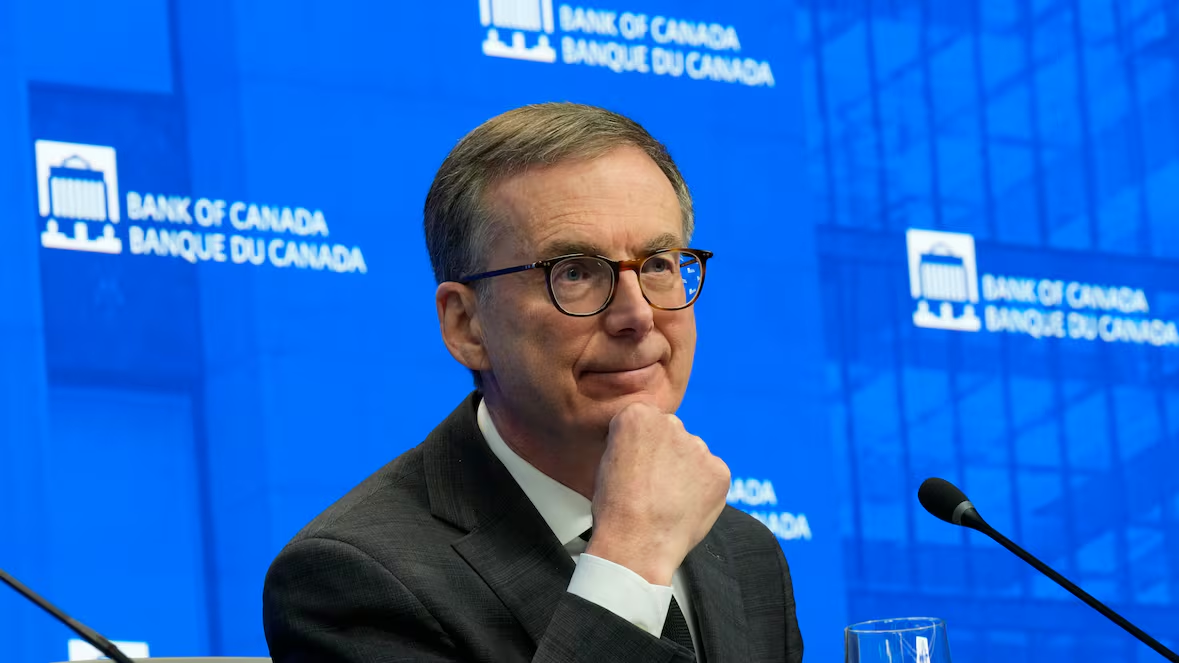
In the face of inflation fueled by supply shocks and soaring commodity prices, the Bank of Canada (BoC) was compelled to raise interest rates aggressively. For a time, this placed it ahead of the U.S. Federal Reserve in the tightening cycle. Higher interest rates in Canada attract foreign capital seeking better returns, creating demand for the loonie. This monetary policy divergence provided a crucial pillar of support.
The Coming Calm: Why Peace Poses a Problem
When the fog of war eventually lifts and global supply chains begin to normalize, the very pillars supporting the loonie are likely to erode. The transition from a crisis-driven economy to a stable one could reveal underlying weaknesses.
The Commodity Price Correction
A sustained peace would inevitably lead to a recalibration of global commodity markets. As supply fears subside and alternative trade routes solidify, the war-driven premium on oil, gas, and grains would dissipate.
- Energy Rebalance: Global energy markets would seek a new equilibrium, likely at lower price points than crisis peaks, pressuring Canadian export revenues.
- Agricultural Normalization: The resumption of agricultural exports from traditional hubs would increase competition and soften prices for Canadian farmers.
- China’s Slowdown: A broader peace might shift focus back to China’s structural economic slowdown, a major headwind for global commodity demand that has been overshadowed by war.
This correction would directly undermine a primary source of the loonie’s recent strength.
The Interest Rate Divergence Cliff
The monetary policy landscape is poised for a dramatic shift. The BoC, facing a domestic economy weighed down by high household debt and a cooling housing market, is widely expected to cut interest rates sooner and potentially more aggressively than the U.S. Federal Reserve.
Once the BoC begins easing while the Fed holds steady—or even continues its “higher for longer” stance—the interest rate advantage that attracted capital to Canada will reverse. This could trigger significant outflows, weakening demand for the loonie.
Revealing Structural Vulnerabilities
Without the cloak of a global crisis, the market’s focus will return to Canada’s long-standing economic challenges:
- Productivity Gap: Canada’s chronic productivity growth problem, which limits non-inflationary economic expansion and wage growth.
- Competitiveness Concerns: Issues surrounding business investment, regulatory burdens, and tax competitiveness compared to the U.S.
- Household Debt Sensitivity: An economy and currency highly sensitive to interest rate changes due to record levels of household debt.
In a stable world, capital flows towards economies with the strongest growth fundamentals and productivity prospects. Canada risks being overshadowed without the artificial lift of crisis-driven commodity revenues.
Navigating the Transition: What It Means for Canada
A weaker loonie in a post-conflict world is not inherently a disaster, but it does present a mixed bag of consequences and necessitates strategic action.
For Exporters & Industry: A softer dollar would provide a natural buffer for non-commodity exporters (like manufacturers and service providers) by making their goods and services cheaper for foreign buyers. This could help sectors that struggled with the previous high-cost CAD.
For Consumers & Travelers: The downside would be felt at home and abroad. Imported goods, from electronics to produce, would become more expensive, contributing to cost-of-living pressures. Cross-border shopping and travel to the U.S. would also become notably more costly.
The Strategic Imperative: This potential scenario underscores a critical need for Canadian policymakers. Canada cannot rely on global instability as an economic strategy. The looming struggle of the loonie highlights the urgent need to address foundational issues: spurring productivity-enhancing investments, fostering innovation, and improving competitiveness to attract capital based on economic merit, not just geopolitical accident.
The Bottom Line: Preparing for a Post-Crisis Reality
The narrative that the Canadian dollar is a perpetual beneficiary of global events is due for a revision. The analysis suggesting the loonie could become an underperformer once major conflicts wind down is a stark reminder that Canada’s recent economic advantages have been circumstantial.
The transition from a world on edge to one of greater stability will remove the crutches of war-premium commodity prices and crisis-driven capital flows. It will place the spotlight squarely back on Canada’s domestic economic engine and its ability to compete in a calm, but fiercely competitive, global marketplace.
For investors, businesses, and policymakers alike, the message is clear: the true test for the loonie’s strength is not how it weathers the storm, but how it performs when the sun finally comes out. Preparing for that brighter, but more challenging, day requires building a more resilient and productive economic foundation—one that doesn’t depend on the world’s misfortunes to thrive.