
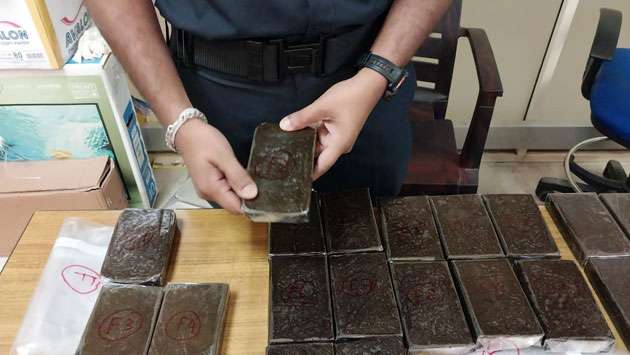
Massive Drug Bust: Canadian National Held at Sri Lanka Airport with 21kg of Kush
In a dramatic display of border security, Sri Lankan customs authorities have made a staggering narcotics interception at the country’s main aerial gateway. The arrest of a Canadian national attempting to smuggle over 21 kilograms of Kush, a high-potency cannabis product, through Bandaranaike International Airport (BIA) highlights the relentless and sophisticated efforts to combat the international drug trade. This seizure is not just a routine catch; it represents one of the most significant single hauls of this particular substance and underscores the evolving challenges faced by narcotics control units worldwide.
The Interception: A Profile of Precision and Vigilance
The operation unfolded at the arrival terminal of Bandaranaike International Airport, where officers from the Passenger Profiling Division of Sri Lanka Customs identified a traveler exhibiting suspicious indicators. Acting on their trained instincts and advanced profiling techniques, officials singled out the Canadian passenger for a thorough secondary inspection.
What they discovered was astonishing. Concealed within the traveler’s luggage was not a small personal-use quantity, but a commercial-scale shipment of narcotics. The substance, identified as Kush, weighed a total of 21,250 grams (21.25 kg). The sheer volume immediately elevated the case from a simple possession charge to a major trafficking investigation.
The suspect was swiftly apprehended by the specialized Airport Customs Narcotics Control Unit, which has since taken the lead in the case. Their investigation is now delving deep into several critical areas:
- The intended final destination for the drugs.
- Possible accomplices or networks within and outside Sri Lanka.
- The trafficking route and how the drugs were sourced.
- The suspect’s travel history and connections.
What Exactly is Kush? Beyond the Generic Name
While often used colloquially as a synonym for cannabis, the term “Kush” carries specific connotations in the world of narcotics. Understanding what was seized is key to grasping the magnitude of this bust.
The Origins and Potency of Kush
True Kush refers to strains of cannabis that originate from the Hindu Kush mountain range spanning Afghanistan and Pakistan. These are typically indica-dominant strains, known for their distinct characteristics:
- High THC Content: They often possess significantly elevated levels of tetrahydrocannabinol (THC), the primary psychoactive compound in cannabis, leading to a more intense and sedative effect.
- Distinct Effects: Users report powerful body-centric effects, including deep relaxation, sedation, and a strong “couch-lock” sensation, differentiating it from more cerebral sativa strains.
- Market Value: Due to its potency and reputation, Kush commands a premium price on the black market, making it a lucrative commodity for traffickers.
The seizure of over 21 kg of this specific product points to a targeted smuggling attempt of a high-value narcotic, rather than a generic cannabis product.
Sri Lanka’s Zero-Tolerance Stance and Harsh Penalties
This arrest places a stark spotlight on Sri Lanka’s stringent anti-narcotics laws. The country maintains a rigorous, zero-tolerance policy towards drug trafficking, with severe legal consequences for offenders. Possession or trafficking of quantities as large as those intercepted in this case falls under the purview of the Dangerous Drugs Ordinance.
Potential penalties for drug trafficking in Sri Lanka are severe and can include:
- Lengthy imprisonment sentences, often ranging from 10 years to life.
- Heavy monetary fines imposed by the courts.
- Mandatory rehabilitation, though this does not replace criminal liability for trafficking.
For foreign nationals, the repercussions extend beyond the judicial sentence. Conviction typically leads to deportation after serving the prison term, along with a permanent ban from re-entering the country. The arrested Canadian national now faces this formidable legal framework.
Bandaranaike International Airport: A Fortified Frontline
This successful bust is a testament to the enhanced security protocols implemented at Bandaranaike International Airport. As Sri Lanka’s primary international airport, it is a critical frontline in the nation’s defense against the transit of illegal goods. Authorities have invested heavily in several key areas:
Advanced Passenger Profiling: The initial identification of the suspect showcases the effectiveness of behavioral analysis and risk assessment training given to customs officers.
Technology Integration: The use of advanced scanning equipment, sniffer dogs, and intelligence databases creates a multi-layered screening process.
Specialized Units: The existence of a dedicated Narcotics Control Unit within the airport customs apparatus allows for focused expertise and rapid response.
This multi-pronged approach transforms the airport from a mere transit hub into a significant barrier for international drug syndicates.
The Bigger Picture: Sri Lanka in the Global Drug Trade
While Sri Lanka is not a major producer of narcotics like cannabis or Kush, its strategic location in the Indian Ocean has historically made it a potential transit point for trafficking routes between Asia, the Middle East, and beyond. This incident raises important questions about the evolving patterns of the drug trade.
- Shift in Trends: The massive volume of a specific, high-grade product like Kush suggests traffickers may be testing routes or supplying a niche, high-end market.
- International Connections: The involvement of a Canadian traveler immediately points to cross-continental links, necessitating cooperation with international agencies like INTERPOL and authorities in the traveler’s home country.
- A Strong Deterrent: Publicizing such busts serves a dual purpose: it warns trafficking networks of increased risks and assures the public of the government’s commitment to safety and law enforcement.
Conclusion: A Clear Message Sent and a Continuing Battle
The arrest of the Canadian national with 21.25 kg of Kush is far more than a headline. It is a clear demonstration of operational effectiveness, a case study in the specific type of narcotics circulating in the black market, and a sobering reminder of the harsh realities of drug trafficking laws in Sri Lanka.
As the Airport Customs Narcotics Control Unit continues its investigation, the world will be watching to see what broader network, if any, is uncovered. This seizure undoubtedly disrupts a major supply chain and prevents a substantial quantity of drugs from reaching its intended consumers. Ultimately, it reinforces a critical message: Sri Lanka’s borders are vigilantly guarded, and the consequences for attempting to breach them with illegal narcotics are swift and severe. The battle against drug trafficking is perpetual, but victories like this one prove that vigilance and advanced policing can and do make a profound difference.

