
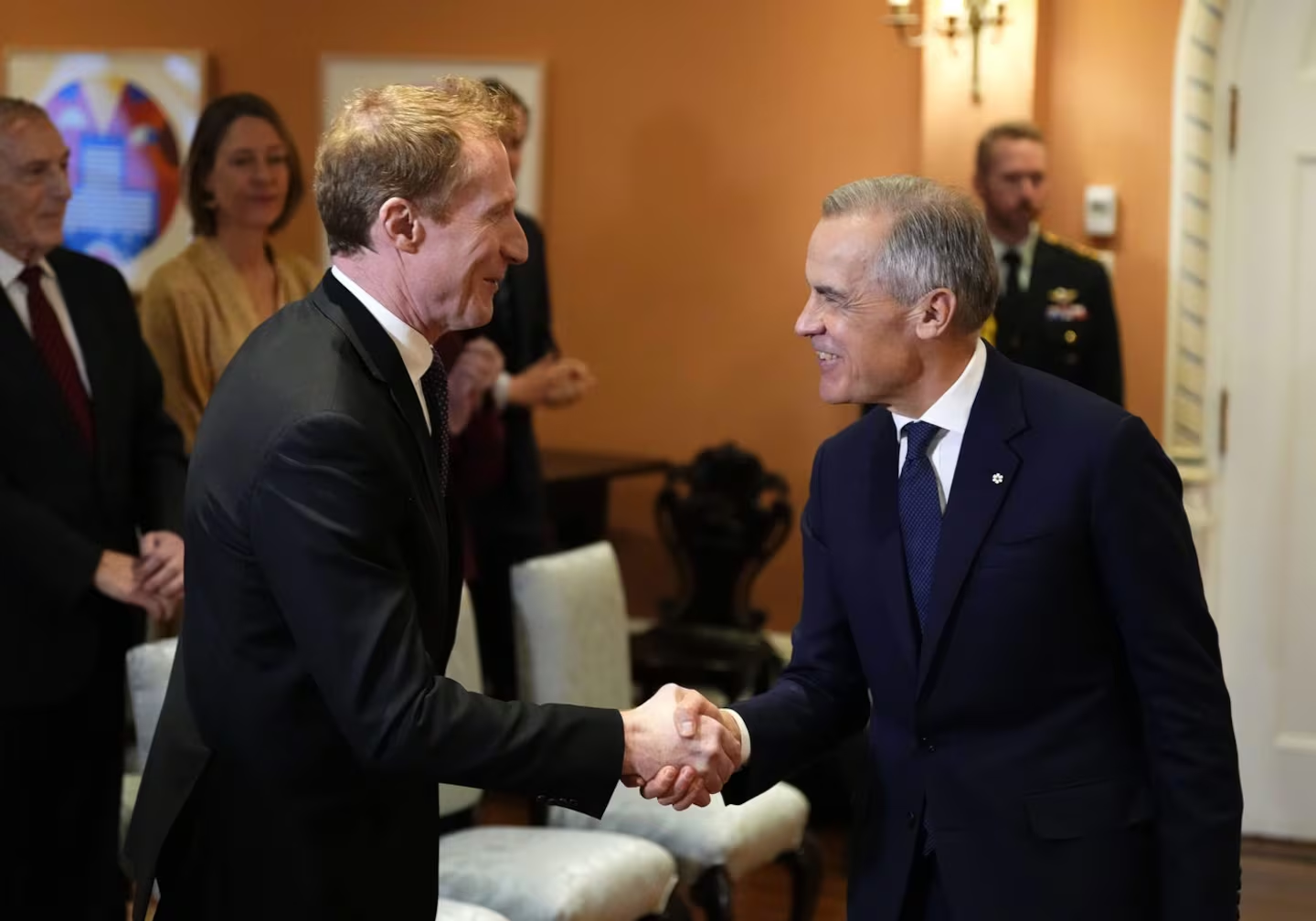
Carney’s Cabinet Shuffle Revives Trudeau-Era Minister Marc Miller
In a move signaling both continuity and a fresh strategic direction, Prime Minister Mark Carney has unveiled a significant cabinet reshuffle, with the headline-grabbing return of former Trudeau-era minister Marc Miller. The shuffle, announced on December 1, 2025, recalibrates Carney’s front bench as his government approaches its first major legislative milestones and gears up for future economic challenges. Miller’s reinstatement to a high-profile portfolio underscores a deliberate effort to blend experienced political operators with new talent, aiming to stabilize the government’s agenda.
This reshuffle is more than a routine change of personnel; it is a calculated political statement. By bringing back a figure so closely associated with the previous Liberal government, Carney is sending a clear message about his priorities and his confidence in certain legacy policies. The return of Marc Miller, in particular, offers a fascinating case study in how the Carney administration is navigating its relationship with the Trudeau political inheritance.
The Strategic Calculus Behind the Shuffle
Prime Minister Carney’s cabinet shuffle appears driven by several interconnected objectives. First and foremost is the need for administrative competence and political steadiness. After an initial period of setting a new tone, the government is now entering a phase where delivering on complex promises—from housing to climate transition—requires ministers with proven track records of managing large departments and navigating Parliament.
Secondly, the shuffle addresses specific portfolio weaknesses and emerging crises. Some ministers have faced criticism over implementation delays or communication stumbles, prompting a need for renewed vigor and clarity in key economic and social files. Carney is seeking to place his strongest players where the political and policy battles will be most intense in the coming year.
Finally, it is an exercise in party unity and coalition management. By integrating a respected Trudeau-era minister like Miller, Carney is reinforcing bridges within the Liberal family, assuring the party’s traditional base that their voices and legacy remain valued within his modernized vision.
Marc Miller: A Profile in Resilience and Expertise
Marc Miller is no stranger to the pressures of federal cabinet. Under Prime Minister Justin Trudeau, he held the challenging portfolios of Crown-Indigenous Relations and Immigration, Refugees and Citizenship. His tenure was marked by a direct, no-nonsense communication style and a reputation for deep policy immersion.
- Indigenous Relations Record: As Minister of Crown-Indigenous Relations, Miller was a central figure in the fraught and complex negotiations around reconciliation, land claims, and self-government. He earned respect from many Indigenous leaders for his straightforward approach and willingness to engage in difficult conversations, though the path remained fraught with challenges.
- Immigration Leadership: Later, at Immigration, Miller managed one of the government’s most dynamic and politically sensitive files. He oversaw record-high immigration targets aimed at addressing labor shortages, while simultaneously grappling with systemic backlogs and the political pressures surrounding housing and integration.
His return signifies that Carney values this specific blend of experience in managing high-stakes, nation-building files that require both sensitivity and operational toughness.
Analyzing Miller’s New Assignment and Its Implications
While the official announcement confirmed Miller’s return, the specific portfolio he will assume is packed with implications. Should he return to a social file like Indigenous Services or Housing, it would signal Carney’s desire for a steady, experienced hand to manage foundational domestic priorities. Alternatively, placing him in a major economic portfolio would indicate a trust in his managerial skills to execute Carney’s core financial agenda.
Wherever he lands, Miller’s presence instantly adds heft and a direct line to the policy frameworks of the recent past. This allows the Carney government to claim continuity on popular Trudeau-era initiatives while infusing them with new energy and perhaps a different emphasis. It also provides a recognizable face to reassure stakeholders in key sectors during a period of transition.
The Broader Reshuffle: New Faces and Shifting Priorities
Miller’s return is the centerpiece, but the broader shuffle reveals other strategic moves. Expect to see:
- Rising Stars Promoted: Look for high-performing parliamentary secretaries or junior ministers to be elevated to full cabinet roles, reflecting Carney’s commitment to renewing the party’s leadership bench.
- Underperformers Moved or Replaced: Ministers who have struggled with their briefs are likely to be shifted to less demanding roles or moved out of cabinet entirely, a necessary step to maintain discipline and momentum.
- Portfolio Realignments: Some departments may be restructured or renamed to better reflect the government’s current focus, such as merging issues related to the green economy or digital innovation.
This comprehensive refresh is designed to create a cabinet that looks more like the one Carney wants leading into the next election—a blend of experience, fresh perspective, and unwavering loyalty to his central mission.
Political and Public Reception: A Bold Move or a Step Back?
The reaction to Miller’s return will be a key indicator of the political landscape. Within the Liberal caucus, it will likely be welcomed by the traditional wing as a stabilizing move. However, some Carney loyalists who advocated for a more decisive break from the Trudeau era may view it with skepticism.
The opposition, particularly the Conservative Party, will undoubtedly frame this as evidence that “it’s the same old Liberal team” despite the new leadership. They will argue that Carney is relying on the architects of the problems he claims to want to solve. Carney’s defense will hinge on competence and results, positioning Miller not as a symbol of the past, but as a proven tool for achieving future goals.
For the public, the impact may be more nuanced. Miller is not a flashy, headline-driven minister but is known as a competent manager. His return may bolster confidence in the government’s administrative capacity among voters who prioritize stability and effective service delivery over dramatic political theater.
The Road Ahead for the Carney Government
This cabinet shuffle is a pivotal moment for Mark Carney’s prime ministership. It moves his government from its initial launch phase into a period of sustained execution. The integration of Marc Miller is a bold gamble that prioritizes managerial expertise and intra-party harmony.
The success of this move will be judged in the coming months by Miller’s performance in his new role and the overall cohesion and effectiveness of the new cabinet lineup. Can Carney successfully harness the experience of the Trudeau years while maintaining the momentum for change that brought him to power? The answer will depend largely on whether this reshuffled team can translate political strategy into tangible improvements in the lives of Canadians.
Ultimately, by bringing Marc Miller back to the cabinet table, Mark Carney has made a definitive choice: evolution over revolution. He is betting that the surest path to achieving his ambitious goals is to build upon, rather than dismantle, certain pillars of the recent past, guided by a steady hand that knows the machinery of government inside and out. The coming parliamentary session will reveal whether this calculated embrace of continuity proves to be a masterstroke.

