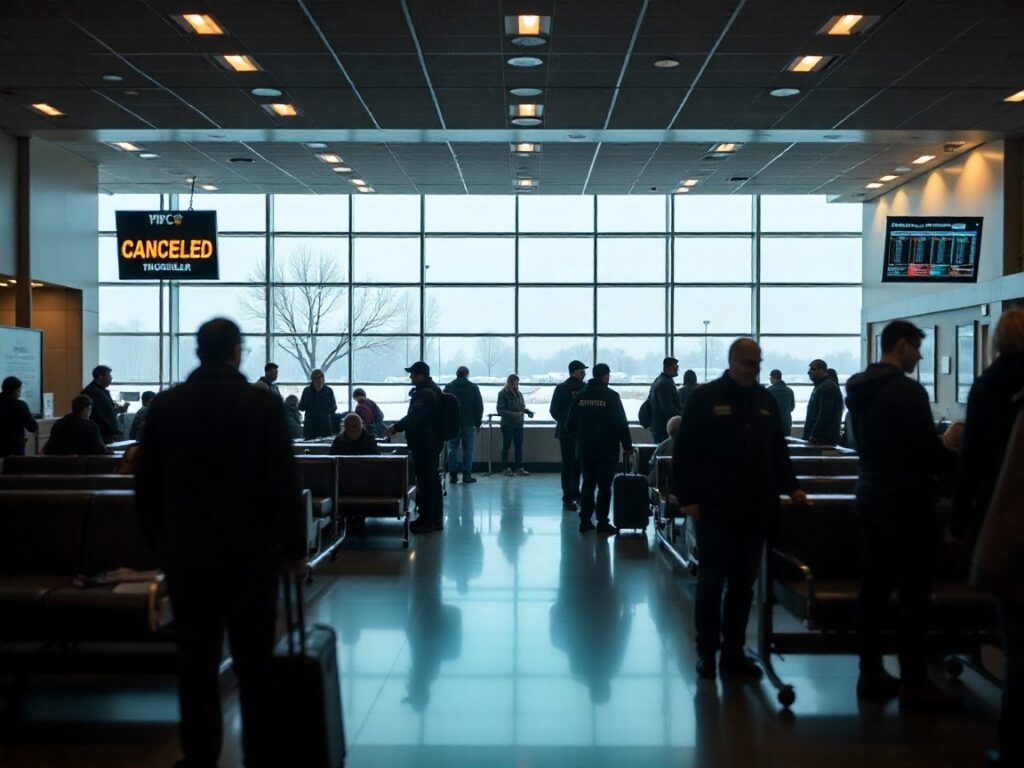
Navigating Chicago Winter Storm Travel Disruptions and Flight Cancellations
A major winter storm has descended upon Chicago, bringing with it a cascade of travel chaos that has rippled across the globe. O’Hare International Airport, one of the world’s busiest aviation hubs, has been brought to a near-standstill, with hundreds of flights canceled and thousands of passengers left stranded. This disruption has created a domino effect, impacting not only domestic travel but also international journeys for visitors from Canada, Mexico, the United Kingdom, and beyond. For travelers caught in this wintry snare, navigating the situation requires patience, preparation, and a clear understanding of your options.
The Heart of the Storm: O’Hare’s Operational Halt
The storm’s impact on Chicago’s aviation infrastructure has been severe. O’Hare International Airport, a critical connecting point for both domestic and international routes, has experienced widespread cancellations and significant delays. The combination of heavy snowfall, plummeting temperatures, and powerful winds has made runway operations hazardous and de-icing procedures a lengthy bottleneck.
Key impacts at O’Hare include:
This operational crunch means that even if your flight is not immediately canceled, the likelihood of a lengthy delay is extremely high. The ripple effect of these disruptions will be felt for days as airlines work to reposition aircraft and crews.
On the Ground: Hotel Surge and Stranded Tourists
With flights grounded, the immediate consequence has been a massive surge in demand for last-minute accommodations. Hotels in and around Chicago’s airport corridors and downtown are reporting near-full occupancy, with rates skyrocketing due to the urgent demand. Travelers who had layovers in Chicago or were due to depart have found themselves needing a place to stay, often with little notice.
If you are currently stranded in Chicago, consider these steps:
Critical Information for International Travelers
The international dimension of this disruption is significant. Travelers from Canada, Mexico, and the United Kingdom, who make up a large portion of Chicago’s international traffic, face unique challenges.
For Canadian Travelers
Given the proximity, many Canadian travelers might consider alternative land travel. However, this storm is also affecting the broader Great Lakes and Midwest region.
For Mexican Travelers
Travelers from Mexico often have connecting itineraries through Chicago to other U.S. or Canadian destinations.
For United Kingdom Travelers
UK travelers facing canceled transatlantic flights are dealing with one of the most complex rebooking scenarios due to the limited number of daily flights.
Proactive Steps for All Affected Travelers
Regardless of your point of origin, a unified strategy is essential for navigating this disruption.
Looking Ahead: The Road to Recovery
Airline recovery from a storm of this magnitude is a multi-day process. Even after the snow stops, the logistical challenge of moving aircraft and crews back into position, combined with a backlog of stranded passengers, means disruptions will linger. If you have travel planned to, from, or through Chicago in the coming 72-96 hours, stay in close contact with your airline and consider preemptively exploring flexible change options if your plans allow.
The Chicago winter storm is a stark reminder of nature’s power to interrupt even our most advanced travel systems. By staying informed, utilizing technology, and understanding your rights and resources, you can navigate this challenging situation and move toward your destination safely.