
Cuba’s Power Grid Fails Again in Third Major Blackout This Month
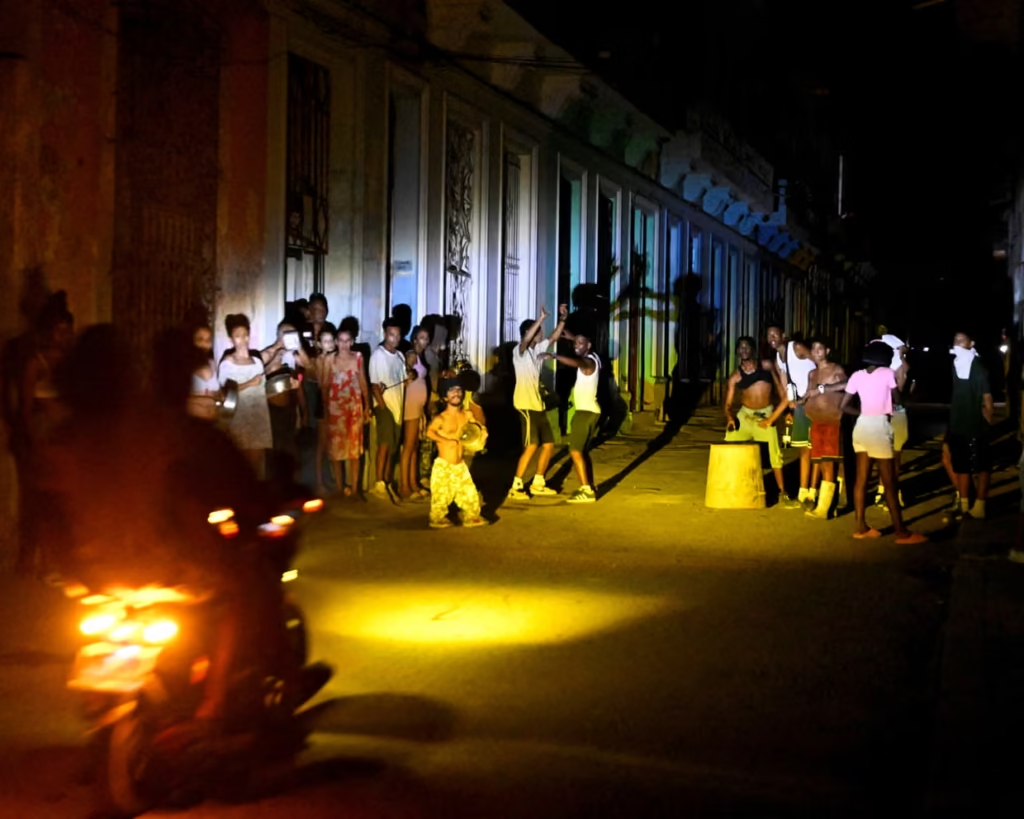
For the third time in a single month, Cuba has been plunged into a nationwide blackout, casting the island into darkness and highlighting the profound and persistent crisis within its aging energy infrastructure. The collapse, which occurred on a Tuesday evening, left virtually the entire population of 11 million people without electricity, disrupting daily life, paralyzing businesses, and raising urgent questions about the system’s stability.
This latest failure is not an isolated incident but part of a distressing pattern of energy instability that has plagued the country for years. Each blackout peels back another layer on a complex problem rooted in decades of underinvestment, fuel shortages, and the compounding pressures of a struggling economy and stringent U.S. sanctions.
The Immediate Crisis: A Nation in the Dark
The blackout struck suddenly, with the state-owned electricity company, Unión Eléctrica (UNE), reporting a failure at the Antonio Guiteras thermoelectric plant in Matanzas—the island’s largest and most critical power facility. The domino effect was swift, overloading the fragile grid and causing a total system collapse.
For ordinary Cubans, the immediate consequences were severe:
- Homes were left without lighting, refrigeration, or fans in the tropical heat.
- Hospitals, many with outdated backup generators, scrambled to maintain critical care.
- Communications were severed as cell towers and internet services failed.
- Public transportation ground to a halt, and water pumps stopped working, creating a secondary crisis of water supply.
The blackout lasted for several hours in most areas, with full restoration taking much longer in more remote regions. For a population already enduring severe shortages of food, medicine, and basic goods, these recurrent power failures represent more than an inconvenience; they are a direct threat to health, safety, and economic survival.
Root Causes of a Failing Grid
To understand why Cuba’s power grid keeps collapsing, one must look at a perfect storm of structural, economic, and geopolitical factors.
Aging Infrastructure and Lack of Investment
The backbone of Cuba’s electricity generation is a network of thermoelectric plants, most of which were built with Soviet assistance decades ago. These plants are plagued by chronic breakdowns due to years of deferred maintenance. Spare parts are scarce, and the technology is obsolete. The government’s efforts to transition to renewable sources like solar and wind have been slow, leaving the country overwhelmingly dependent on these unreliable, oil-burning facilities.
Fuel Shortages and Economic Strain
Cuba relies heavily on imported fuel, primarily from political allies like Venezuela. When shipments are delayed or reduced—as has frequently happened due to Venezuela’s own economic troubles—the island faces a dire fuel deficit. Furthermore, Cuba’s deep economic crisis, exacerbated by the pandemic and tightened U.S. sanctions, leaves it with scant foreign currency to purchase fuel or vital parts on the open market.
The Impact of U.S. Sanctions
While not the sole cause, the decades-long U.S. embargo plays a significant role. It severely restricts Cuba’s access to international financing, modern technology, and investment needed to overhaul its energy sector. Sanctions make it difficult and expensive to procure parts, even from third-party countries, and deter foreign companies from engaging in large-scale infrastructure projects.
The Human and Social Toll of Recurrent Blackouts
The frequency of these blackouts is taking a heavy toll on Cuban society. Beyond the immediate discomfort, there are deeper, more corrosive effects.
Economic Paralysis: Small businesses, a growing part of Cuba’s economy, cannot operate without power. Restaurants lose inventory, tradespeople cannot work, and home-based entrepreneurs are shut down. Each blackout represents lost income for families already on the edge.
Health Risks: Prolonged power outages compromise the cold chain for medicines and vaccines. They also increase risks from heat-related illnesses and make it difficult for the elderly or infirm to cope at home.
Social Unrest: The blackouts have become a flashpoint for public frustration. The July 2021 protests, the largest in decades, were sparked in part by power cuts. While the recent blackouts have not triggered similar mass demonstrations, the underlying anger and disillusionment continue to simmer, challenging social stability.
Government Response and a Path Forward?
The Cuban government has acknowledged the severity of the crisis. Following each blackout, officials provide public updates and apologize for the hardship. The long-stated plan involves a multi-pronged approach:
- Repairing and maintaining existing thermoelectric plants.
- Increasing the use of distributed generation via smaller, mobile fuel-oil plants.
- Accelerating the incorporation of renewable energy sources.
However, public trust in these promises is waning. The gap between official rhetoric and the lived reality of darkness is vast. Many Cubans feel the government has failed to prioritize a solution to a problem that affects every aspect of their lives.
Is There a Viable Solution?
Experts agree that solving Cuba’s energy crisis requires a monumental effort and significant capital. A true fix would involve:
Massive Foreign Investment: Attracting capital to build modern, efficient power plants and a robust renewable energy sector. This is currently hindered by both U.S. sanctions and Cuba’s own restrictive investment laws.
Technical and Financial Assistance: International cooperation, potentially from allies or multilateral organizations, to fund grid modernization and provide technical expertise.
Urgent Short-Term Mitigation: A more transparent and effective strategy for managing fuel distribution and communicating realistic schedules for planned maintenance outages, known as “load shedding,” to manage public expectations.
A Nation Waiting for the Lights to Stay On
The third nationwide blackout in a month is a stark symbol of Cuba’s profound challenges. It is a crisis of infrastructure, of economy, and of confidence. Each time the power fails, it reinforces a narrative of decline and mismanagement that is difficult to reverse.
For now, Cubans continue to adapt with resilience, using battery-powered radios, conserving phone charge, and sharing what little they have. But resilience has its limits. The repeated collapse of the power grid is more than a technical failure; it is a symptom of a system struggling to function. Until the root causes are addressed with substantial resources and political will, the people of Cuba will remain in the precarious position of waiting for the next blackout, hoping only that the lights come back on before the food spoils, the medicine warms, and the patience of a weary nation finally runs out. The stability of the country may very well depend on keeping the power on.

